Satellite Image Captures Shiveluch Volcano in Eastern Russia
A satellite image taken by Landsat 9 has captured the snow-covered Shiveluch volcano in eastern Russia, showcasing its unique feature of a growing lava dome.
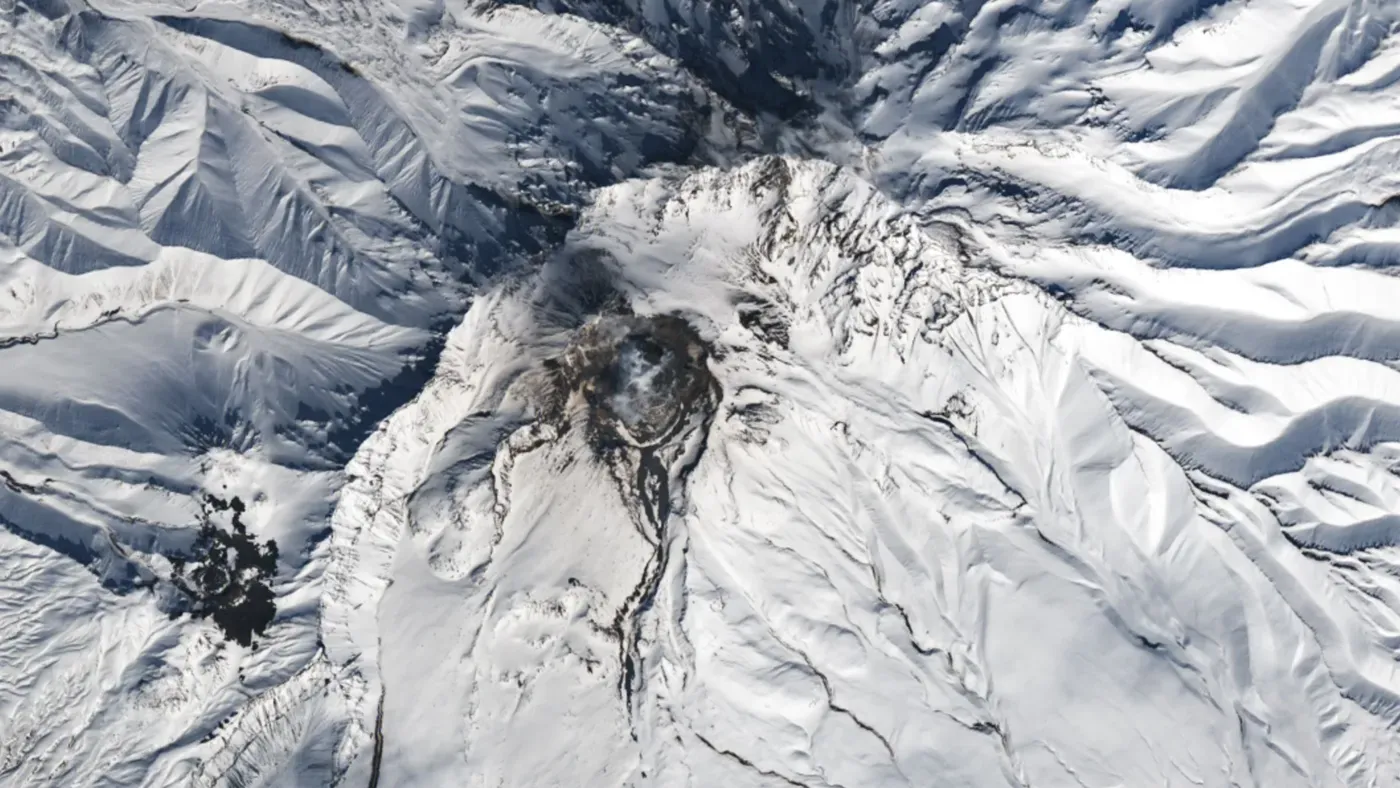
A striking satellite image has captured the snow-covered Shiveluch volcano in eastern Russia, showcasing its unique feature of a growing lava dome.
The photo, taken by Landsat 9 on April 23, 2026, reveals a heavy blanket of snow surrounding the summit of this highly active and unstable stratovolcano. Shiveluch stands at an impressive height of 10,771 feet (3,283 meters) and is known as "smoking mountain" in the local Itelmen language.
Located on the Kamchatka Peninsula, Shiveluch is the northernmost active peak in a region renowned for its powerful and dramatic volcanic eruptions. This area is home to numerous volcanoes, but Shiveluch stands out due to its exceptional level of activity.
According to NASA's Earth Observatory, Shiveluch is one of the planet's most active volcanoes. In fact, it has experienced at least 15 eruptions over the past century, with the latest ongoing since 1999, as reported by the Smithsonian Institution's Global Volcanism Program.
The volcano produces a significant amount of lava each year, releasing around 530 million cubic feet (15 million cubic meters) annually. This is equivalent to filling approximately 6,000 Olympic-size swimming pools, as calculated in a 2007 study.
The Shiveluch volcano in Russia is an extremely active and dynamic entity, constantly undergoing changes on its surface.
Satellite images taken regularly reveal fresh signs of volcanic activity within the horseshoe-shaped caldera, including thermal anomalies, hot avalanches, and debris flows that are detected almost daily.
The surrounding landscape is also affected by ash deposits spewed out by the volcano, darkening the area with a thick layer of ash. The sheer volume of these emissions suggests an intense and ongoing process.
A massive lava dome has been forming at the summit of Shiveluch, its growth rate accelerating in recent months according to Earth Observatory data.
Shiveluch's volcanic landscape is marked by frequent collapses and rebuilds, with lava flows often retaining so much heat that snow cannot settle on them for months or even years.
Lava flows visible as black lines snaking down the volcano's slopes have a distinct appearance, indicating they are still extremely hot. These flows are not only visible but also retain enough heat to prevent snow from settling on them, a testament to their intense temperature. This unusual phenomenon is likely due to the high concentration of magma in these flows.
In satellite images, the lava flows appear as thick dark lines emanating from the summit caldera and other points along the volcano's flanks. A zoomed-out version of one such image reveals numerous black streaks, giving the impression that they were painted onto the image with rough brushstrokes. These darker patches are actually pyroclastic ash left over from a 2023 eruption that ravaged nearby forests.
Volcanologist Janine Krippner noted during fieldwork at Shiveluch that she could still feel heat emanating from lava flows that were over five years old, highlighting the volcano's remarkable ability to retain heat. The sheer scale of this phenomenon is a testament to the immense energy released by the volcano, with its lava flows and ash deposits forming an enduring part of the landscape.
In stark contrast to the breathtaking landscapes showcased in astronaut photos and satellite images, the superactive snow-covered volcano in Russia's Kamchatka Peninsula is exhibiting an unusual sight: a growing lava dome oozing out like toothpaste.
This extraordinary phenomenon has garnered significant attention due to its sheer scale, with the immense energy released by the volcano resulting in extensive lava flows and ash deposits that will leave their mark on the surrounding landscape. The volcano's snow-covered peak belies the intense geological activity unfolding below the surface, where molten rock is pushing its way through the earth's crust.
The stunning visuals of this natural wonder serve as a poignant reminder of the awe-inspiring power of volcanic eruptions and the ever-changing nature of our planet's geography. As the volcano continues to erupt, it will undoubtedly leave an indelible mark on the surrounding landscape, shaping the environment in ways both subtle and profound.
Facts based on reporting originally published by Live Science.
You may republish this story, in full or in part, if you credit News Central Site and link to it (licence CC BY 4.0). Photos are not included.