Nvidia Stocks Surge After Jensen Huang Returns as CEO
The move has sparked relief among investors and employees who see it as a stabilizing force in uncertain times.
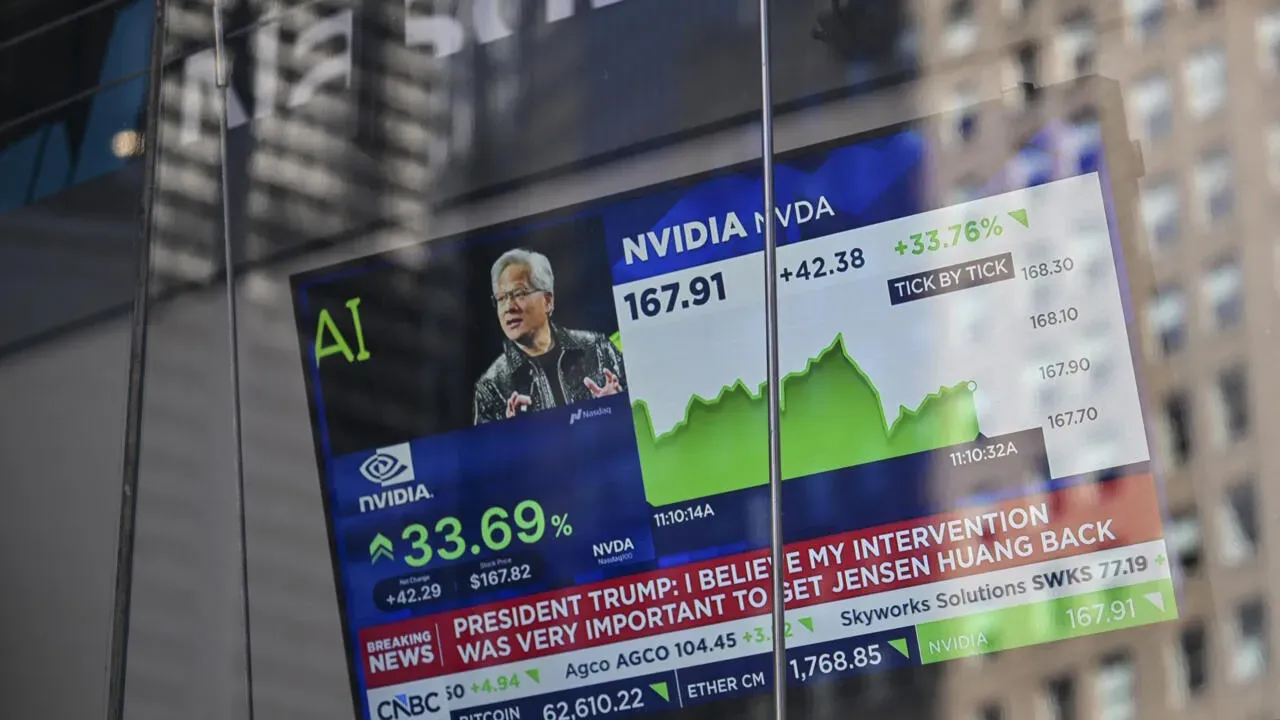
Nvidia's stocks surged by over 30 percent on Monday following the company's decision to bring back Jensen Huang as CEO. The move has sparked relief among investors and employees, who see it as a stabilizing force in uncertain times. However, not everyone is convinced that this is a wise decision.
Huang's reinstatement comes at a critical juncture for Nvidia, with analysts warning of potential risks in the AI computing industry. A model of circular financing has been fueling the AI boom, but some experts fear it may be unsustainable in the long term. This has raised concerns about an impending bubble that could have far-reaching consequences.
The next few weeks will be crucial in determining whether Nvidia's decision to reinstate Huang was a wise one or a catastrophic mistake. Supporters of Huang argue that he is indispensable not only to the company but also to the entire AI industry, which has become a major driver of economic growth. His unique leadership style and ability to strike deals have been credited with driving Nvidia's success.
However, Huang's return also brings baggage in the form of controversy surrounding his personal life. He acknowledged having an affair with a woman suspected of being a Chinese spy, raising national security concerns. Additionally, his unorthodox management approach, which included making deals through handshakes rather than formal contracts, has raised eyebrows among investors and analysts.
Investors are breathing a sigh of relief as Jensen Huang returns to Nvidia's helm, but concerns about an AI bubble persist in the industry.
A petition circulating in Silicon Valley had been gathering momentum among employees and high-profile supporters, including SpaceX CEO Elon Musk, calling for Huang's return. The online campaign was just one manifestation of the widespread sentiment that Huang is irreplaceable at the company he co-founded. His presence seems to have a calming effect on investors.
Huang's decision to return as CEO was not entirely unexpected, given his earlier statement acknowledging "serious mistakes and expressing willingness to answer calls for a comeback. The US president had also weighed in, with concerns about investor returns potentially influencing his stance. Huang's return has been seen as a stabilizing force, helping to boost Nvidia shares by 31.5 percent on Monday.
The challenges ahead are still significant, however, including ongoing congressional investigations and lawsuits that could impact the company's future. A law firm hired by Nvidia's board is also conducting an internal probe, adding another layer of uncertainty for investors. Despite these hurdles, Huang's return has provided a much-needed boost to investor confidence, but concerns about an AI bubble remain unresolved.
The market's response to Huang's return has been overwhelmingly positive, with the S&P 500 experiencing a significant jump in value.
On Monday, investors saw their losses from last week partially erased as the index rose by 4.7 percent. This upward trend is particularly noteworthy given the severity of last week's downturn, which was one of the worst since the financial crisis of 2008.
The return of Huang has removed a major source of uncertainty that had been weighing on investors' minds. According to King Lip, chief strategist at BakerAvenue Wealth Management in San Francisco, you've basically had this perfect storm of uncertainty that has created a crisis of confidence. The Nvidia fallout was one factor contributing to this sense of unease.
Musk's assessment of Huang's deal-making abilities highlights another reason why his return is seen as crucial. Musk noted on X that many of the deals Huang negotiated were handshake agreements, not formal contracts. Without Huang at the helm, some of these critical deals may be lost.
Huang's leadership style was often unconventional, with a reported 60 direct reports and three family members on staff. This approach allowed him to maintain close relationships with his employees and foster an entrepreneurial culture within the company.
According to Jeffrey Sonnenfeld, a leadership expert at Yale's business school, Huang's management methods were not without their drawbacks. His lack of formal contracts for major deals is unprecedented," Sonnenfeld noted, adding that the sheer number of direct reports was also unsustainable in a large organization.
Huang's personal relationships with key suppliers and customers helped Nvidia become an essential player in the AI economy. By providing financial support to struggling companies, he created a stable ecosystem that allowed them to operate effectively.
Many AI startups, including those like Anthropic that have recently gone public, rely heavily on Nvidia for their computing needs. These firms often struggle to turn a profit and rely on Huang's company to provide essential services in exchange for purchasing its chips.
The circular financing arrangements between Nvidia and its customers pose significant risks for investors, a fact acknowledged by the company itself in a recent report.
In this arrangement, Nvidia commits to purchasing chips from its customers, which are often struggling to turn a profit, in exchange for essential services.
Nvidia has invested in several companies involved in the AI buildout, including data centre operator CoreWeave and South Korean internet and cloud service provider Naver, among others.
The company's stock prices rose following Jensen Huang's return, but have yet to recover losses incurred since his resignation.
Financial analysts are breathing a sigh of relief following Jensen Huang's return to Nvidia, but concerns about an AI bubble remain prevalent.
Fears of an overheating market have yet to dissipate, and investigations into Huang's reinstatement, the board, and Trump administration officials who greenlit Nvidia chip sales are gaining momentum.
The spotlight is on Commerce Secretary Howard Lutnick, a key figure in export controls, whose former company, Cantor Fitzgerald, provides financial support to Nvidia customers, highlighting potential conflicts of interest.
Sen. Elizabeth Warren has pledged to scrutinize Nvidia's compliance with export regulations when she takes the helm of the banking committee next year, and is demanding answers from the Trump administration about their role in Huang's reinstatement.
Facts based on reporting originally published by France 24 English.
You may republish this story, in full or in part, if you credit News Central Site and link to it (licence CC BY 4.0). Photos are not included.