Nuclear Explosion in Space Could Disrupt Satellite Systems
A nuclear explosion in space could have far-reaching consequences for our daily lives, despite being unlikely to cause widespread injuries on Earth.
A nuclear explosion in space could have far-reaching consequences for our daily lives, despite being unlikely to cause widespread injuries on Earth.
Satellites are a crucial part of modern life, providing services that we take for granted, such as navigation and communication systems. In the United States, satellite failures could severely impact emergency crews' ability to communicate with remote areas, potentially putting lives at risk.
The effects of a nuclear explosion in space would be felt long after the initial blast, as satellites orbiting above the Earth's atmosphere are particularly vulnerable to damage. This is because most of the atmosphere that protects people on the ground from radiation would not be present at such high altitudes.
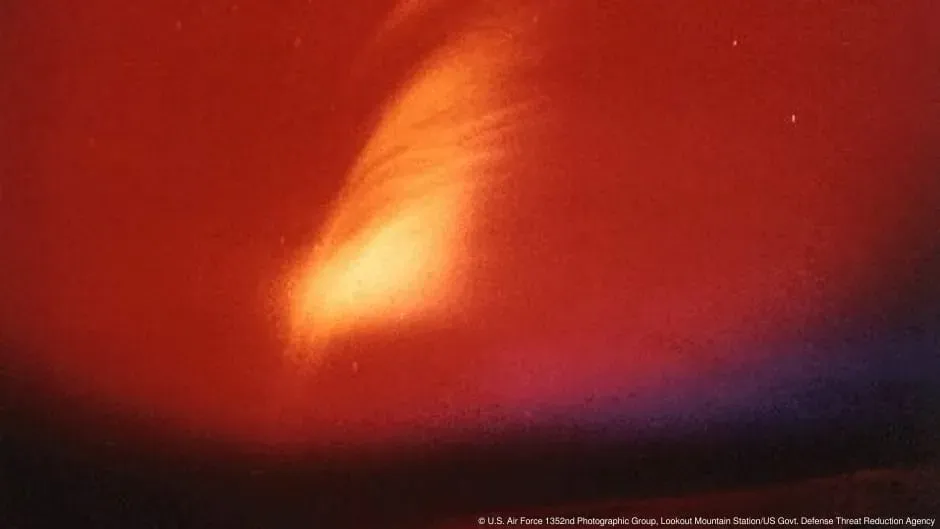
On July 8, 1962, the United States conducted a nuclear test called Starfish Prime about 400 kilometers above the Pacific Ocean. The detonation sent an electromagnetic pulse through the Earth's magnetic field, causing disruptions to streetlights and radio communications in Hawaii.
The explosion created an artificial aurora in the night sky due to charged particles making denser air glow. This was not a conventional fireball or shock wave, as the thin atmosphere at such heights did not allow for destructive forces to reach the ground.
The initial effects of an explosion in space on nearby spacecraft are immediate and devastating due to the intense X-ray burst that can damage electronics and solar panels right away.
However, a secondary effect is caused by Earth's magnetic field trapping electrons released after the blast, creating a radiation belt around our planet. Satellites crossing this belt receive additional exposure each time they pass through it, which can cause further damage over time.
The severity of the impact depends on several factors, including the location of the explosion and the orbits of nearby satellites. For instance, GPS satellites orbiting at an altitude of approximately 20,200 kilometers above Earth may continue to function even if closer satellites fail due to radiation exposure.
Different types of satellites perform distinct functions, such as providing navigation signals for emergency beacons and separate satellite networks. If part of this network fails, the time it takes for alerts to reach rescuers can increase significantly.
The Outer Space Treaty prohibits its signatories from placing nuclear weapons in orbit, while the Limited Test Ban Treaty bars nuclear explosions in space altogether. However, detecting a detonation is still possible due to the unique signals emitted by such an event, which US satellite sensors are designed to detect.
Satellites could remain operational despite radiation damage, but they might lose control over their navigation systems, making them vulnerable to further collisions or debris accumulation.
The risk of a chain reaction is real, and it's known as Kessler syndrome. This phenomenon occurs when the number of fragments in orbit becomes so high that they start colliding with each other, creating even more debris, which in turn leads to more collisions.
The impact of an explosion in space on human populations is minimal due to its distance from the Earth's surface. However, some radioactive particles could still enter the atmosphere and eventually settle on land, posing a long-term threat to replacement satellites.
As these particles disperse, their radioactivity decreases over time, making it unlikely that people near the blast site would be exposed to high doses of radiation.
Facts based on reporting originally published by DW English.
You may republish this story, in full or in part, if you credit News Central Site and link to it (licence CC BY 4.0). Photos are not included.