Emergency Preparedness Expert Shares Survival Skills
Jessie Krebs has shared her expertise on prepping for emergencies after years of living off the grid in Pagosa Springs, Colorado.
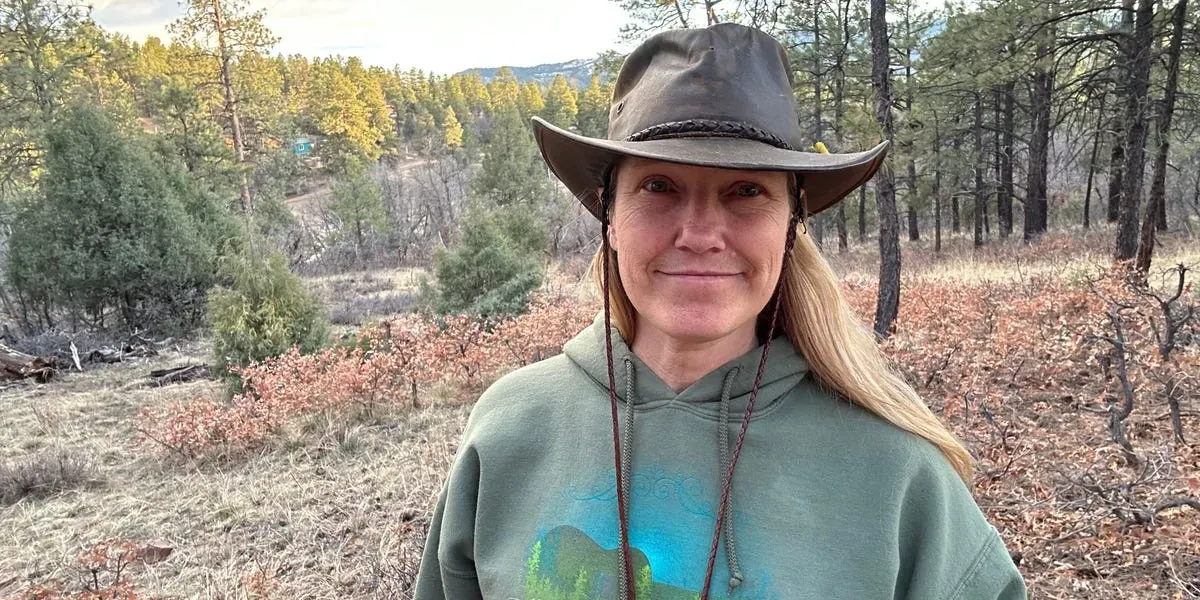
Jessie Krebs, a 54-year-old former Air Force instructor, has shared her expertise on prepping for emergencies. She lives off the grid in Pagosa Springs, Colorado, where she can put her survival skills to the test.
Krebs' journey into emergency preparedness began when she joined the military at a young age. As an 18-year-old, she didn't think much about potential disasters or natural calamities. It wasn't until she became a Survival, Evasion, Resistance, and Escape (SERE) instructor that she gained valuable insights on how to survive in extreme situations.
The SERE program teaches individuals to rely on their own abilities rather than relying solely on equipment. Krebs learned the importance of improvising with available materials when faced with an emergency. This skill was honed during her training, where she and other instructors developed creative solutions using everyday objects.
Krebs' experience as a SERE instructor has given her a unique perspective on preparing for emergencies. She emphasizes that being physically aware of basic needs is crucial in any survival situation.
Living off the grid for nearly 20 years has given me valuable insights into what truly matters in survival situations. I've developed a system to harness solar power on my home and collect rainwater or transport it from a nearby spring, making me largely self-sufficient with minimal utility bills.
In emergency scenarios like blackouts, I rely on the skills I've learned over time, including how to make do with available resources. This approach has proven effective in various situations, whether stranded in the wilderness, dealing with a vehicle accident, or facing natural disasters such as floods and fires.
When faced with a power grid shutdown or similar crisis, it's essential to know basic signaling techniques to communicate your location to others. This involves planning ahead by designating meeting points for family members, ideally marked on a map within a survival kit. For instance, a specific landmark like a distinctive blue slide at the east side park can serve as a reference point.
In signaling, the choice of method is crucial; it should be unique and recognizable to avoid confusion with other signals. A simple yet effective example might involve stacking three rocks or using two long sticks crisscrossed in a particular pattern.
To ensure effective communication in emergency situations, it's crucial to establish a clear plan that all family members or group members can follow. This involves designating a specific meeting point, such as a slide near a town, where everyone will gather at the same time each day.
For instance, on days one through three, people should meet at the designated spot at noon every day. However, from days four to 10, they should move to Maggie's house, which is located five miles out of town. This change in location serves as a secondary meeting point and helps prevent confusion or miscommunication.
In terms of personal protection, clothing and equipment play a vital role. A sleeping bag, rope or line, headlamp, and knife are essential items that can provide a range of benefits. For example, rope can be used to tie up shelters, create splints, or even haul heavy objects. Its versatility makes it an indispensable tool in survival situations.
In addition to equipment, having the right shelter is also crucial for staying safe. A lightweight and bulky sleeping bag is ideal, while a poncho or waterproof material can be used to protect gear from the elements. Furthermore, knowing how to build a fire and construct a shelter over it when weather conditions are poor is essential for maintaining warmth and safety.
In order to draw people to your location in an emergency situation, it's essential to have a visible signal fire that can be seen from afar. However, this is not the primary concern when it comes to survival preparation.
Water should take precedence over food as the most crucial element for sustenance. On average, individuals can survive for three days without access to water, whereas they can go 30 or more days without food. This stark contrast highlights the importance of prioritizing hydration in emergency situations.
When selecting food items for a bug-out bag or survival kit, it's crucial to focus on high-fat content foods that are likely to be scarce in an emergency environment. Items such as peanut butter and oil should be chosen for their high fat content, which can help sustain energy levels.
In many cases, the goal is not to travel but rather to bring rescue to you by making yourself visible and accessible. Therefore, it's essential to have a basic understanding of navigation skills, including using a compass and identifying safe locations.
In times of crisis, panic can set in and cloud one's judgment. When individuals are unable to think clearly, they often exacerbate their situation instead of finding a solution. To regain composure and make rational decisions, it is essential to calm down and clear the mind.
Personal hygiene may seem like an afterthought when preparing for emergency situations, but neglecting basic needs can have severe consequences. Failing to maintain cleanliness can lead to mental and emotional distress as well as health issues. Even simple tasks such as brushing teeth or washing one's face are crucial in maintaining a sense of normalcy during chaotic times.
The concept of bug-out bags or doomsday kits is often misunderstood, with many individuals accumulating gear without understanding its purpose or functionality. These survival kits should be designed to cater to individual needs and expertise, rather than being generic collections of equipment. Knowing what items are essential and how to use them effectively can make all the difference in a crisis situation.
Having a well-stocked kit is only half the battle; it's equally important to possess the knowledge required to utilize its contents. Acquiring skills such as navigation, first aid, and basic repair techniques can be just as valuable as carrying equipment.
When preparing for emergencies, individuals often overlook the importance of adapting their survival kits to their specific environment. This means considering factors such as readily available food and water sources, ways to signal for help, suitable clothing and shelter options, navigation techniques, and basic first aid knowledge.
Many items needed for a survival kit can be sourced inexpensively from thrift stores or second-hand shops, eliminating the need for expensive specialized gear. By thinking creatively about what's available in their surroundings, individuals can assemble a comprehensive kit that meets their unique needs without breaking the bank.
In emergency situations, it's essential to remain calm and focused on the present moment. Rather than panicking, people should take a deep breath, acknowledge their current safety, and try to relax. By doing so, they'll be better equipped to think clearly and make rational decisions to ensure their survival.
Ultimately, surviving an emergency requires a combination of preparation, resilience, and mental clarity. By focusing on the positive aspects of their situation and trusting in their ability to adapt, individuals can navigate even the most challenging circumstances with greater ease.
Facts based on reporting originally published by Business Insider.
You may republish this story, in full or in part, if you credit News Central Site and link to it (licence CC BY 4.0). Photos are not included.