Robin Rue Simmons leads reparations movement across US.
A growing movement to address the legacy of slavery in the US is gaining momentum, with a focus on housing grants and municipal reparations programs.
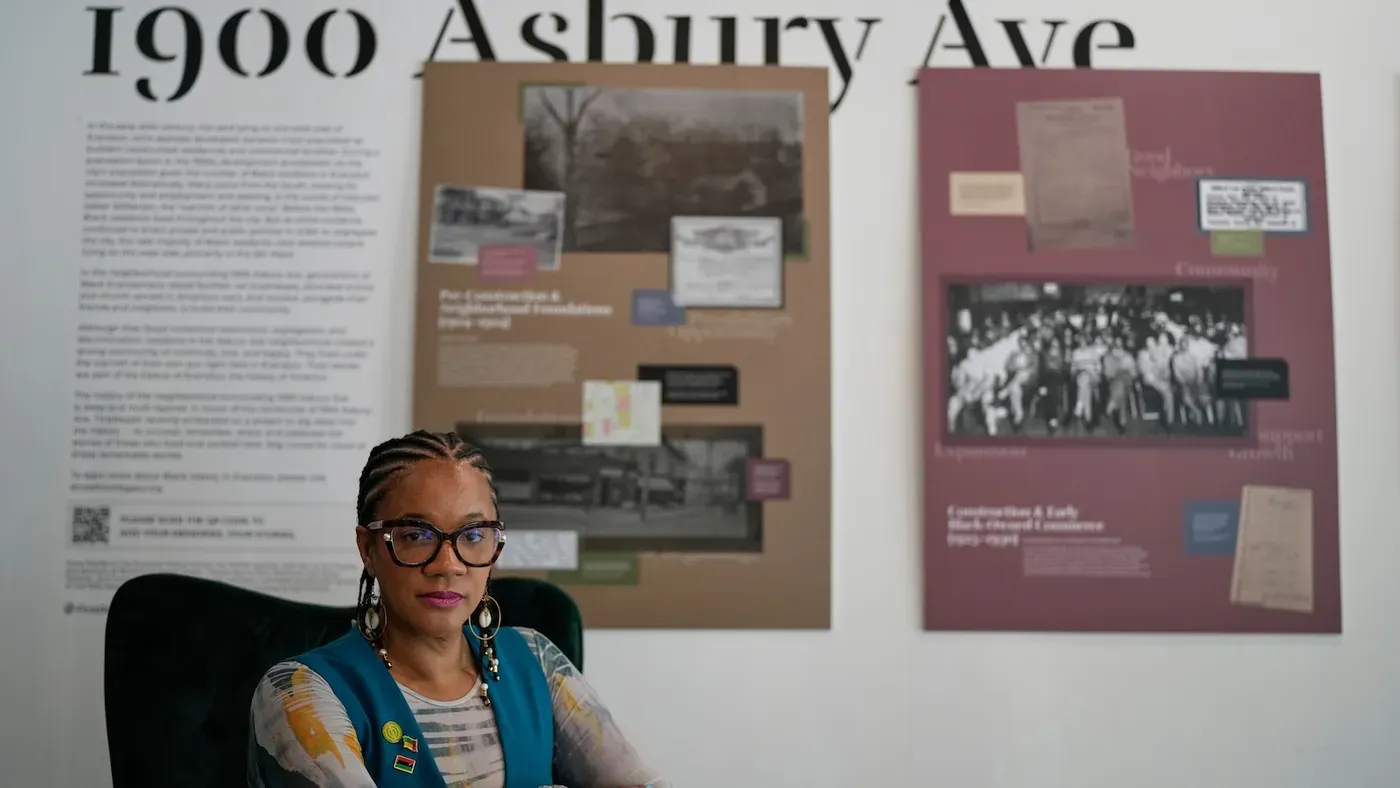
A growing movement to address the legacy of slavery in the US is gaining momentum across the country. Robin Rue Simmons, a leading figure in this effort, has been working tirelessly to find solutions to repair the damage caused by discriminatory policies.
Simmons' work in Evanston, Illinois, has resulted in a significant achievement: a $25,000 housing grant for Black residents whose families were harmed by discriminatory housing practices. This pioneering initiative is part of the nation's first municipal reparations program, which Simmons is now spreading to over 100 communities across the US.
The Trump administration's stance on diversity and inclusion programs has created a formidable obstacle for this movement. The administration's efforts to curtail federal support for initiatives that address racial disparities have led some institutions to reconsider or quietly scale back their reparations work.
In stark contrast, the international community is taking steps towards acknowledging the atrocities of slavery. In March, the U.N. General Assembly passed a resolution condemning the trafficking of millions of enslaved Africans as "the gravest crime against humanity". The resolution was supported by over 120 countries, with only three voting against it: Argentina, Israel, and the US.
Rue Simmons, chairman of Evanston's Reparations Committee and former city councilwoman, remains committed to achieving redress for the legacy of slavery despite the current administration's obstacles. As a key figure in the movement for reparations, Simmons is undeterred by the challenges ahead. The collective goal of federal redress continues to serve as a guiding light for the Reparations Committee.
The transatlantic slave trade forcibly brought an estimated 12.5 million Africans across the Atlantic Ocean to the Americas over three and a half centuries. Of these, approximately 1.8 million did not survive the grueling journey to their new destinations. The enslaved people who arrived in what is now the United States were subjected to chattel slavery, with their enslavers treating them as property.
The legacy of slavery has had far-reaching consequences for generations of Black Americans. Enslavement denied them freedom and a fair share of the wealth they generated, while Jim Crow segregation, discrimination, and systemic racism further exacerbated the economic disparities between Black and white communities. As a result, wealth remains largely concentrated among white families.
The concept of reparations has evolved over time, from the unfulfilled promise of "40 acres and a mule" after emancipation to modern-day proposals aimed at addressing the ongoing impact of slavery. Despite these efforts, comprehensive reparations initiatives have historically faced significant resistance and skepticism from politicians.
William Darity, an expert on reparations who co-authored a book with A. Kirsten Mullen, notes that no president has been openly supportive of comprehensive Black reparations in recent history. The topic was often considered taboo until recently, highlighting the ongoing challenges to addressing the legacy of slavery through reparative measures.
As President Trump continues to express his opposition to reparations for slavery descendants, some cities are pushing forward with their own programs.
A key battleground is Evanston, Illinois, where a lawsuit has been filed by Judicial Watch against the city's reparations program. The program provides funding for housing grants and college scholarships to African American residents who can prove they were born in the city or lived there at some point.
Sociologists argue that reparations are not just about providing financial compensation but also about acknowledging the historical injustices of chattel slavery and taking responsibility for them. This recognition is seen as a crucial step towards healing and moving forward.
The Trump administration has entered the fray, with the Justice Department seeking to intervene in the Evanston case. The city's program has been criticized by some who argue that it discriminates based on race without requiring specific harm identification.
The Justice Department has taken a firm stance on programs that provide government benefits based on race, warning leaders in Asheville and Buncombe County, North Carolina, of potential federal law violations.
In a statement to The Associated Press, Kiersten Pels, a department spokeswoman, emphasized that such programs are both unconstitutional and often violate federal civil rights laws. Those implementing these programs are doing so despite being aware of the federal law's requirements, she added.
The White House referred questions about this matter to the Justice Department, indicating that the administration is standing by its stance on these issues.
In contrast, Georgetown University has continued to offer admission consideration for descendants of enslaved people tied to the campus' past. This effort remains ongoing despite the current administration's efforts to crack down on diversity and inclusion initiatives.
Richard Cellini, a former leader of a Harvard University project, said that new efforts to identify and support descendants of enslaved people have largely come to a standstill across higher education.
Harvard's efforts to provide redress to living descendants of enslaved people have stalled since the Trump administration returned to office. Despite ongoing research by American Ancestors, an outside company, Harvard has yet to offer any form of compensation or support.
A handful of Virginia universities have quietly begun implementing scholarship programs for descendants of slaves, as mandated by a 2021 state law. However, according to Kirt von Daacke, a historian at the University of Virginia who leads a consortium of colleges studying slavery, no new initiatives have been launched since Trump's return to office.
The lack of progress is attributed to a perceived reluctance to jeopardize federal research funding, von Daacke said in an interview. This sentiment suggests that institutions may prioritize maintaining access to federal dollars over addressing the historical injustices perpetrated against enslaved people and their descendants.
Meanwhile, some universities have established programs to support descendants of slaves. For instance, the Georgetown initiative focuses on those whose ancestors were sold by Jesuit priests to slaveholders in Louisiana, while the Virginia Theological Seminary makes annual cash payments to descendants who labored on its campus during slavery and Jim Crow eras.
The reparations programs initiated by some educational institutions in the United States are now facing opposition from the Trump administration. These programs aim to provide financial compensation to descendants of enslaved individuals, acknowledging the historical injustices they suffered.
Nicky Burridge, a spokeswoman for the Virginia Theological Seminary, stated that her institution is unique in making annual cash reparations payments with no conditions attached. Ebonee Davis-Hayes, director of reparations at another institution, emphasized the importance of both moral and monetary repair in addressing historical injustices.
The Trump administration's stance on these programs has been met with disappointment from recipients like Joe Martin, a 46-year-old Delta flight attendant who benefits from the Evanston reparations program. He believes that these initiatives are a crucial step towards acknowledging the contributions and struggles of Black Americans throughout history.
Facts based on reporting originally published by ABC News Politics.
You may republish this story, in full or in part, if you credit News Central Site and link to it (licence CC BY 4.0). Photos are not included.