Rising Healthcare Costs Worry American Families
Cindy Banda, a mother of six, is struggling with medical bills as she undergoes cancer treatment at a Houston hospital.
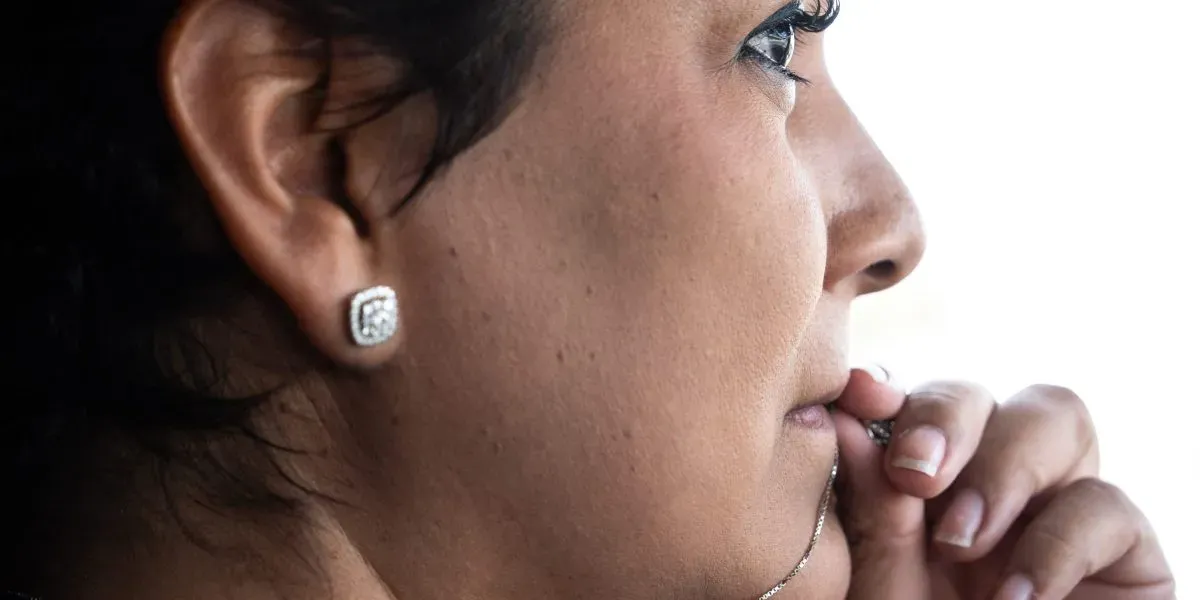
A Houston cancer center's parking lot was filled with cars as Cindy Banda pulled up in her Ford Expedition. She wore bedazzled flip-flops, a stark contrast to the somber atmosphere that greeted her at the hospital. The sound of elevators and muffled conversations created a sense of unease.
Banda had been through a harrowing experience just a year ago when surgeons removed her right breast. Now, she was back for treatment, still unsure whether the cancer has been completely eliminated from her body. Doctors had warned her that beating the disease would be challenging.
As Banda sat in the dimly lit waiting room with a white wristband on her arm, she spoke about her priorities. She's a mother of six and wants to keep providing for her children. Her mantra is simple: "Keep the house. Keep the cars. And just keep the kids stable." The weight of medical bills looms large over her.
Rising healthcare costs are taking a toll on many American families, with half of registered voters identifying them as a major problem. This is up from one-third four years ago, according to recent polls. These concerns are likely to play a significant role in the upcoming midterm elections.
As party control of Congress hangs in the balance, voters are increasingly turning away from President Donald Trump's Republican Party. They're more likely to trust Democrats with handling healthcare issues. This shift is reflected in broader concerns over rising prices and economic stability.
The frustrations of ordinary Americans like Cindy Banda may yet have a profound impact on the midterm elections. With party control at stake, voters will be closely watching how each party handles the pressing issue of healthcare costs.
As she navigated her cancer treatment, Banda's financial struggles became increasingly daunting. Her phone constantly rang with reminders about unpaid bills, including a $1,300 car payment that she desperately needed to address in order to return to work.
Her job selling internet service had been on hold for over a year due to her illness, but she was determined to get back on track to support her three children and the three additional kids she had taken in after her sister's passing. The weight of these responsibilities hung heavily as she juggled her treatment with the demands of being a single mother.
The uncertainty surrounding Banda's reconstruction surgery added another layer of complexity to her situation. Her doctor mentioned that scheduling the procedure earlier than January might be possible if the skin around her surgical scar loosened, but this was far from a guarantee.
Banda's experiences are a stark reminder of the financial burdens that come with cancer treatment in the United States. With healthcare costs exceeding $5 trillion annually, it's not hard to see why many patients struggle to make ends meet while navigating their care.
As she walked back through the rows of parked cars outside her doctor's office, Banda was surrounded by a sea of people dealing with similar struggles. The ebb and flow of life, sickness, and death in this small corner of the healthcare industry is a constant reminder of the human cost behind these staggering statistics.
Two weeks after her appointment, Banda returned to work, determined to make ends meet while she continued her treatment. Walking door-to-door in McAllen, she held blue flyers advertising Spectrum's Wi-Fi services, a small step back towards financial stability in the face of overwhelming medical expenses.
Banda's financial struggles began last October when her income from sales and commissions came to a halt following her diagnosis.
Her cancer treatment has been costly, with expenses piling up despite having insurance through her job. The surgeries, chemotherapy, and radiation have added over $25,000 to her debt, which she is still paying off.
The financial strain is compounded by the daily costs of maintaining a household, including utilities, mortgage payments, car loans, and groceries. Two water leaks in the house are also adding to her expenses, bringing her monthly bills up to around $7,000.
Banda tries to stay positive and avoid dwelling on the stress caused by her medical debt. However, she admits that it can be overwhelming at times, making her wonder if she's worth more to herself dead than alive.
She has made sure to prioritize one financial responsibility - paying life insurance premiums for herself, a lesson learned from her late sister Melissa who didn't have coverage when she passed away.
Banda's financial struggles have been exacerbated by the costs associated with her children. In addition to child support payments, their father contributes $400 a week towards hiring a nanny to care for them. Her own father has also provided significant financial assistance, sending her $700 in advance of a recent medical appointment in Houston.
To make ends meet, Banda has had to rely on the generosity of others. A GoFundMe campaign raised nearly $30,000, and she was able to rent out her late sister's house while putting her own property in forbearance. Furthermore, some of her high school classmates who hadn't been in touch with her for decades organized a fundraiser by selling food from a roadside tent.
The burden of financial insecurity has taken a toll on Banda's well-being. She had to sell internet services to catch up on expenses and even went door-to-door distributing flyers for Spectrum Wi-Fi. Her efforts paid off when she secured her first sale back at work, but the process was exhausting.
After years of identifying as a lifelong Christian, Banda's faith was shaken by her sister's tragic death in 2020. She had voted for Trump in both 2016 and 2020 based on her anti-abortion stance. However, during this time of personal crisis, she began to question her politics.
Banda's decision to vote for a Democrat for the first time has been influenced by her changing circumstances. The chaos of President Biden's tenure, including rising inflation and the lingering effects of the pandemic, made her reconsider her allegiance to Trump in 2024.
Fighting an expensive disease has been a constant battle for Banda, who has found little relief from rising costs despite her best efforts to manage her condition.
A recent visit by James Talarico, a Democrat running for U.S. Senate, had a profound impact on her. He spoke about his own struggles with diabetes and his work in the Texas Statehouse to lower insulin prices, which resonated deeply with Banda.
Talarico's platform stands in stark contrast to that of his Republican opponent, Ken Paxton. While Talarico advocates for universal access to Medicare, Paxton proposes a $25,000 tax deduction for out-of-pocket medical expenses, a solution Banda believes falls short.
Banda's financial struggles have taken a toll on her family, with grocery bills piling up and even the local high school having to cover her children's soccer gear. Her anti-abortion stance has long been a defining characteristic of her voting record, but now she finds herself reevaluating her priorities in light of her dire circumstances.
As Banda navigated the complexities of her new cancer-targeting medication, costing $16,000 per month, reduced to $500 by insurance, she was forced to take a break due to nausea and fatigue. The impact on her business dealings was also felt, with a scheduled meeting at the barbershop being cancelled as a result.
Visiting her family's gravesite became an emotional experience for Melissa Banda as she navigated her complicated feelings about politics.
As she stood in the evening light surrounded by headstones and oak trees, Banda joined her loved ones to replace the flowers at her sister's tomb, a somber reminder of their loss. The family gathered quietly around the open-air mausoleum, with no formal eulogy offered instead letting Fidel Banda's actions speak for themselves as he carefully clipped and arranged the flowers.
Banda's thoughts were elsewhere though, consumed by her own battle against cancer which would be revealed on Election Day when test results showed whether the disease was in remission or had spread to other parts of her body.
Facts based on reporting originally published by Fortune.
You may republish this story, in full or in part, if you credit News Central Site and link to it (licence CC BY 4.0). Photos are not included.