Remote Work Becomes a New Normal for Americans
A recent trend suggests that working from home is becoming increasingly common in the US, with approximately 26% of all workdays now spent at home.
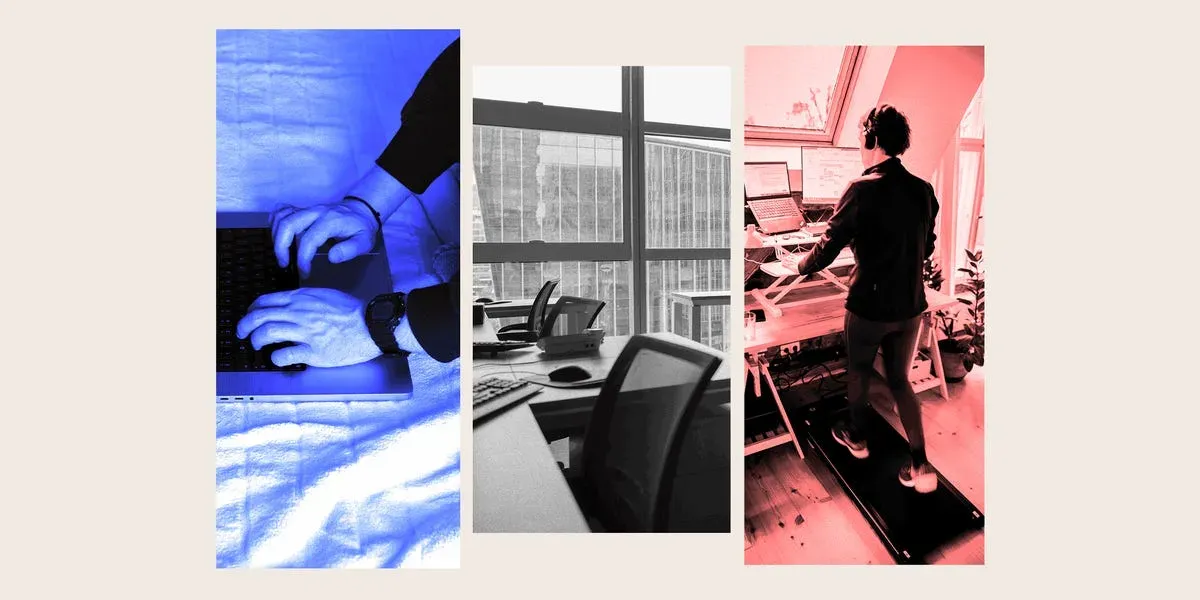
A recent trend suggests that working from home is not going away anytime soon. Despite initial predictions of a return to traditional office settings, numbers indicate that remote work has become a staple of American life. According to data, approximately 26% of all workdays in the US are now spent at home.
This shift towards remote work began during the early months of the pandemic, when 62% of workdays were conducted from home. However, it's worth noting that this figure is still lower than the current trend. In contrast to pre-pandemic levels, where only 7% of workdays were spent working remotely.
The rapid adoption of remote work has been a significant change in the corporate landscape. If the pandemic had not occurred, it's likely that companies would have taken another 40 years to reach this level of remote work. The new normal for white-collar professionals is now one where working from home at least two days a week is considered standard practice.
As remote work continues to shape American life, experts like Nick Bloom are examining the broader implications of this shift. As the world's leading expert on remote work, Bloom has been at the forefront of advising companies on how to adapt their work policies to accommodate remote workers. His research and insights have been shared with major tech companies such as Microsoft, Facebook, Google, and Apple.
Bloom's work highlights the profound impact that remote work is having on society. As more people spend less time commuting and more time working from home, changes are occurring across various aspects of life.
The shift to working from home has brought about significant changes in daily routines and habits. One of the most notable benefits is the substantial time savings for employees. On average, Americans spend around 40 minutes each way commuting, which adds up to a considerable amount of time spent on transportation.
Before venturing out into the world, individuals typically need some extra time to get ready by showering and dressing. However, working from home eliminates this need, allowing people to start their day immediately after waking up. In fact, estimates suggest that it takes only 30 seconds to roll out of bed and open a laptop.
The cumulative effect of these daily savings is substantial. According to one expert's estimates, the typical American worker saves around an hour and a half for every day they work from home. For those in sectors like tech and finance that are particularly conducive to remote work, this time saving averages about 3 hours per week.
People have been using their newfound free time to improve their physical and mental well-being. Many are getting more sleep and exercise, while also cooking at home instead of relying on takeout or dining out. Parents, in particular, are taking advantage of the extra time to spend with their children, which is having a positive impact on family dynamics.
A study in the Netherlands found that when parents were allowed to work from home, their kids performed better on standardized tests used to determine high school track placement. This suggests that remote work can have long-term benefits for families and communities.
The shift to remote work has significantly impacted labor participation rates among people with disabilities. Prior to the pandemic, 77% of Americans without a disability were employed, compared to just 32% of those with a disability.
Many individuals with disabilities faced insurmountable barriers in traditional office settings. For example, those who were blind may have struggled to commute, while others with mobility issues found navigating stairs or long commutes too daunting.
The pandemic's emphasis on remote work has dramatically altered this landscape. According to recent data, over a quarter of a million people with disabilities now hold full-time jobs, many of whom would have been unable to participate in the workforce under traditional office arrangements.
As women also benefited from the flexibility of working from home, they were better able to balance childcare responsibilities without having to sacrifice their careers. This has had a positive ripple effect on the economy as a whole, with estimates suggesting that increased labor participation rates could boost GDP by 1-2%.
Research has shown that individuals who worked remotely at least one day a week between 2023 and 2025 were more likely to have children than those who worked in traditional office settings.
The association between working from home and increased fertility is not limited to just a few statistics, but has been observed across various demographics. According to Bloom's estimates, working from home is linked to a roughly 5% increase in fertility in the US and Northern Europe, which may seem modest but is still significant.
This trend is particularly pronounced among women aged 30 and older with college degrees who already have one child. It suggests that the flexibility offered by remote work arrangements is having a positive impact on family planning decisions. The increased fertility rate is a welcome development in regions struggling with declining birth rates.
The benefits of working from home extend beyond fertility, with improved air quality being another notable advantage. During the early days of lockdowns, urban residents worldwide noticed cleaner skies and better air quality due to reduced traffic congestion. This trend has continued even after workplaces transitioned to hybrid models, with city centers experiencing an 8% decrease in nitrogen dioxide levels by 2025.
This reduction in pollution is estimated to translate into significant health benefits, with between 1,500 and 3,500 fewer deaths per year attributed to lung and heart conditions. However, the shift towards remote work has also had a profound impact on city centers, leading to budget shortfalls and vacant office spaces.
The pandemic-induced shift to remote work has significantly altered the way businesses operate, and one of its unintended consequences is the reduced revenue generated by public transit systems.
BART, which connects San Francisco to surrounding areas, is a prime example of this issue, as it now relies on fares and parking for only 23% of its operating costs, down from around 70%.
To mitigate these budget shortfalls, Bay Area residents will soon vote on a ballot measure that would increase the sales tax to support public transit systems.
This proposal comes at a time when cities are grappling with the economic implications of widespread remote work and reduced office occupancy rates.
The shift to remote work has made it easier for employees to use AI tools in their daily tasks, such as recording meetings and sending around transcribed notes.
This change is largely due to the increased adoption of video conferencing platforms like Zoom during the pandemic, which have made it simple to record and share audio recordings.
As a result, many white-collar workers view remote work as a positive development, but they are also concerned about its impact on job security, particularly in fully remote back-office jobs that can be easily automated with AI.
These concerns highlight the mixed bag of consequences that comes with accelerating AI's spread in the corporate workplace.
Facts based on reporting originally published by Business Insider.
You may republish this story, in full or in part, if you credit News Central Site and link to it (licence CC BY 4.0). Photos are not included.