Parkinson's disease linked to impaired brain waste drainage
A new study suggests that Parkinson's disease is driven by a complex interplay between protein accumulation and impaired drainage of brain waste, which exacerbates the condition over time.
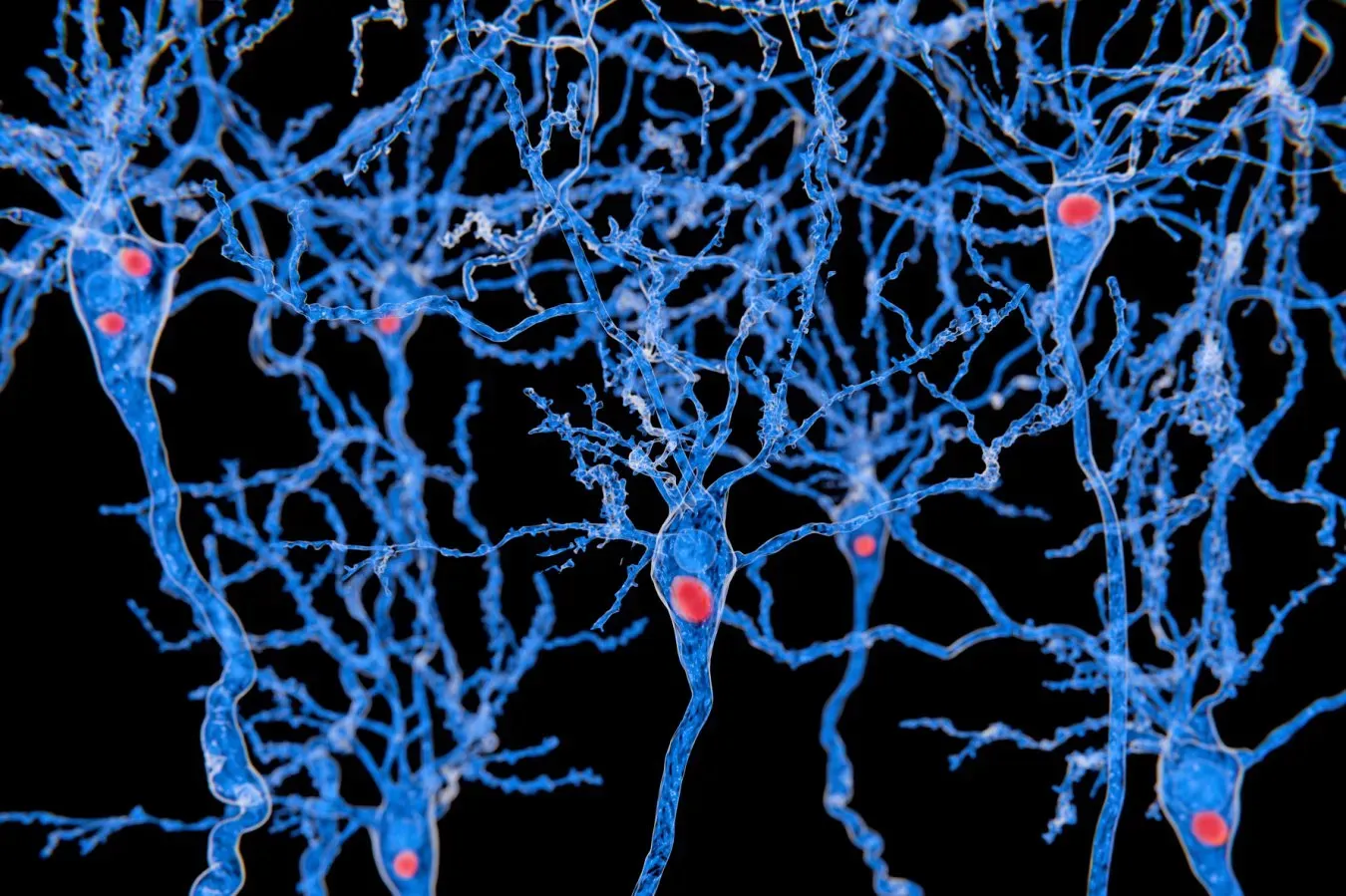
Parkinson's disease is a debilitating condition that affects millions worldwide, causing tremors and muscle stiffness as neurons in key brain regions deteriorate.
Researchers have long suspected that the build-up of a misfolded protein called alpha-synuclein plays a central role in Parkinson's disease, but new evidence suggests this process may be driven by a complex interplay between protein accumulation and impaired drainage of brain waste.
The lymphatic vessels responsible for removing waste from the brain are thought to become inflamed in people with Parkinson's disease, which could hinder their ability to clear alpha-synuclein aggregates that form inside nerve cells.
This disruption may create a self-reinforcing cycle where damaged lymphatic vessels allow more alpha-synuclein to accumulate, further impairing drainage and exacerbating the condition.
Experts warn that this "vicious cycle" may help explain why Parkinson's disease is a progressive condition that worsens over time.
The glymphatic system is responsible for draining waste from the brain to other parts of the body for disposal. This process involves vessels that receive waste from surrounding channels and transport it away from the brain. However, research has shown that people with Parkinson's disease have impaired lymphatic function in their brains.
Experts had previously identified alpha-synuclein as a key protein involved in Parkinson's disease, but its role in disrupting brain waste drainage was unclear. To investigate this, researchers analyzed post-mortem samples of meninges from individuals with severe Parkinson's disease and those without the condition. The team found that only the Parkinson's samples contained clumps of alpha-synuclein.
These findings suggested that alpha-synuclein accumulation at the brain's borders may be a key factor in impaired lymphatic function in Parkinson's disease. To test this hypothesis, researchers infected mice with a virus that caused their meningeal cells to produce high levels of alpha-synuclein. This led to the formation of toxic clumps of protein in the lymphatic vessels.
The researchers observed that these mice had significantly reduced drainage of waste fluid from their brains compared to control mice. The impaired clearance of brain waste was linked to the accumulation of alpha-synuclein clumps in the meningeal lymphatic vessels, but not within the brain itself.
The study's findings provide new insights into the mechanisms underlying Parkinson's disease and suggest that targeting alpha-synuclein may be a potential therapeutic strategy. However, more research is needed to fully understand the relationship between alpha-synuclein accumulation and impaired lymphatic function in Parkinson's disease.
Research into Parkinson's disease has revealed a possible explanation for why the condition progresses and worsens over time. In one group of mice, immune cells called macrophages were found to engulf alpha-synuclein clumps at the brain's borders.
This caused a significant increase in the number of macrophages and their production of TNF-alpha, an inflammatory molecule that plays a key role in immune responses. The presence of these molecules had a profound impact on the surrounding tissue.
Experiments with human cells found in meningeal lymphatic vessels showed that both alpha-synuclein and TNF-alpha caused gaps to form between the cells, making them leaky according to researchers. This suggests that the accumulation of alpha-synuclein can drive an immune response that disrupts the brain's waste drainage system.
This vicious cycle may be a key factor in the worsening of Parkinson's symptoms and brain damage, say experts. The same mechanism could also apply to other neurodegenerative conditions such as Alzheimer's disease, where proteins accumulate in the brain.
Therapies targeting the immune response that drives this cycle may offer new hope for treating Parkinson's. Researchers are now planning further experiments to study the progression of the condition and test potential treatments.
Researchers are now planning further experiments to study the progression of the condition and test potential treatments. To gain a deeper understanding of how alpha-synuclein affects brain waste drainage in Parkinson's patients, the team is collecting more samples from individuals who have died with varying levels of severity.
These additional samples will enable the researchers to determine the frequency at which alpha-synuclein clogs up the brain's borders and when it may start causing lymphatic impairment. This information will be crucial for developing effective treatments that target this specific mechanism.
The team is also testing whether drugs that block TNF-alpha can reverse lymphatic damage in both mouse and human cells. A previous study found that people with inflammatory bowel disease, a condition linked to an increased risk of Parkinson's, were 78 per cent less likely to develop the disease when taking these types of medications.
The results from this ongoing work are expected to provide valuable evidence supporting the researchers' findings, which could lead to new avenues for treating Parkinson's disease.
Facts based on reporting originally published by New Scientist.
You may republish this story, in full or in part, if you credit News Central Site and link to it (licence CC BY 4.0). Photos are not included.