North Korea Closes Diplomatic Office in Pyongyang and Expels Head
North Korea has taken a bold move in its foreign policy by shutting down a recently opened diplomatic office in Pyongyang and expelling its head, a decision that signals a more assertive approach to international relations.

North Korea has taken a bold move in its foreign policy, shutting down a recently opened diplomatic office in Pyongyang and expelling its head, a decision that signals a more assertive approach to international relations.
The closure of the Swiss office is seen as a potential risk for North Korea, which could lose access to alternative diplomatic partners from Europe. The move comes after Switzerland imposed sanctions on a youth camp allegedly involved in the transfer of children from Russian-occupied areas of Ukraine, an action that drew the ire of North Korean leader Kim Jong Un.
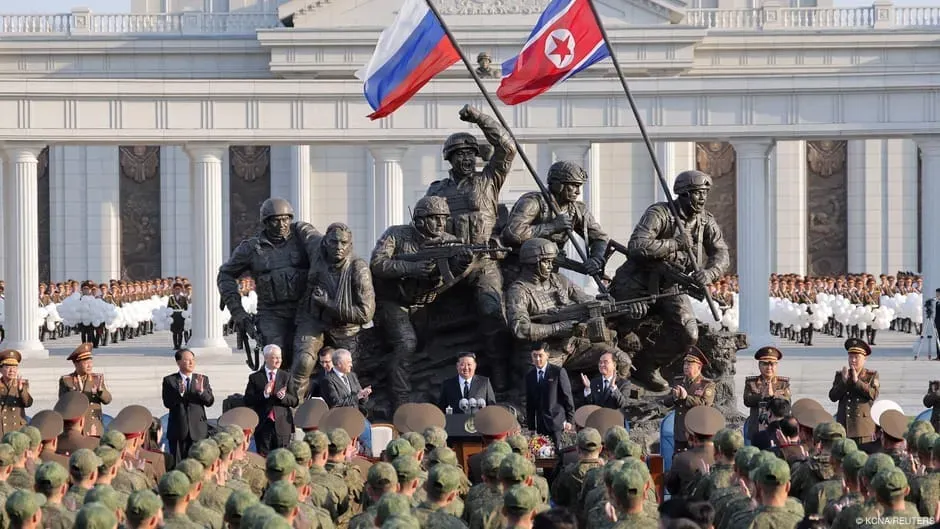
Just days before this tense development, Kim had welcomed 10 newly appointed ambassadors, including envoys from Russia and Sweden, marking a rare moment of diplomatic optimism during his 15-year rule. In a ceremony attended by these new ambassadors, Kim defended his country's nuclear arms buildup and called for the world to respect North Korea's sovereignty.
The closure of the Swiss office also highlights a perceived rift between North Korea and its would-be allies on issues like sanctions and diplomacy. Pyongyang has accused Switzerland of failing to meet its obligations in this regard, particularly by sanctioning the youth camp over its alleged involvement in the transfer of Ukrainian children.
North Korean authorities have taken swift action against Switzerland's diplomatic presence in Pyongyang. The head of the Swiss office, Sylvain Astier, was summoned to a meeting at the Foreign Ministry and informed that he is persona non grata.
A formal notice was handed to Astier demanding that the Swiss office be closed and that he leave the country within 48 hours. This move has left Switzerland's diplomatic relations with North Korea in limbo. The Federal Department of Foreign Affairs has expressed regret over the decision.
Despite the closure of its diplomatic office, Switzerland intends to maintain diplomatic ties through other channels. The Swiss embassy in Beijing will continue to serve as a point of contact for both countries. In addition, the North Korean embassy in Bern will remain open and facilitate communication between the two nations.
The North's actions are seen as a response to the imposition of sanctions on its Songdowon International Children's Camp by Switzerland earlier this month. The camp was added to the list due to its alleged involvement in the transfer of Ukrainian children, who were allegedly sent there for reeducation with pro-Russian propaganda.
Kim Yo Jong, the powerful sister of Kim Jong Un, has publicly condemned Switzerland's decision to impose sanctions on the camp. She views it as an "open hostile act" that violates North Korea's sovereignty. However, she did not directly address the allegations surrounding the Ukrainian children.
The closure of the Swiss office marks a significant escalation in tensions between the two countries, which have been strained due to their differing stances on Russia's invasion of Ukraine.
The decision by North Korea to shut down its diplomatic office in Switzerland marks a significant escalation in tensions between the two countries. This move comes after Switzerland sanctioned the Songdowon camp, which has likely caused offense among Pyongyang's leadership. The closure of the Swiss office sends a clear message that North Korea will not tolerate any actions it considers hostile.
Switzerland has maintained a unique relationship with North Korea, one that dates back to 1974 when diplomatic relations were established. Unlike many other Western countries, Switzerland has continued to engage in talks with Pyongyang and even operated a humanitarian-focused cooperation office in the country's capital. However, this cooperation was put on hold during the COVID-19 pandemic.
The decision by North Korea to downsize its diplomatic presence in Switzerland may be seen as a response to past experiences. Koh Yu-hwan, former president of South Korea’s Institute of National Unification, suggests that Kim Jong Un and his sister's time at Swiss schools in the 1990s could have created a deep sense of loyalty towards the country.
However, it seems North Korea is sending a more ominous message, warning countries not to expand sanctions or pursue policies it considers hostile. This move puts pressure on its remaining Western contacts, including Sweden, which may feel compelled to re-evaluate their relationships with Pyongyang.
The international community has been divided in its response to North Korea's actions. While Russia and China have blocked efforts to tighten U.N. sanctions over the country's nuclear and missile programs, the United States and its allies have imposed their own sanctions on illicit activities used by Pyongyang to fund its weapons programs. These include information-technology worker fraud and cryptocurrency theft.
The recent alignment of North Korea with Russia has given Kim Jong Un significant diplomatic clout on the global stage. This partnership has provided North Korea with economic benefits and strengthened cooperation with China, its primary trade partner. As a result, Kim's regime is now willing to assert its dominance over other countries.
North Korea's decision to shut down its Swiss diplomatic office just weeks after it opened sends a clear message: that Pyongyang will only engage in diplomacy from a position of strength. This move aims to deter other states from forming close ties with North Korea unless they are prepared to accept its terms. By doing so, Kim's regime wants to demonstrate its resolve.
However, some experts warn that this strategy carries risks for North Korea. Moon Seong Mook, an analyst at the Seoul-based Korea Research Institute for National Strategy, believes that while Kim may win favor with Russia, this move could further isolate his country from the international community. This isolation could have long-term consequences for North Korea's relations with Europe.
The North Korean regime's increasing reliance on China has also raised concerns among experts. With over 98% of its external trade tied to China in 2025, North Korea is vulnerable to economic shifts and potential disruptions in its relationship with Beijing. Furthermore, Park Won Gon, a professor at Ewha University, notes that the move will reinforce European countries' perception that North Korea cannot be trusted.
Kim's insistence on not engaging in talks with the United States unless Washington drops its demand for denuclearization has been unwavering. Meanwhile, his advancing nuclear arsenal and deepened cooperation with Russia have bolstered his international standing. The implications of this move will continue to unfold as the situation develops further.
North Korea's decision to close its Swiss diplomatic office appears to be part of a broader strategy to deal directly with Washington, rather than relying on intermediaries. This shift in approach is likely driven by Pyongyang's growing confidence in its nuclear capabilities and its desire to assert its status as a global power.
The implications of this move will continue to unfold as the situation develops further. European countries like Switzerland are no longer seen as necessary or valuable partners for North Korea, which now views itself on an equal footing with the United States.
Facts based on reporting originally published by ABC News International.
You may republish this story, in full or in part, if you credit News Central Site and link to it (licence CC BY 4.0). Photos are not included.