Hooved Mammals Face Higher Extinction Risk When Migrating
A study has found that over the past 100,000 years, hooved mammals that migrate have faced a higher risk of extinction compared to those that remain stationary. The research, conducted by...
A study has found that over the past 100,000 years, hooved mammals that migrate have faced a higher risk of extinction compared to those that remain stationary. The research, conducted by Joel Abraham and his team at Princeton University, reveals a concerning trend in the vulnerability of migratory species.
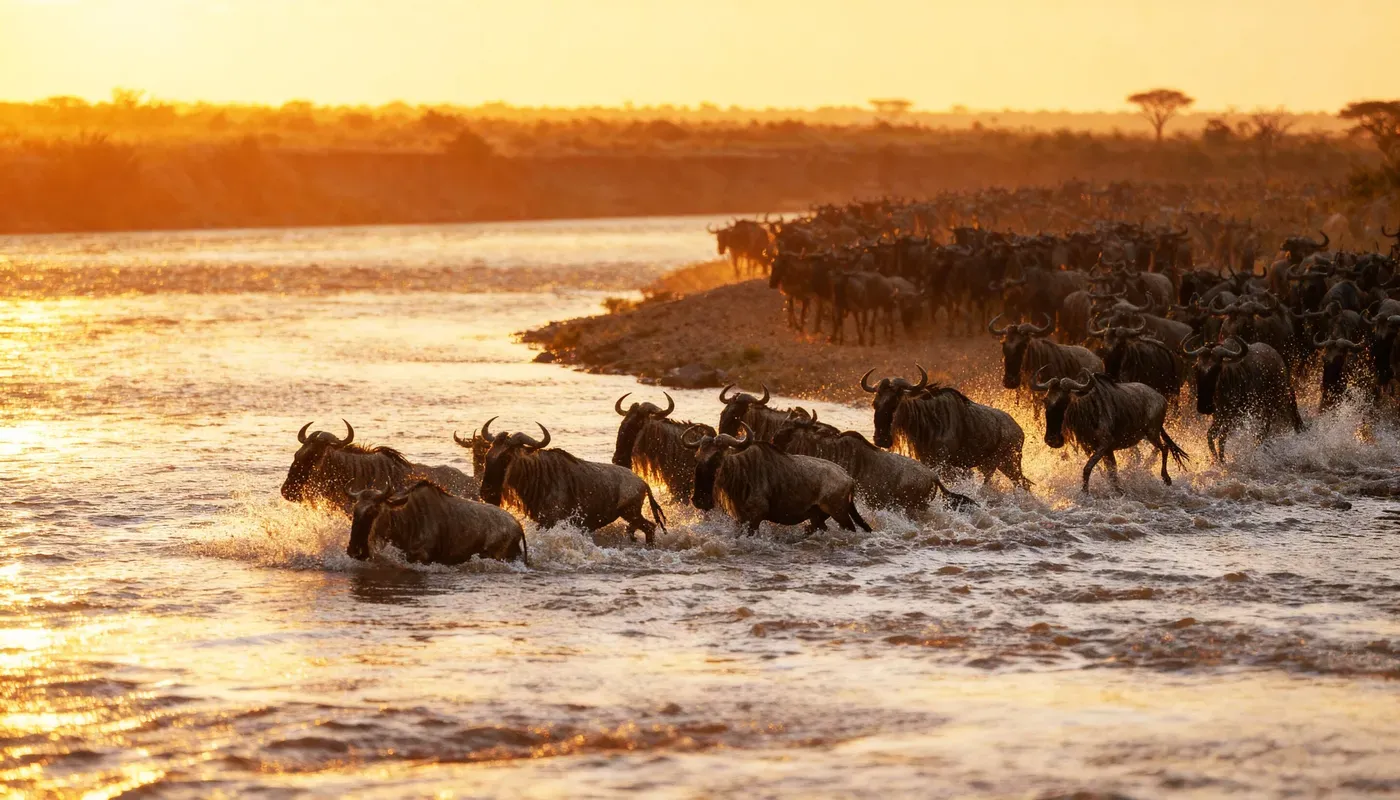
Animal migrations are one of nature's most awe-inspiring displays, but human activities have disrupted many of these natural movements by constructing roads and fences or altering resource availability due to climate change. As a result, numerous migratory species have experienced declining populations or even extinction in recent years.
The study suggests that the vulnerability of migratory species to extinction may not be a new phenomenon. In fact, the success of migration as a strategy relies on animals' ability to accurately predict the timing and location of essential resources like food and water, making them susceptible to environmental changes.
To investigate the vulnerability of migratory ungulates to extinction, researchers analyzed fossil evidence and data from modern-day species to infer the migratory behavior of 51 ungulates that went extinct over the past 100,000 years. This comprehensive approach provided valuable insights into the complex relationships between migration patterns and extinction risk.
The findings of this study have significant implications for conservation efforts, highlighting the need to protect not only individual species but also their migratory routes and habitats in order to prevent further extinctions.
A closer examination of historical records reveals that 80% of ungulates that went extinct in recent geological epochs were migratory species. In contrast, only about half of modern ungulate populations migrate, suggesting a potentially greater risk of extinction for those that do move.
However, statistical analysis suggests that new migratory species have emerged more frequently over time. Researchers found that, on average, 2.8 new species evolved in lineages of migratory ungulates every million years, compared to around 1.7 new species in non-migratory lineages.
The team also investigated whether the extinction of migratory ungulates resulted in any significant loss of functional diversity within ecosystems. In Africa, they found that extinctions of these animals led to a decline of about 2.7% in functional diversity, although this effect was relatively minimal at a global level.
Despite the apparent risks associated with migration, researchers note that it can also be a costly and challenging strategy for species survival. As such, conservation efforts may need to prioritize migratory species, which are facing increasing pressures from human activities like urbanization, hunting, and climate change.
The study's findings highlight the importance of considering not just individual species but also their migratory patterns and habitats in conservation efforts. This will be crucial in preventing further extinctions and maintaining ecosystem balance.
The study suggests that hooved mammals that migrate may be more vulnerable to extinction than those that remain in one place.
This conclusion is based on two key findings: first, researchers analyzed the migratory habits of many extinct ungulates and discovered that they were significantly more likely to be migratory animals compared to their present-day counterparts. This implies that migration might play a role in increasing the risk of extinction for these species.
The second piece of evidence supports this notion, revealing that migration is associated with higher rates of extinction among ungulates. Furthermore, researchers found that migratory behavior is linked to elevated speciation rates within the group, a pattern previously observed in birds but also applicable to ungulates.
This relationship between migration and increased extinction risk highlights the need for conservation efforts to take into account the unique challenges faced by migratory species, particularly in light of human activities altering ecosystems worldwide.
Facts based on reporting originally published by Phys.org.
You may republish this story, in full or in part, if you credit News Central Site and link to it (licence CC BY 4.0). Photos are not included.