New sauropodomorph dinosaur species found in Zimbabwe
Researchers have identified a new dinosaur species, Musango matusadonaensis, found near the Nyamasango River in Zimbabwe.
In a significant discovery that sheds new light on the diversity of African dinosaurs, researchers have identified a new species found in Zimbabwe. The find is particularly intriguing as it highlights the unique characteristics of these prehistoric creatures in comparison to those discovered in neighboring South Africa.
Africa's rich biodiversity has long been recognized, with up to 25% of the world's animal and plant species calling the continent home. This remarkable diversity can be attributed to a range of habitats that exist across its vast territories, from scorching deserts to lush coastlines and teeming seas. Furthermore, many animal and plant groups have their origins in Africa, tracing back millions of years.
The study of African dinosaurs has been ongoing for nearly two centuries, with paleontologists excavating fossils from various parts of the continent. While the discovery of hominid fossils has garnered significant attention, revealing insights into human ancestry, other spectacular finds include those of familiar extinct animals, including dinosaurs.
Zimbabwe itself has a long history of dinosaur fossil discoveries, dating back to 1916 when the first reports emerged. With its own rich trove of fossil beds waiting to be explored, Zimbabwe is an integral part of the African dinosaur puzzle.
As researchers delve into the new species found in Zimbabwe, they are gaining valuable insights into the early stages of dinosaur evolution. A specialist in early dinosaurs who has worked extensively on similar material from China and Africa is among those studying the find, hoping to uncover more about these fascinating creatures.
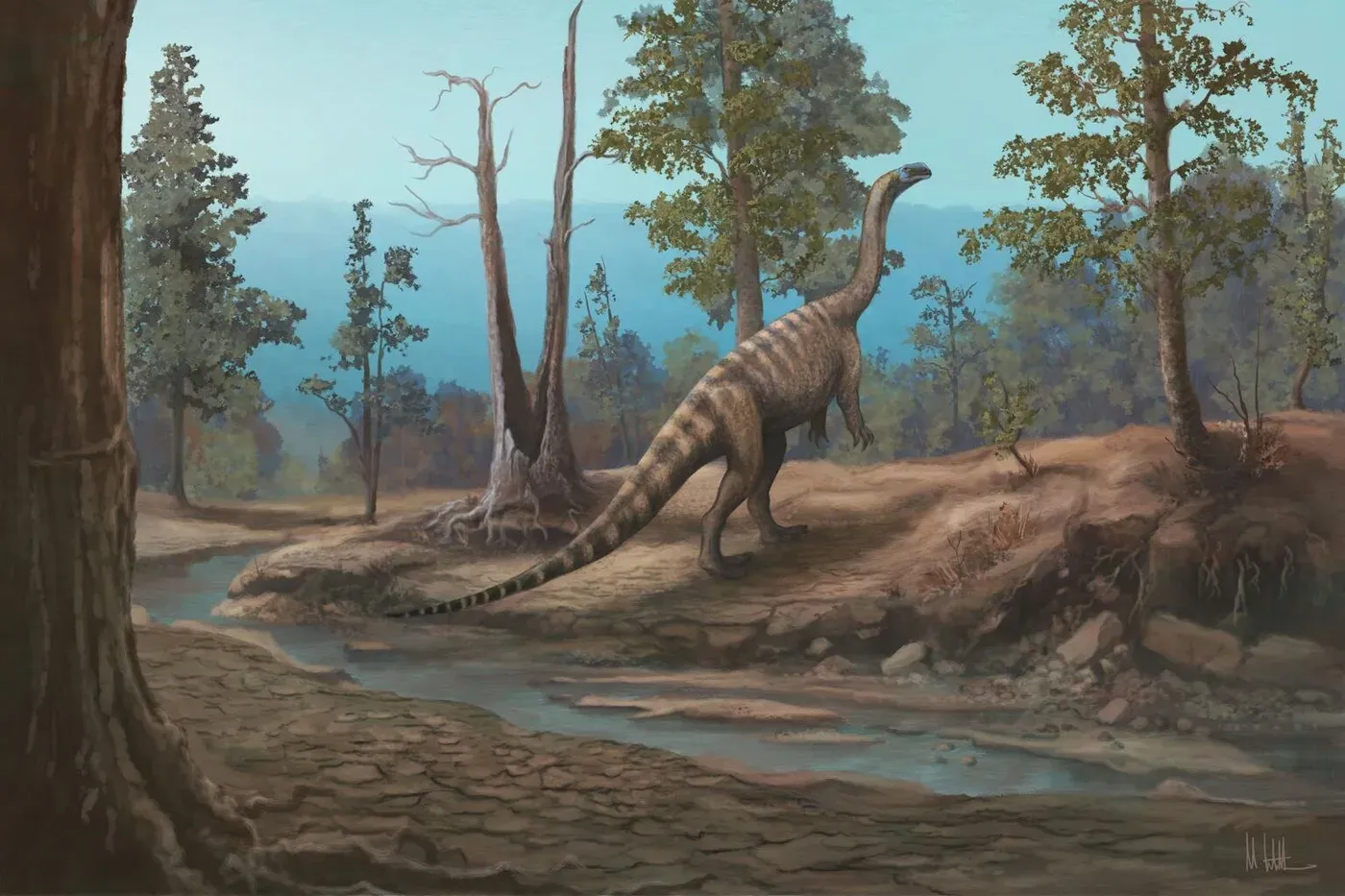
The discovery of a new sauropodomorph dinosaur in Zimbabwe has shed light on the unique characteristics of dinosaurs found in the region. Musango matusadonaensis is a bipedal dinosaur that measured around 4.5 meters in length and weighed approximately 220 kilograms.
Its incomplete skeleton was unearthed near the Nyamasango River, close to Musango Island, which is reflected in its scientific name. The fossil remains indicate that Musango was still growing when it died, with growth marks visible on its bones suggesting a subadult status at the time of death.
Unfortunately, the skull of Musango matusadonaensis did not survive, making it difficult to determine its diet. However, based on the characteristics of its close relatives, it is likely that Musango was a herbivore, feeding on plants rather than meat.
The discovery of Musango highlights the distinctiveness of Zimbabwe's dinosaurs compared to those found in South Africa. While early fossil finds in Zimbabwe were initially overlooked by scientists, pioneering work in the 1970s by local paleontologists Geoffrey Bond and Michael Raath helped bring attention to the region's rich fossil record.
Most of the fossils discovered by Bond and Raath were identified as belonging to species already known from neighboring South Africa. However, with the discovery of Musango matusadonaensis, it is clear that Zimbabwean dinosaurs have their own unique characteristics and may be influenced by environmental conditions in the region.
After a few decades of stagnation in paleontological work in Zimbabwe, a group of dedicated fossil hunters continued to search for new discoveries. Their efforts eventually paid off when Steve Edwards, a local safari camp manager, identified promising sites on the shore of Lake Kariba.
These sites, situated deep within Matusadona National Park, presented a logistical challenge due to their remote location. However, an innovative solution was found in utilizing a houseboat as a mobile laboratory and hotel, enabling researchers to prospect the shoreline with greater ease.
The team, led by Jonah Choiniere from the University of the Witwatersrand in Johannesburg, embarked on two expeditions to Lake Kariba's shoreline in 2017 and 2018. During these trips, they collected valuable material from brick-red mudstones and sandstones deposited around 210 million years ago during the Late Triassic period.
The geological evidence suggests that the ancient landscape surrounding Lake Kariba was characterized by dry conditions with stands of large conifer trees. Green corridors of vegetation were found to follow permanent watercourses, providing a glimpse into the region's past ecosystem.
Plant fossils and geological data from the sites have been extensively cleaned and studied since the expeditions. This meticulous work is crucial in piecing together the history of Zimbabwe's dinosaurs and understanding their unique characteristics in comparison to those found in other regions.
The research team has made a significant discovery about the unique characteristics of dinosaurs found in Zimbabwe. The country's Late Triassic dinosaurs are unlike those discovered in South Africa, despite the two regions being geographically close and sharing similar ages.
One of the most striking aspects of this finding is that the sauropodomorphs found in Zimbabwe do not resemble their counterparts in South Africa. In fact, they appear to be distinct species altogether, setting them apart from their southern neighbors.
The team has also uncovered a diverse range of fossil animals in Zimbabwe, including lungfish and phytosaurs, which are rare or absent in South African sites. This suggests that the region's unique climate may have played a significant role in shaping its dinosaur population.
Further investigation into the historical dinosaur collections in Bulawayo has revealed that many fossils cannot be assigned to known South African species, challenging earlier assumptions about the region's paleontological heritage.
The study of Zimbabwe's dinosaur fossils has revealed that they differ significantly from those found in South Africa, prompting researchers to propose new species classifications.
Further analysis of the rock formations where these dinosaurs were discovered will help determine their exact age and environmental conditions, allowing for more precise comparisons with other sites around the world.
Facts based on reporting originally published by Phys.org.
You may republish this story, in full or in part, if you credit News Central Site and link to it (licence CC BY 4.0). Photos are not included.