Aspens Remember Past Droughts Through Changes in Leaf Chemistry
A three-year experiment found that quaking aspen trees exposed to drought conditions had higher levels of salicinoid phenolic glycosides in their leaves.
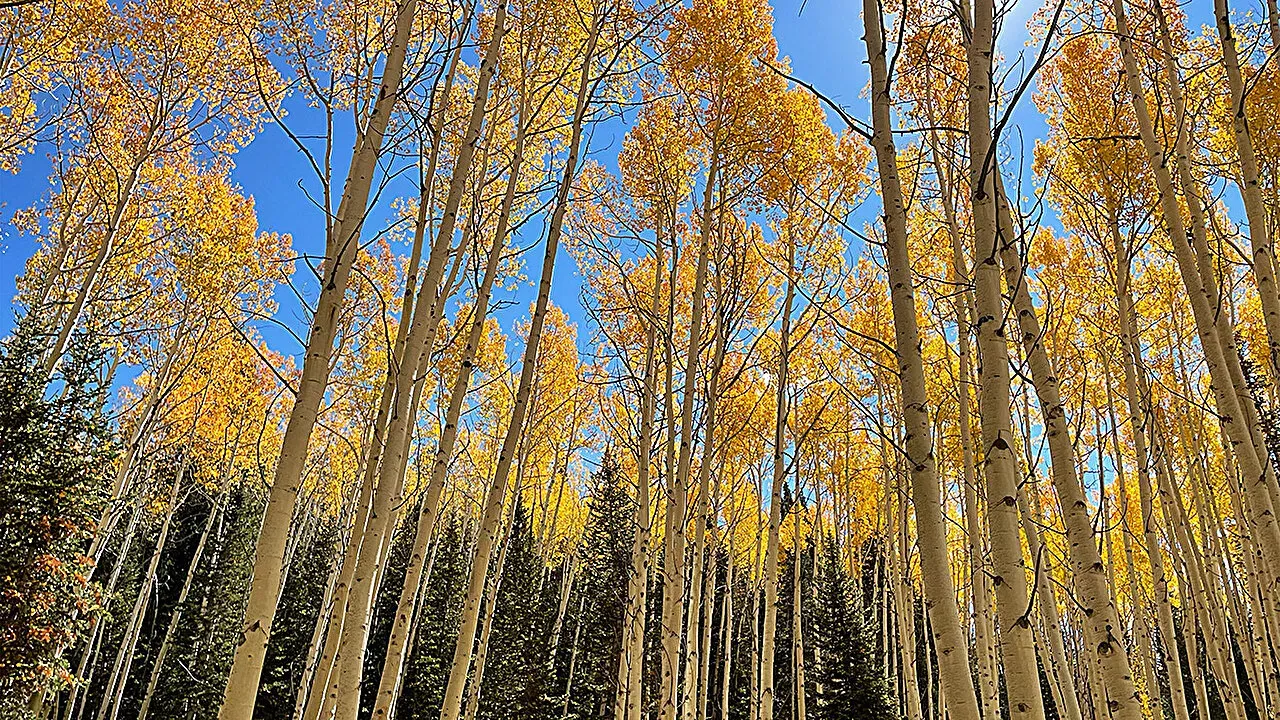
Researchers at the University of Utah have made a remarkable discovery about how aspen trees respond to drought conditions. They found that aspens "remember past droughts in their leaves, not just in the form of narrow bands in their annual growth rings, but also through changes in the chemistry of their leaves.
In a three-year experiment, biologists created a controlled environment where quaking aspen trees were subjected to artificially induced drought conditions. The researchers monitored how this affected the chemical defenses in the new leaves produced by the trees and found a significant correlation between drought history and leaf chemistry.
The study revealed that aspens exposed to drought conditions had higher levels of salicinoid phenolic glycosides in their leaves, which are chemicals known to deter herbivores. According to Talia Karasov, an assistant professor of biology and co-author of the study, this is a key finding that highlights the trees' ability to adapt to past environmental stressors.
Quaking aspen is a dominant deciduous tree species in the Mountain West region, including Utah, where it has been declining due to various factors such as insect infestations, pathogens, fire suppression, and overgrazing by livestock. The trees grow in clonal stands with genetically identical individuals, making them unique in their ecosystem.
The researchers' findings have significant implications for our understanding of how aspens respond to drought conditions and how this knowledge can be used to inform conservation efforts. Further research will be needed to fully explore the potential applications of this discovery, but it is clear that aspen trees possess a remarkable ability to remember" past environmental stressors.
The complex relationship between aspen trees and their environment has long been a subject of study for scientists seeking to understand the causes of decline in western forests.
Researchers have been trying to grasp how drought affects not just the immediate health of aspen trees but also their long-term interactions with other organisms in their ecosystem. This involves looking beyond the short-term effects of drought to consider its lasting impact on tree chemistry and behavior.
To gain a deeper understanding, the team examined whether past water limitations leave behind any chemical signatures in aspen leaves that could influence how these trees interact with herbivores and fungi that inhabit them.
The researchers found that levels of condensed tannins, which help protect against microbial threats, decreased significantly in drought-exposed aspens. This unexpected change raised questions about the role of drought in shaping tree defenses.
Further investigation into this phenomenon revealed a complex interplay between drought stress and leaf chemistry, with potential implications for how trees adapt to dry conditions.
The study's findings suggest that drought can have long-lasting effects on aspens, influencing their recovery and vulnerability to pests and pathogens in subsequent growing seasons.
Researchers believe that defenses against pests and pathogens are crucial for aspen survival during both droughts and normal conditions, emphasizing the importance of understanding how drought affects defense production in these trees.
The common garden model used by the researchers brings together plants from geographically diverse populations, allowing them to study their behavior under shared conditions. This model was employed at the University's Biology Research Experimental Garden, near Red Butte Canyon, where the aspen research took place.
In 2021, a team established an experimental aspen plot at this site, planting rootstock gathered from mountainous regions in five national forests across Utah and Colorado. The original sites were situated approximately 9,000 feet above sea level on south-facing slopes.
The research team led by Anderegg has published additional studies on aspen drought response based on data collected at the research garden.
To investigate how aspen trees respond to varying levels of drought, the team manipulated water availability for the trees from 2021 through 2023 and harvested leaves in late August.
Leaves were subjected to chemical analysis to determine levels of phenolic glycosides, compounds that accumulate in aspen leaves as defense mechanisms against insects and disease-causing microbes.
The increased production of phenolic glycosides was linked with reduced canopy damage, while other changes in leaf chemistry corresponded to shifts in the fungi inhabiting the leaves.
The researchers found that aspen trees did not sacrifice their growth to produce more phenolic glycosides, a type of chemical defense compound. This suggests that the increased investment in these compounds is a strategic decision made by the trees.
This adaptation allows the trees to better protect themselves from environmental stressors and pathogens. The study's findings provide new insights into how aspen trees respond to drought conditions and interact with microorganisms on their leaves. The results highlight the complex mechanisms underlying plant memory and defense strategies.
Facts based on reporting originally published by Phys.org.
You may republish this story, in full or in part, if you credit News Central Site and link to it (licence CC BY 4.0). Photos are not included.