P-8 Poseidon aircraft face challenges in detecting submarines during NATO exercises
The Royal Air Force pilots rely on advanced sensors and sonobuoys to detect submarines, but harsh weather conditions can complicate these missions.
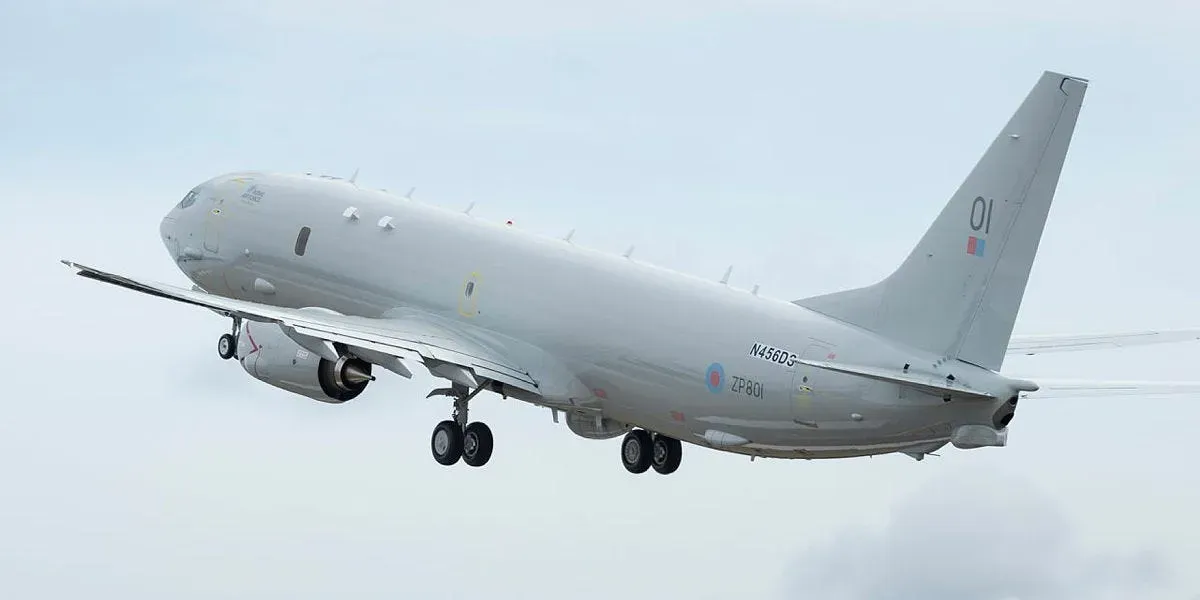
A challenging task lies ahead for Royal Air Force pilots when their hours-long mission to hunt a submarine finally comes to an end.
The P-8 Poseidon aircraft relies on advanced sensors and sonobuoys to detect submarines lurking beneath the surface of the sea during NATO exercises like Dynamic Merlin, which simulates real-world anti-submarine warfare scenarios.
Those who have flown with RAF P-8 crews know that the hunt for a submarine can be an arduous task, requiring multiple flights per week at low altitudes just a few hundred feet above the water's surface. The pressure is on to locate and track the target before it disappears.
Rough weather in the Baltic Sea area and northern Scotland, particularly during winter months, can significantly complicate these missions as well as the return journey to RAF Lossiemouth base.
Weather conditions in the Baltic Sea area can be particularly challenging for P-8 Poseidon missions, forcing aircraft to navigate through rough seas and strong winds during winter months.
The Poseidon's capabilities are impressive, equipped with advanced radar, cameras, electronic support equipment, and acoustic sensors that allow it to track submarines effectively. However, even this robust technology is not immune to the effects of harsh weather.
Low-altitude flying is essential for releasing sonobuoys, which rely on being close to the surface to detect noise or emit sound waves that bounce back off targets. The aircraft can carry up to 129 of these devices.
Flying at such low altitudes exposes the crew to turbulence and icing conditions, which can significantly impact their comfort and ability to perform tasks during a long mission.
The P-8 Poseidon aircraft is designed for sub-hunting missions, but bad weather can make these flights even more challenging. Turbulence, wind, and rough seas can complicate an already demanding task of locating a submarine that's expertly hidden beneath the waves.
A recent flight was described as one of the busiest sorties by crew members, with a complex weather forecast involving wind, storms, and high sea states. This required extra planning before takeoff, which added to the mission's complexity. The crew had to depart from Lossiemouth using a shorter runway, limiting their fuel capacity.
As a result, they were forced to stop in Sweden for refueling en route to the exercise. P-8 flights are already physically and mentally demanding on crew members due to long hours and intense focus required during the mission. Even landing back at base can be a challenging part of the day for these pilots.
The 10-hour flight time was taxing on the crew, adding to their physical and mental exhaustion. The days are indeed long for P-8 pilots, who liken their work to a marathon rather than a sprint.
The demands of P-8 Poseidon sub-hunting missions extend far beyond the hours spent searching for a target. The final approach to base can be just as taxing as the initial hunt, requiring pilots to remain focused and alert.
According to Group Capt Kevin Latchman, deputy assistant chief of staff in No 11 Group, which oversees RAF global air operations, the last five minutes of the flight can be equally crucial as the search itself. "So they are very challenging missions," he added, highlighting the complexity of these operations.
The relentless pace of P-8 Poseidon sub-hunting missions makes them a marathon rather than a sprint, testing the endurance and concentration of pilots to the limit.
Facts based on reporting originally published by Business Insider.
You may republish this story, in full or in part, if you credit News Central Site and link to it (licence CC BY 4.0). Photos are not included.