New howler monkey species identified in Amazon rainforest
Scientists have discovered two previously unknown species of howler monkey in the Amazon rainforest through genetic analysis and physical characteristics.
Two previously unknown species of howler monkey have been identified in the Amazon rainforest by scientists conducting a recent study.
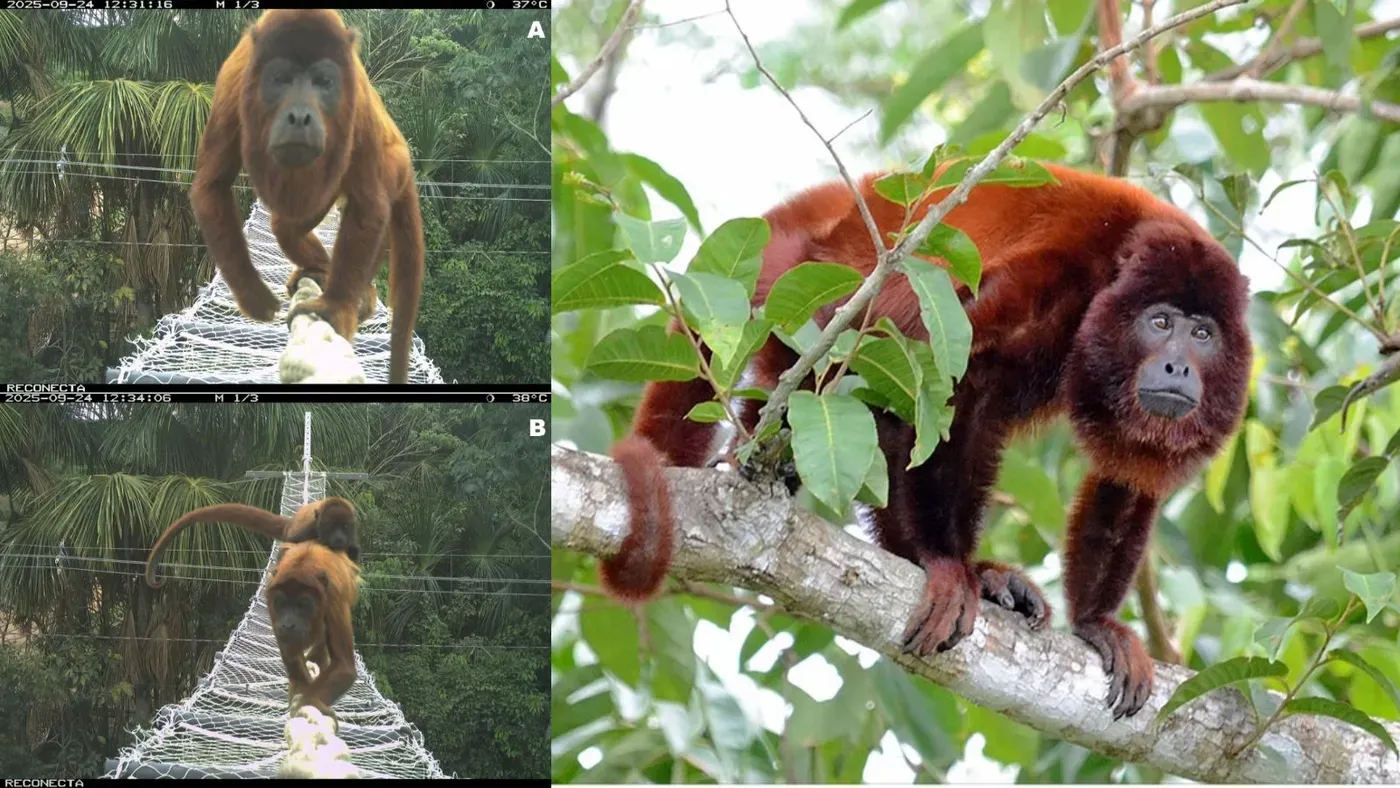
The discovery is significant as it could alter our understanding of the evolutionary relationships within this primate group. The new species were found to possess distinct physical characteristics, including bushy beards and vibrant red fur.
The findings bring the total number of known howler monkey species to 16, according to researchers who announced their discovery in a statement.
Genetic analysis of 11 howler monkey species has provided new insights into their evolution and diversification in South and Central America. Researchers combined existing DNA datasets with fresh genomic information from Brazilian zoological collections to gain a deeper understanding of these primates' history.
The study's findings suggest that the process of speciation, or the formation of new species, was more complex than previously believed. For instance, the Tapajós red-handed howler and the Amazonian black howler are not as closely related as scientists had thought, according to the researchers.
Photographs taken in Guiana have captured one of the newly discovered species, Alouatta iroi , which joins a growing list of known howler monkey species.
The newly discovered howler monkey species have been found to be vulnerable due to their limited habitats and low population numbers. According to conservationists, these species are already at risk of extinction.
The Amazon River's waterways have played a significant role in the evolution of these distinct species, as natural barriers like the Xingu and Branco rivers separated groups of howler monkeys. As a result, different traits developed over time due to the isolation. This phenomenon is consistent with the emergence of new species in the Amazon region.
Facts based on reporting originally published by Live Science.
You may republish this story, in full or in part, if you credit News Central Site and link to it (licence CC BY 4.0). Photos are not included.