Neanderthals Among Us: The Making of a Prehistoric Human
Historian Peter Sahlins examines the complex relationship between modern humans and Neanderthals through the lens of cultural and political ideologies.
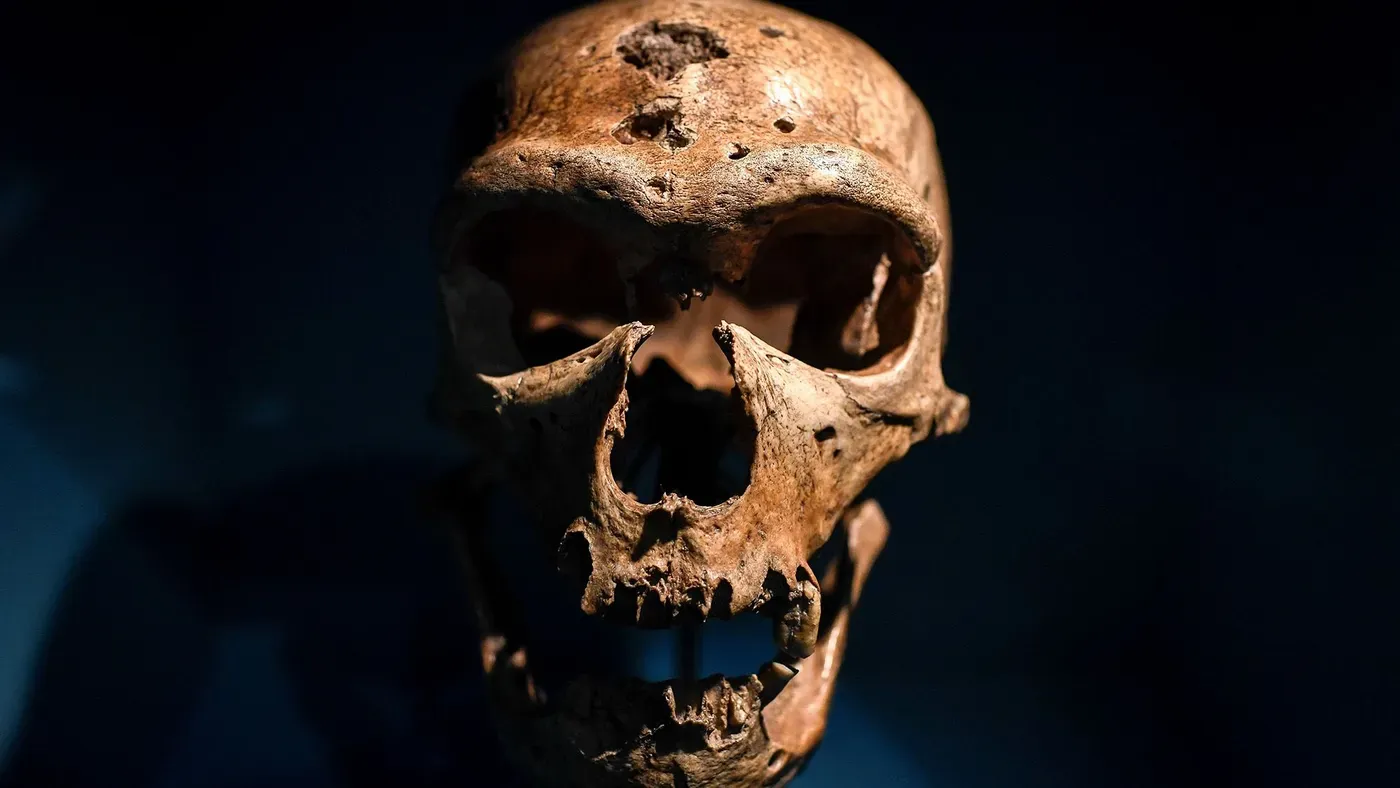
The discovery of Neanderthal remains in the 19th century sparked widespread fascination among scientists and the general public. However, our understanding of these ancient hominins has undergone a significant transformation since then, yet our perception of them has remained entrenched in our own species' view.
Historian Peter Sahlins examines this complex relationship between modern humans and Neanderthals in his book "Neanderthals Among Us: The Making of a Prehistoric Human." Through the lens of cultural and political ideologies, we have viewed this lost human lineage.
A wide range of theories attempt to explain why Neanderthals went extinct, from violent extermination to peaceful absorption through cultural exchange. Just as we've projected our concerns about race and gender onto Neanderthals, so too do contemporary challenges shape how we imagine their extinction.
This phenomenon is not unique to the scientific community; newspapers often translate complex science into easily relatable headlines that reflect contemporary anxieties. For instance, a 2011 Glasgow Herald article claimed that "Europe's earliest residents may have been crowded out by uncontrolled immigration 40,000 years ago," linking Neanderthal extinction to issues of immigration.
The article in question was based on a study by Cambridge archaeologist Paul Mellars, which found a notable increase in population size during the Upper Palaeolithic. News reports like this one demonstrate how scientific findings can be distorted or exaggerated to fit contemporary narratives.
This tendency for news outlets to shape science into relatable stories is not limited to Neanderthal extinction; it's a broader phenomenon that reflects the deep-seated anxieties and concerns of modern society.
The pathogen thesis has gained significant traction in recent years, particularly during and after the COVID-19 pandemic. This theory suggests that Sapiens-borne pathogens were transmitted to a Neanderthal population without immunity, leading to their demise.
A study published in 2024 confirmed widespread speculation on this matter by analyzing a 50,000-year-old case of herpes in a sequenced viral genome. The research found evidence supporting the idea that Neanderthals were vulnerable to diseases brought over from Homo sapiens.
Jonathan Kennedy's book "Pathogenesis (Crown, 2023) offers an alternative perspective on the matter. He argues that Homo sapiens would have been less susceptible to Neanderthal diseases due to their larger numbers and more evolved immune systems, which they developed in their tropical environment before migrating to other parts of the world.
Over the past two decades, researchers have increasingly pointed to climate change as a key factor in the extinction of Neanderthals. This idea builds upon the concept of catastrophism, first proposed by French geologist Georges Cuvier. According to this theory, species die off due to cataclysmic geological events like earthquakes and volcanic eruptions.
The Campanian Ignimbrite eruption near Naples (Italy) is a significant example of this phenomenon, dated to around 39,280 BP (+/- 110 years). The massive release of magma from this event may have had a devastating impact on Neanderthal populations. In contrast, arriving Homo sapiens were less affected by the disaster.
The lineages that directly descend from Neanderthals are now largely extinct, but their genetic legacy lives on in modern humans. While most people share small parts of the Neanderthal genome, the majority of our DNA comes from our Neolithic ancestors who settled in Europe long after the Ice Age. This suggests that waves of Homo sapiens arrived later, potentially replacing or displacing the remaining Neanderthals.
Scientists have suggested that climate change played a significant role in the extinction of Neanderthals during the Upper Pleistocene era. This theory was proposed by an international team of researchers who spent over seven years studying the phenomenon. Their findings indicated a period of extreme climatic fluctuations that lasted for six centuries, starting around 41,000 years ago.
This climatic instability led to a severe cooling event, which in turn reduced vegetation and herbivore food sources. As a result, Neanderthals were forced to migrate towards warmer climates, including southern Spain, in search of sustenance. Clive Finlayson, an expert in ecological modeling, was among the first scientists to propose this theory, suggesting that the last Neanderthal may have survived as late as 29,000 years ago at Gibraltar.
However, other researchers have proposed alternative locations for the final Neanderthal stronghold. For example, a skeleton found in Zafarraya, Granada, has been dated to around 30,000 years ago, while some scientists argue that Mezmaiskaya Caves in the Caucasus may also be home to one of the last Neanderthals.
The idea of a mini-Ice Age has been widely discussed among scientists, with many seeking to understand its timing, magnitude, and ecological impact. This prehistoric event is often seen as a counterpart to modern-day global warming, highlighting the complex relationships between climate change and human evolution.
Researchers have also used this period of climatic instability in their fiction and nonfiction accounts of Neanderthal history. For example, authors such as Claire Cameron and Ludovic Slimak have written about the final days of the Neanderthals, often using these events to explore themes of survival and adaptation in the face of environmental change.
The recent shift in scientific thinking about Neanderthal extinction has led some experts to reevaluate their ability to adapt to changing environments.
Some researchers now argue that climate change was not solely responsible for the demise of Neanderthals, as previously thought. This departure from earlier theories is due in part to the growing recognition of Neanderthals' complex and equal status as a human species.
Neanderthals' origins date back to a warm interglacial period, which challenges the notion that they were well-suited to cold climates. Their inability to develop advanced technologies for making clothing may also have contributed to their vulnerability in harsh environments.
However, some experts attribute Neanderthal extinction not to environmental factors but rather to their supposed lack of innovation and technological progress. This view posits that humans' ability to adapt and innovate allowed them to thrive while the more conservative Neanderthals struggled to keep pace.
The emphasis on human innovation as a key factor in success is closely tied to contemporary ideologies of neoliberalism and late-stage capitalism. This perspective reinforces the notion that those who are able to adapt and innovate will ultimately prevail, while those who cling to traditional ways will be left behind.
This idea of Neanderthal conservatism has its roots in 19th-century anthropological judgments about primitive peoples. Archaeologists such as Augustus Pitt Rivers described indigenous cultures as being characterized by a persistent conservatism, with a strong emphasis on adhering to the wisdom of their ancestors.
The discovery of Neanderthals has been a fascinating yet complex phenomenon that has contributed to our understanding of human history. Initially, they were perceived as being inferior to modern humans, often depicted as ugly, stupid, and hairy in early accounts.
Their image underwent significant changes over time, with science and popular culture progressing at different paces. As new discoveries emerged, Neanderthals gradually gained more respect, but their rehabilitation was not without its challenges. The process of reevaluating their significance was marked by inconsistencies and contradictions.
The concept of Neanderthal Man has been a subject of ongoing debate and fascination. It has served as a mirror to our own anxieties about human uniqueness and difference. The perception of Neanderthals has been shaped by societal attitudes towards race, gender, and the human form.
Historian Peter Sahlins offers an in-depth examination of this phenomenon in his book Neanderthals Among Us". By exploring the intersections of science, culture, and history, he sheds light on how our understanding of Neanderthals has been influenced by contemporary anxieties.
The rehabilitation of Neanderthals' image was a gradual process that spanned centuries. As new evidence emerged, their reputation evolved from being seen as inferior to being recognized as a distinct human species. This transformation reflects the changing attitudes towards human diversity and the complexity of human evolution.
Peter Sahlins brings his expertise in early modern French and European history to bear on this subject matter. His interdisciplinary approach provides a nuanced understanding of how our perception of Neanderthals has been shaped by various factors, including cultural and scientific developments.
The study of Neanderthal extinction has often been used as a lens through which to examine human evolution and our place in the natural world. However, researchers suggest that this narrative is not entirely objective, but rather reflects contemporary anxieties and societal concerns.
Neanderthals have long been seen as a symbol of our own mortality and vulnerability, with their extinction serving as a cautionary tale about the fragility of human existence. By examining how our perception of Neanderthals has evolved over time, researchers can gain insight into the cultural and scientific factors that shape our understanding of the past.
The study highlights how news reports and media coverage have contributed to this narrative, often emphasizing the more sensational aspects of Neanderthal behavior to capture modern audiences' attention. This selective presentation of facts has led to a distorted view of Neanderthals as brutish and inferior, rather than complex and resourceful individuals who adapted to their environment in remarkable ways.
Ultimately, the study underscores the importance of critically evaluating how our understanding of historical events is shaped by contemporary societal concerns and cultural values.
Facts based on reporting originally published by Live Science.
You may republish this story, in full or in part, if you credit News Central Site and link to it (licence CC BY 4.0). Photos are not included.