Artemis II Mission Crew Observes Vibrant Colors on Moon's Surface
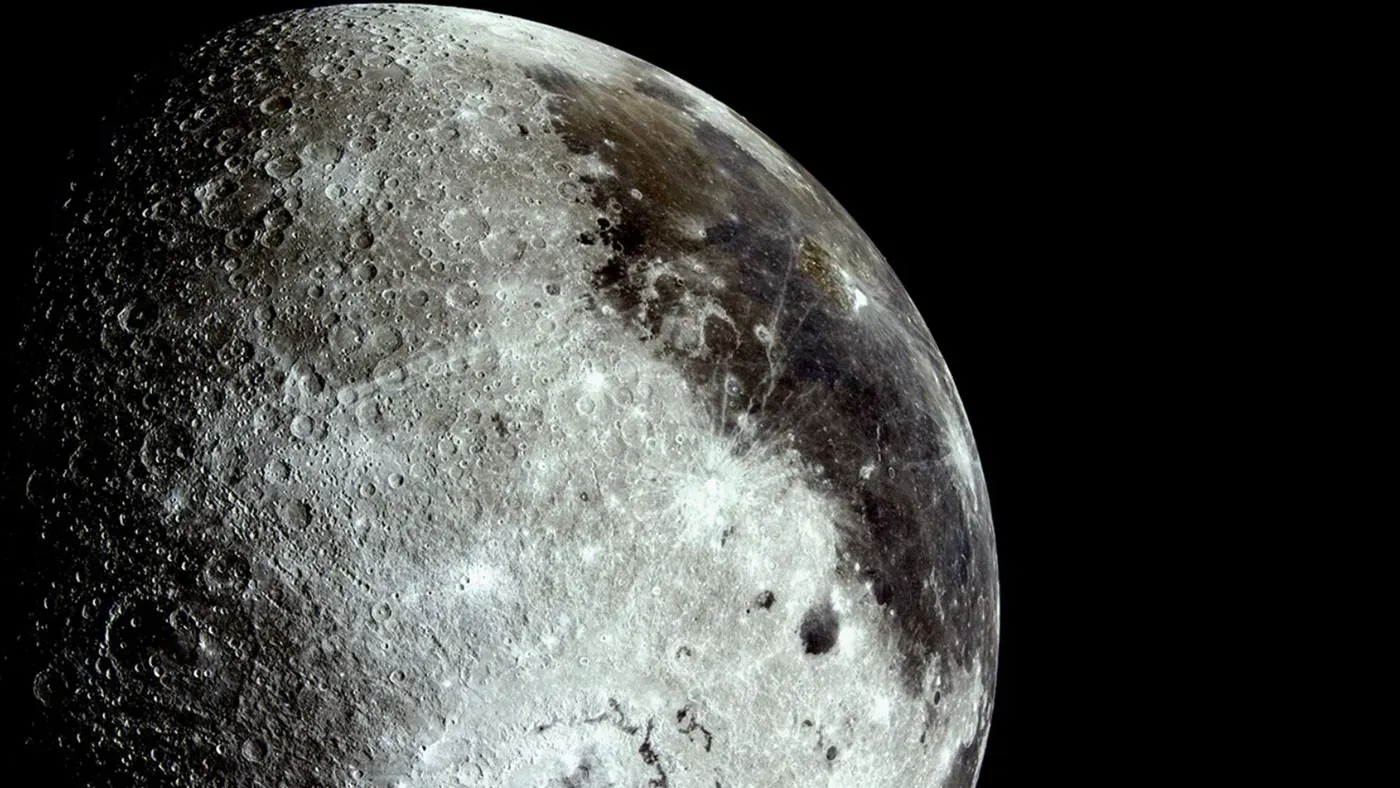
The Artemis II mission crew witnessed a range of colors during their close flyby of the moon in April, including yellow, brown, green, blue, and tan hues.
NASA has released a report detailing the observations of its Artemis II mission crew during their historic close flyby of the moon in April.
The four-person crew spent nearly seven hours circling the moon from just 4,000 miles away and witnessed a range of colors that are not typically associated with the lunar surface. The Aristarchus Plateau on the moon's near side was particularly notable for its vibrant display of yellow, brown, green, blue, and tan hues.
The crew's observations were documented in NASA's Artemis II Preliminary Lunar Science Report, which provides a comprehensive overview of their experiences during the mission. The report includes photos, videos, and audio recordings taken from the Orion crew capsule and totals over 814 gigabytes of data.
According to the report, the colors observed by the crew are indicative of distinct geological features on the lunar surface. These findings could have significant implications for future missions to the moon as space agencies seek to establish a permanent presence on the lunar surface.
The Artemis II mission marked an important milestone in NASA's efforts to return humans to the moon and lay the groundwork for further exploration of our celestial neighbor.
The Artemis II mission has provided a wealth of new information about the lunar surface, including some surprising sights that have left astronauts and scientists alike in awe.
One region that has particularly caught the eye is the Aristarchus Plateau, located on the northwestern edge of the moon's nearside. This broad, elevated area is home to some of the most extensive collections of ancient volcanic features on the moon, including dark lava deposits and colorful volcanic glasses.
The plateau's unique appearance was a source of fascination for the astronauts, with one mission specialist describing it as resembling "a yellow snow-capped mountain". The bright colors are thought to be caused by sunlight reflecting off craters in the region, creating an otherworldly landscape that is unlike anything seen before on the moon.
As the astronauts continued to explore the lunar surface, they were struck by the sheer variety of colors present. In addition to the yellow shades seen at Aristarchus Plateau, there are also green and brown hues visible across the region. One astronaut described seeing these colors as "a jaundiced cheek of the Moon", highlighting the remarkable diversity of the lunar landscape.
The colorful volcanic glasses found on the moon are thought to be similar in composition to those collected by previous Apollo missions. These glasses are rich in titanium and magnesium, which give them their distinctive orange and green hues. The presence of these glasses is a significant discovery, providing valuable insights into the moon's geological history.
Another notable feature that caught the astronauts' attention was the Orientale Basin, a massive impact crater located on the near side of the moon. This vast, multiringed crater stretches across three times the width of Massachusetts and dominates the lunar landscape as seen from orbit.
The Artemis II mission crew's observations of the lunar surface have provided a wealth of scientific information that would be difficult to replicate with autonomous cameras or orbiters.
As they flew over the vast, multiringed crater, the crew noted a range of colors on the surface below, including gray, brown, tan, and green hues. The largest ring in this massive basin contained what one astronaut described as "almost swamp-like colors, while another spotted what looked like dusted peaks and white ridges.
The crew's observations were not just limited to visual descriptions - they also noted the texture and topography of the lunar surface. They compared the chains of craters parading away from the impact site to bubbles rising from a team of scuba divers below, highlighting the complex geological processes that have shaped this region over time.
The crew's ability to make these observations was due in large part to their extensive training, which included visiting craters on Earth and studying geology in classrooms. They also brought reference materials into the Orion capsule to read during the mission, allowing them to draw on a wealth of knowledge as they observed the lunar surface.
As a result of their efforts, the Artemis II crew's observations have provided a unique perspective on the moon's geology that would be difficult for autonomous cameras or orbiters to replicate.
The Artemis II mission has provided a unique perspective on the moon's geology, with observations that would be challenging for autonomous cameras or orbiters to replicate. The crew witnessed unusual swamp-like colors" on the lunar surface, which have been documented in a recent NASA report.
According to NASA data, these peculiar color patterns are likely caused by the way sunlight interacts with the moon's regolith, creating an otherworldly appearance. This phenomenon is not entirely unexpected, but its extent and distribution across the moon's surface were previously unknown.
The Artemis II mission has greatly expanded our understanding of the moon's geological features, offering a fresh perspective on this familiar celestial body that will inform future lunar exploration efforts.
Facts based on reporting originally published by Live Science.
You may republish this story, in full or in part, if you credit News Central Site and link to it (licence CC BY 4.0). Photos are not included.