Navy SEAL Training Progresses Two Female Candidates Further Than Before
Two women have made history by progressing further than any previous female candidates in the grueling process of becoming Navy SEALs.
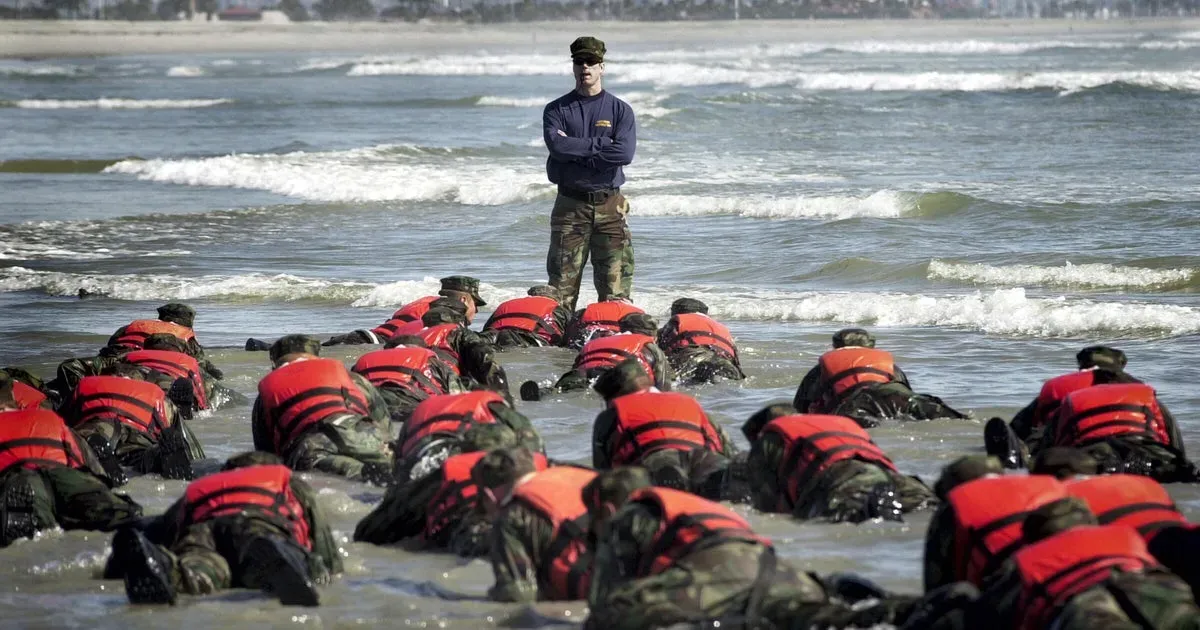
Two women have made history as they progressed further than any previous female candidates in the grueling process of becoming Navy SEALs. According to sources close to the matter, both women entered Basic Underwater Demolition/SEAL training at Naval Amphibious Base Coronado in California several weeks ago.
This rigorous training program, known as BUD/S, pushes candidates to their limits through a series of physically and mentally demanding challenges. The enlisted sailor and naval officer had reached the third week of training before facing the next hurdle: Hell Week, an infamous 5 1/2-day endurance test that starts in the fourth week.
The two women's progress was significant, as only a small percentage of candidates manage to make it this far. To put their achievement into perspective, nearly half of all candidates are either removed or rolled back to the next class during training prior to Hell Week, with around 45% being culled from the program between 1998 and 2023.
The officer was eventually rolled back to the next class, while the enlisted sailor was medically pulled from Hell Week. Despite not completing the course, their success is a testament to their perseverance and determination in pursuing one of the most challenging and elite military careers available.
While the women's identities are being withheld for security and privacy reasons, their achievement marks a milestone in the history of women attempting to become Navy SEALs. Since special operations opened its doors to women in 2016, no female candidate has made it as far as these two individuals did in the training program.
The grueling Hell Week is a pivotal part of the initial training process for Navy SEAL candidates, pushing them to their physical and mental limits. This six-month training program is designed to exhaust every aspect of a candidate's being, testing their endurance, strength, and strategic thinking.
Over the course of five days, trainees receive only about four hours of sleep, during which they are tasked with completing physically demanding activities such as carrying heavy logs, launching boats into crashing waves, lying in icy ocean water, and running extensive distances. This relentless pace is meant to break down even the most resilient candidates, identifying those who truly possess the mental toughness required for special operations.
The history of women's participation in combat roles is a complex one, with significant milestones achieved over the years. The Gulf War marked a turning point, prompting Congress to repeal the 1991 combat aviation exclusion that had previously barred women from serving in combat aviation roles.
However, it wasn't until nearly two decades later that Defense Secretary Leon Panetta rescinded the 1994 policy, removing restrictions on women's participation in ground combat units below the brigade level. This move paved the way for women to attempt selection and training for elite special operations units like Navy SEALs, a prospect previously considered off-limits.
Since opening its doors to female candidates in 2016, thousands of women have attempted to qualify for infantry, armor, and artillery units, with some successfully completing rigorous selection and training programs.
The rigorous selection process for Navy SEALs has proven to be a formidable challenge for even the most determined candidates. According to data from 1998 to 2023, approximately 68% of applicants were eliminated at various stages of training, highlighting the extreme physical and mental demands of the program.
Of those who initially made it through to the first phase, nearly two-thirds, 66%, failed to complete the grueling seven-week period that includes Hell Week. The weeks leading up to this intense phase also saw significant attrition, with about 45% of candidates dropping out or withdrawing voluntarily before reaching Hell Week.
The numbers suggest that once a candidate reaches Hell Week, they are more likely to persevere and finish it. Around 21% of those who made it this far either chose to leave or encountered medical or performance issues that forced them to withdraw. However, attrition rates declined significantly in later training stages, with only 5% dropping out during the second phase and 3% during the third phase.
The final hurdle before being assigned to a SEAL team is the six-month SEAL Qualification Training course, which has an extremely low dropout rate of under 1%. The success of this rigorous program can be seen in the achievements of women who have made it through the pipeline, including the first woman to graduate as a Special Warfare Combat Crewman in 2021.
The rigorous selection process for Navy SEALs is notoriously challenging, with a mere 35% of candidates making it to graduation.
SWCCs, or Special Warfare Combatant-Craft Crewmen, are highly trained maritime operators who specialize in operating high-speed boats that transport Navy SEALs into and out of hostile territory. Their training involves a range of skills, including operating complex machinery and conducting combat missions at sea.
In addition to their specialized role, SWCCs are part of Naval Special Warfare Command, which oversees all special operations forces within the Navy. This command structure allows for seamless integration with other units, such as Navy SEAL teams.
While women have made strides in other special operation training pipelines, they face significant barriers in these fields. For example, only a handful of women have completed the training to join special operation jobs in the Air Force, despite 54 attempts by women to enter this pipeline.
The Army's Special Forces Qualification Course has also seen limited success for women, with fewer than a dozen joining the elite 75th Ranger Regiment.
The rigorous selection process for the 75th Ranger Regiment is notorious for pushing even the most seasoned soldiers to their limits. For women attempting to join this elite group, the challenges are particularly daunting. Among those who have persevered is Hailey Gibbons, a West Point graduate who successfully completed Ranger School in 2021.
Gibbons' experience as a logistician in the 75th Ranger Regiment has given her a unique perspective on what it takes to be part of this team. She notes that every member of the regiment, regardless of their role, is considered a Ranger due to the specialized nature of their work. This understanding likely influenced Gibbons' decision to pursue a position within the regiment.
The road to joining the 75th Ranger Regiment is long and arduous for any candidate, but women face additional obstacles in their pursuit of special operations roles. Despite progress in recent years, there remains resistance from some within the military community towards women serving in combat positions.
Defense Secretary Pete Hegseth has been a vocal critic of women's inclusion in ground combat and special operations roles. In a podcast interview prior to his nomination, he expressed concerns that women's participation could compromise military effectiveness and physical standards. His comments were made during an exchange with Shawn Ryan, a former Navy SEAL.
The scrutiny faced by the two women attempting to join the 75th Ranger Regiment extends beyond internal debates about women's roles in combat. Social media has seen criticism from some former SEALs and military-focused accounts, further underscoring the challenges they face as trailblazers in this field.
The Pentagon has recently commissioned a study to evaluate the performance of women in ground combat roles within the military. This move comes as two female candidates have made history by advancing further than any other woman in Navy SEAL tryouts.
A senior official has confirmed that the standards for special operations remain unchanged, despite claims suggesting otherwise. The official stated that no brigade commander would approve lowering standards to accommodate women in their units, as it would undermine trust and authority within the team. This clarification underscores the ongoing challenges faced by women breaking into previously male-dominated fields.
Facts based on reporting originally published by CBS News Politics.
You may republish this story, in full or in part, if you credit News Central Site and link to it (licence CC BY 4.0). Photos are not included.