President Trump Faces Lame-Duck Period After Democratic Midterm Victories
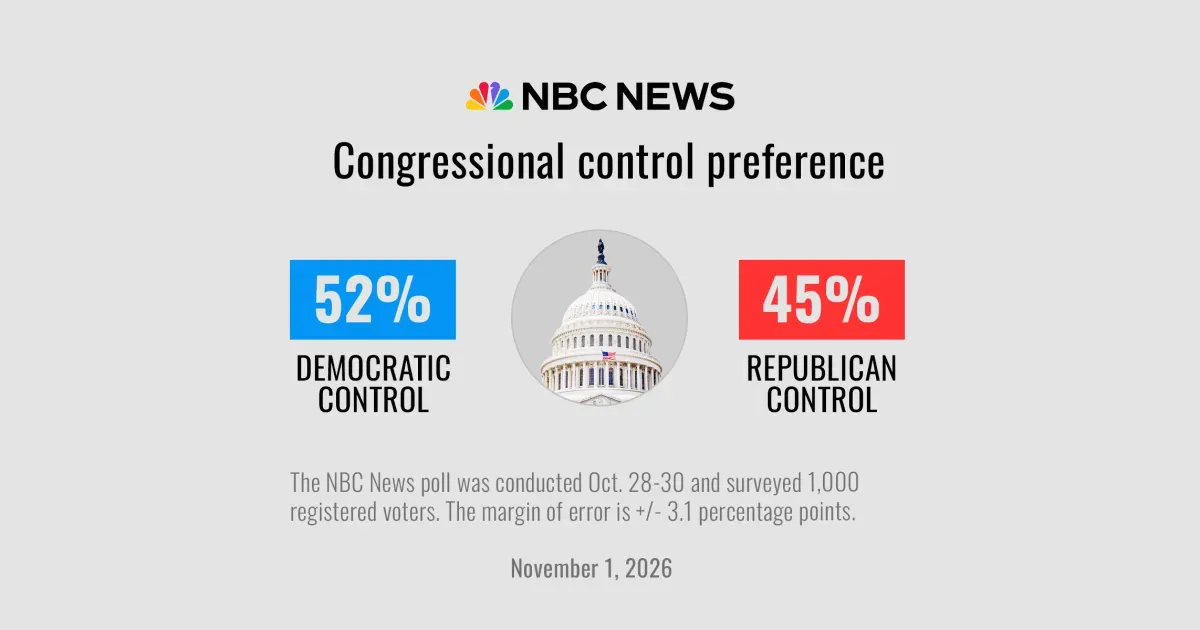
A resounding rebuke of President Trump and his party in the midterm elections has awarded Democrats significant victories that have dramatically altered the balance of power in Washington.
Voters across the United States delivered a resounding rebuke of President Trump and his party in the midterm elections, awarding Democrats significant victories that have dramatically altered the balance of power in Washington.
The election outcome has left President Trump facing a lame-duck period in his second term, during which he has pledged to wield his veto power while also attempting to work with Democrats who now hold majorities in both chambers of Congress.
This shift in legislative control is particularly notable given that it represents one of the largest Democratic majorities in decades. The party's gains are a testament to their ability to mobilize voters and capitalize on widespread discontent with the current administration.
The implications of this development will be far-reaching, setting the stage for a period of intense policy negotiations between Democrats and a president who has thus far shown little inclination to compromise.
The Democratic Party's resounding victories in the midterm elections have set the stage for a significant shift in power in Washington. With control of both houses of Congress now within their grasp, Democrats are poised to implement their policy agenda and challenge President Donald Trump's administration.
Senator Chuck Schumer was quick to capitalize on the momentum, stating that the American people had effectively dismantled the "red brick wall of Republican resistance. Meanwhile, Senator Jon Ossoff echoed this sentiment, suggesting that the sweeping victories were a rebuke of Trump's presidency and the policies that have driven up prices for voters.
In an unusual departure from his typically defiant tone, President Trump acknowledged the impact of rising costs on voter sentiment in his first comments since the elections. He attributed his party's losses to price concerns rather than any perceived shortcomings in foreign policy, a subtle concession that may signal a shift in Republican strategy going forward.
The president also took a moment to promote his ongoing ballroom construction project, highlighting an unusual aspect of his post-election priorities.
The midterm elections have left a lasting impact on American politics, with Democrats sweeping both chambers of Congress in a historic rebuke to President Trump's party.
The consequences of this shift are far-reaching, with Republicans facing severe losses across the country. The extent of these losses is being described as an extinction-level event by some analysts, marking one of the most significant setbacks for the GOP in nearly a century.
In Texas, Democrats achieved a particularly notable victory, winning both the Senate and governor's seats for the first time in nearly 40 years. This outcome was largely attributed to the popularity of Democratic candidates who ran on a platform of unity and inclusivity, as opposed to divisive rhetoric often employed by their Republican counterparts.
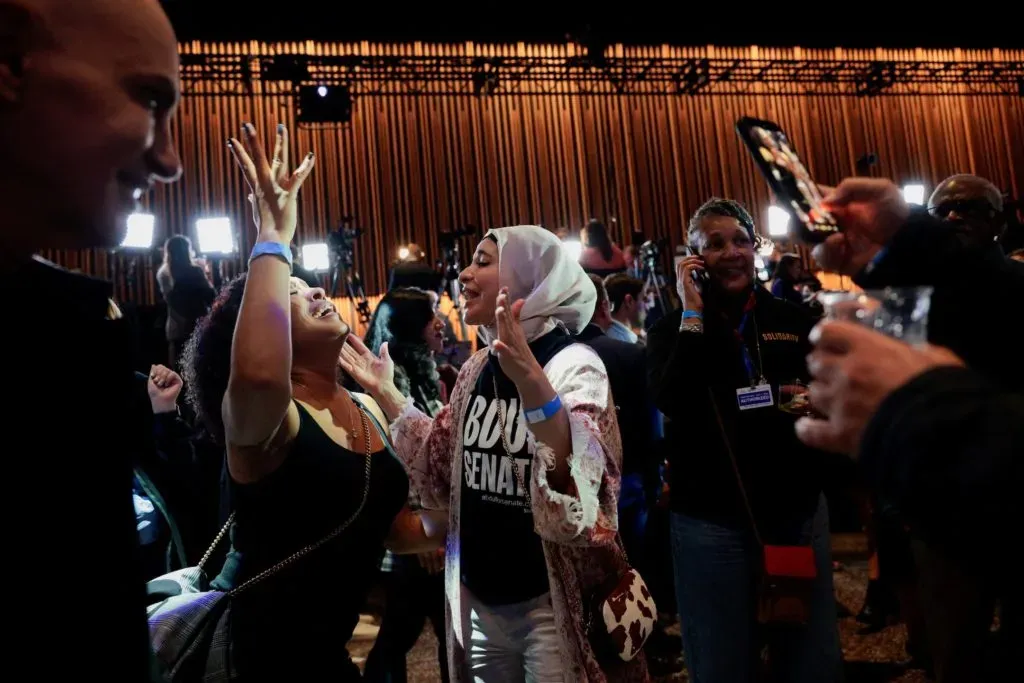
The election results also marked a significant milestone for diversity in American politics, with Abdul El-Sayed set to become the first Muslim elected to the Senate. His victory came despite facing intense criticism from his opponents, including President Trump, who had labeled him a jihadist" during the campaign.
Abdul El-Sayed's victory speech was marked by a sense of triumph and rebuke as he addressed his opponent directly. In a sharp tone, El-Sayed said that Mike, presumably his opponent, should enjoy his retirement, implying that the latter had made a choice to step down from public service.
The crowd responded with cheers, seemingly energized by El-Sayed's words. He continued to mock his opponent, suggesting that he would be enjoying life in Florida, complete with two yachts, while Michigan chose hope over hate. The contrast between the two options was stark, and El-Sayed's message seemed to resonate with his audience.
In other parts of the country, Democrats were making significant gains, including in Maine where five-term Republican Senator Susan Collins conceded to Democrat Troy Jackson. Meanwhile, in Kansas, a Methodist pastor named Adam Hamilton won a seat that had not been held by a Democrat in nearly a century.
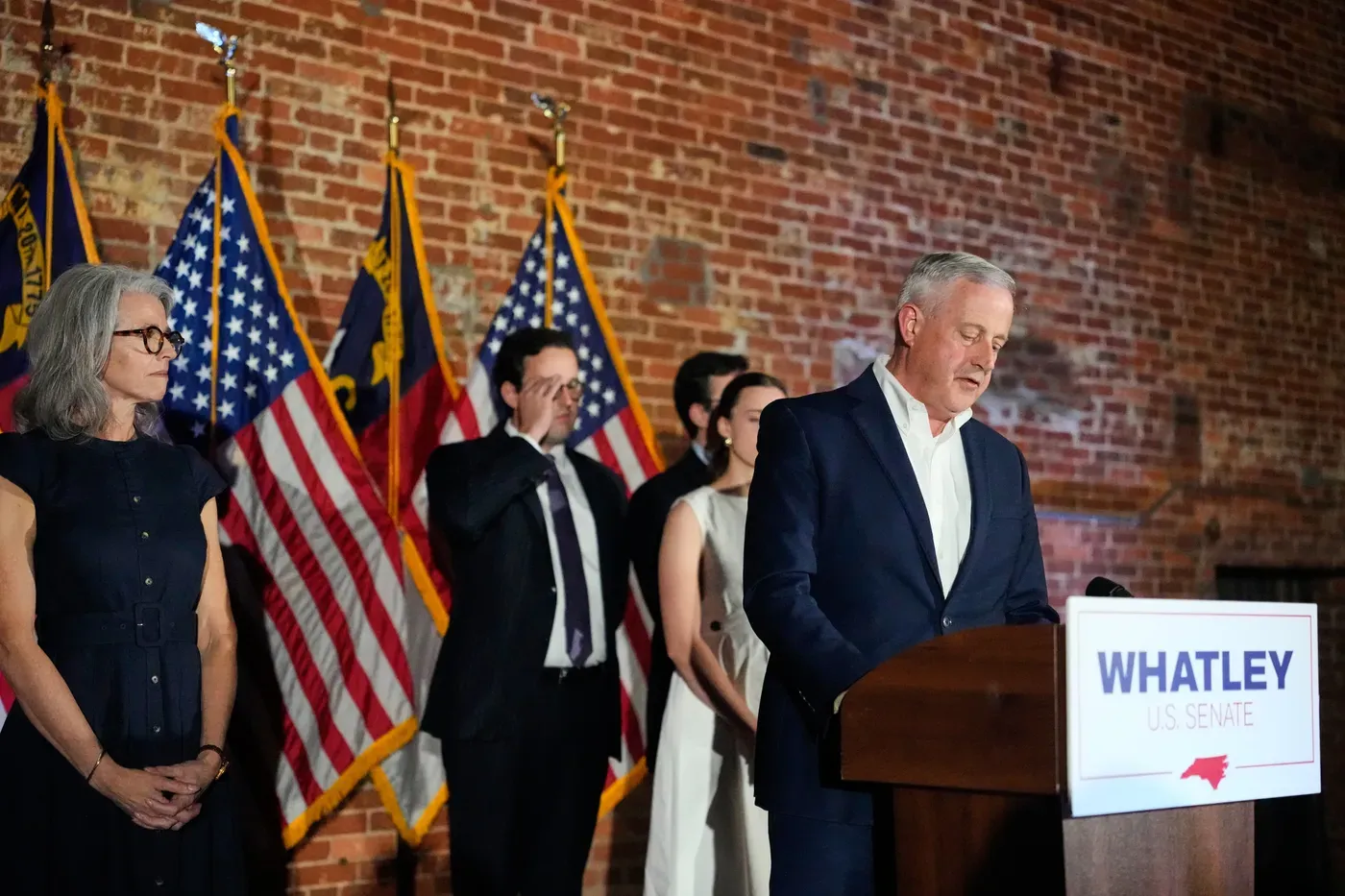
In South Carolina, the Graham family name was unable to secure a win for Darline Graham, who lost her election bid despite being handpicked by President Trump. In response, Graham acknowledged that conservatives had work to do and vowed to start that process immediately.
The Democrats are eager to begin working with the new administration, despite the president's stated intention to veto legislation. The president has acknowledged this right, but expressed a desire not to simply block bills for two years without attempting any collaborative efforts.
Democratic Leader Hakeem Jeffries has indicated his willingness to engage in dialogue with Republicans, stating that if they are genuinely interested in working together to implement significant changes, the Democrats will be open to negotiations. This stance reflects the party's commitment to finding common ground and advancing its policy agenda.
The midterm elections have yielded a number of historic firsts, including the election of three Black women to the Senate for the first time ever. Juliana Stratton's victory in Illinois is one notable example, marking a significant milestone in American politics.
Florida made history by electing its first Black governor, Byron Donalds, a Republican. This milestone marks a significant achievement in American politics. Meanwhile, another historic mark was set with Melat Kiros becoming the first woman from Generation Z elected to Congress.
The exact composition of the House and Senate is still uncertain as votes are being counted across the country. Dozens of states remain unresolved, including Alaska and Mississippi, where two contentious Senate races have not yet been called. In Alaska, a significant portion of the vote remains uncounted due to its rural nature, with some ballots requiring flight by plane.
The outcome in Mississippi is also too close to call, with Democrat Scott Colom leading incumbent Republican Senator Cindy Hyde-Smith by just 65 votes. Thousands of provisional ballots are still to be counted, and the state has until next Tuesday to resolve this matter.
Facts based on reporting originally published by PBS NewsHour Politics.
You may republish this story, in full or in part, if you credit News Central Site and link to it (licence CC BY 4.0). Photos are not included.