House of Representatives Control Hangs in Balance Ahead of Midterm Elections
Democrats seek to win a majority in the House, which would influence President Donald Trump's final two years in office.

The fate of the House of Representatives hangs in the balance as Democrats seek to wrest control from Republicans, who have dominated the chamber for four years but now face significant electoral headwinds.
A Democratic takeover would set a crucial tone and influence the direction of President Donald Trump's final two years in office, with party leaders vowing to launch aggressive investigations into his administration. This shift in power would also grant Democrats a key role in shaping major congressional actions, even if they don't have complete control over the legislative process.
To win a majority, Democrats need to flip at least three seats and reach the 218 threshold required for control. In an effort to mitigate this risk, Republicans have spent the past year and a half redrawing congressional maps across the country in their favor.
Historical trends indicate that the president's party typically suffers losses in midterm elections, which could be detrimental to Democrats' chances of gaining control of the House.
Polls conducted ahead of Election Day revealed widespread voter discontent with Trump across various issues, including the economy and cost of living, further exacerbated by the ongoing Iran conflict and the administration's tariffs policy. These findings suggest that voters are critical of the president's handling of key concerns, which could translate into negative sentiment for Republican candidates.
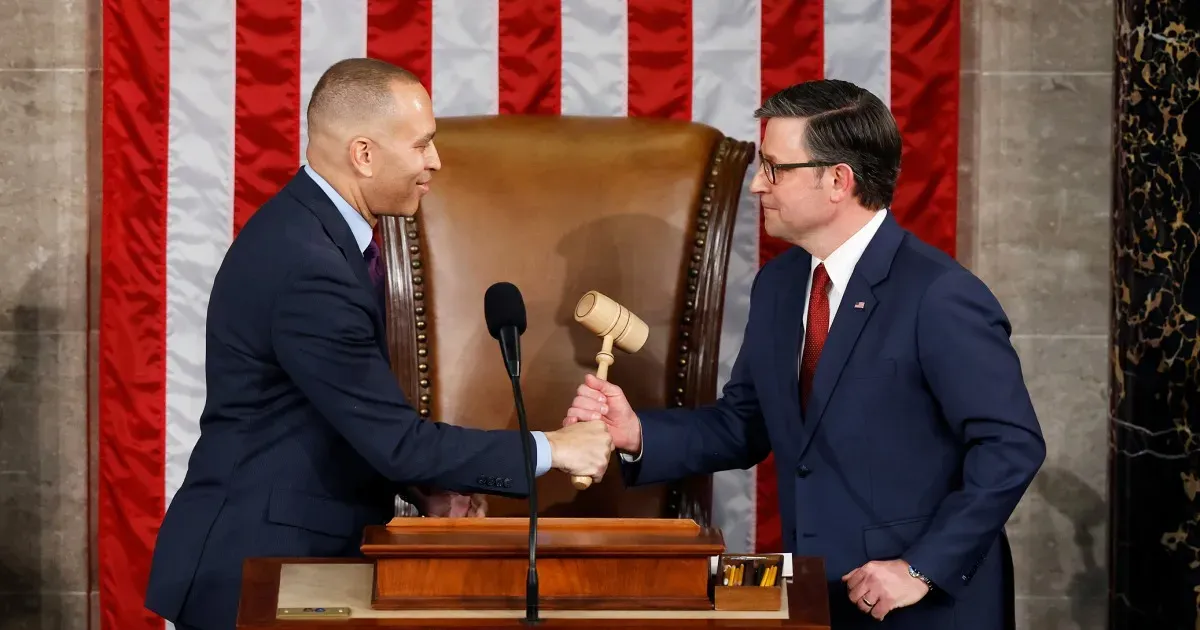
Despite these challenges, House Minority Leader Hakeem Jeffries has predicted a Democratic majority, although he has cautioned against expecting a landslide victory. In a recent campaign rally, Jeffries framed Election Day as "judgment day," underscoring the high stakes for both parties in this election cycle.
In a significant shift in strategy, top Republican outside groups have withdrawn their support for several vulnerable House seats that were once considered competitive.
This move has left millions of dollars in ad reservations unspent, which was initially intended to boost the campaigns of Reps. Mariannette Miller-Meeks of Iowa and other Republicans who represent battleground districts won by Trump in 2024.
The abrupt change in strategy is a clear indication that the Republican Party is reassessing its priorities and redirecting resources to other areas where they believe they have a stronger chance of winning.
The retirement of Republican Representative Don Bacon from his Nebraska district has significantly complicated the GOP's efforts to hold onto the seat.
In a last-ditch attempt to protect their paper-thin majority, Democratic leaders have been crisscrossing the country, campaigning in key battleground districts that could make or break their chances of retaining control. This includes states like California, Texas, Florida, Ohio, Michigan, New York, New Jersey, and Pennsylvania.
As the stakes are raised, Republican candidates are warning voters about the perceived dangers of a Democratic takeover, with some accusing Democrats of promoting a radical agenda that would lead to an overreach of government power and undermine individual freedoms.
Facts based on reporting originally published by NBC News Politics.
You may republish this story, in full or in part, if you credit News Central Site and link to it (licence CC BY 4.0). Photos are not included.