Jet Lag Discovered in Birds After Long Flights
A study has found evidence of jet lag in birds, specifically Manx shearwaters, after long flights across the globe.
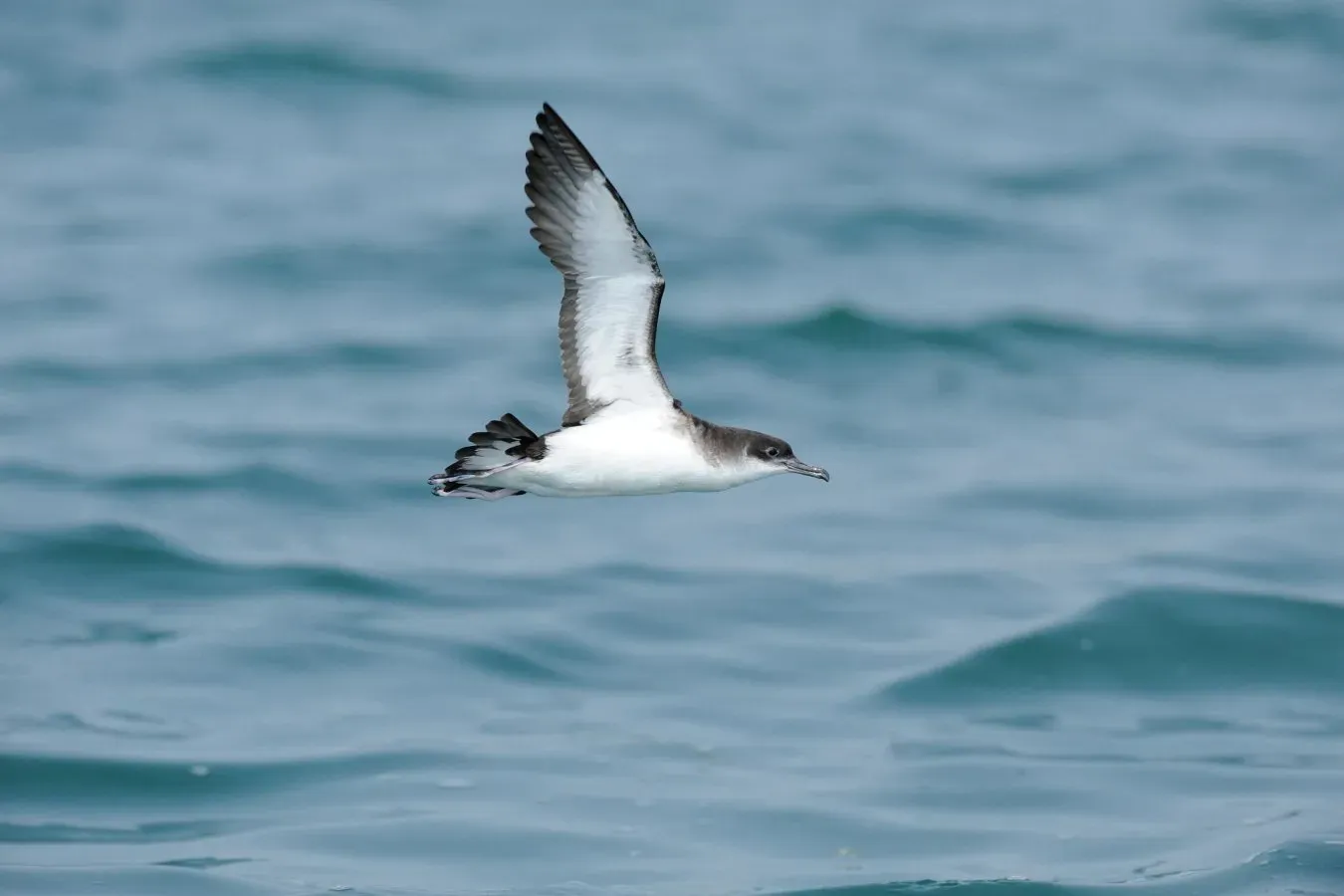
A study has uncovered evidence that birds can experience jet lag after long, fast flights across the globe, disrupting their internal body clocks and navigational abilities.
Researchers have found that Manx shearwaters, small seabirds known for their impressive long-distance travel capabilities, are prone to this phenomenon. These birds fly vast distances using a technique called dynamic soaring, which involves exploiting wind gradients near the sea surface. As they traverse the Atlantic Ocean at high speeds, their body clocks can become desynchronized from local time by more than an hour.
According to Patrick Lewin of the University of Oxford, the process is identical to what causes jet lag in humans. "It's exactly the same process," he says. This implies that other long-distance fliers, including insects and bats, may also experience clock shift disruptions during their journeys.
Lewin notes that Manx shearwaters have evolved a unique niche as exceptional long-distance travelers. Their remarkable navigational abilities are likely compromised when their internal clocks become desynchronized due to fast flights across the Atlantic.
Manx shearwaters breed on islands around the UK and Ireland, but during breeding season, they embark on long-distance flights to reach rich fishing grounds in the mid-Atlantic, a journey that can exceed 1000 kilometres.
Their round-trip migration takes them across vast expanses of ocean, with only occasional detours to skirt around landmasses such as Ireland. But how do these birds navigate their complex routes with such precision? Research suggests they don't rely on Earth's magnetic field for orientation, unlike some other bird species.
Studies have shown that attaching small magnets to Manx shearwaters disrupts geomagnetic navigation, but the birds seem unaffected by this interference. This led researchers to investigate alternative navigational methods, and it appears that these birds use a sun compass instead. By adjusting their orientation relative to the sun, they can maintain a course.
It's been observed that when Manx shearwaters' internal clocks are reset using artificial light and darkness, they become disoriented and head in the wrong direction. This phenomenon has implications for our understanding of animal navigation, suggesting that even experienced birds like these shearwaters can be affected by disruptions to their natural circadian rhythms.
Birds flying rapidly east across long distances can experience disruptions to their natural navigation systems, causing them to veer off course due to a phenomenon known as jet lag.
When Manx shearwaters travel 15° of longitude eastwards, the local time advances by an hour, but their internal clocks remain unchanged. As a result, the sun's position in the sky no longer matches the birds' internal compass, leading them to make navigational mistakes.
To test this theory, researchers analyzed flight tracks from nearly 4000 foraging trips taken by Manx shearwaters with GPS trackers attached. The data revealed that birds on rapid return flights deviated clockwise when out of sight of land, suggesting that their sun compass was disrupted.
This effect is distinct from other factors such as the Coriolis force and wind patterns, which were considered but found to have a lesser impact on the birds' navigation. According to Lewin, "the one thing that best predicted the observed changes in shearwaters' orientation was always this sun compass effect."
The impact of jet lag on birds that take long, fast flights is relatively minor, according to recent research. A bird flying 1000 km might need to cover an additional 5 km to reach its colony, a distance that is likely insignificant for such efficient fliers.
This study suggests that Manx shearwaters may not have evolved mechanisms to avoid jet lag because the effects are so small. The researchers' findings also imply that other species of birds might experience similar difficulties during long flights.
However, experts note that long-distance bird migrations often involve north-south travel, which minimizes the risk of jet lag. But at higher latitudes, the consequences could be more severe, particularly for animals living near the poles where crossing significant distances becomes relatively easy.
Animals such as polar bears and Arctic foxes may be especially vulnerable to the effects of jet lag due to their proximity to the poles, where travel distances are shorter but still pose a risk.
Facts based on reporting originally published by New Scientist.
You may republish this story, in full or in part, if you credit News Central Site and link to it (licence CC BY 4.0). Photos are not included.