Meta's New AI Assistant Muse Logo Designed by Bay Area Artist Jessica Hische
Jessica Hische, a freelance lettering artist from the Bay Area, was commissioned to design the M logo for Meta's new AI assistant, Muse.
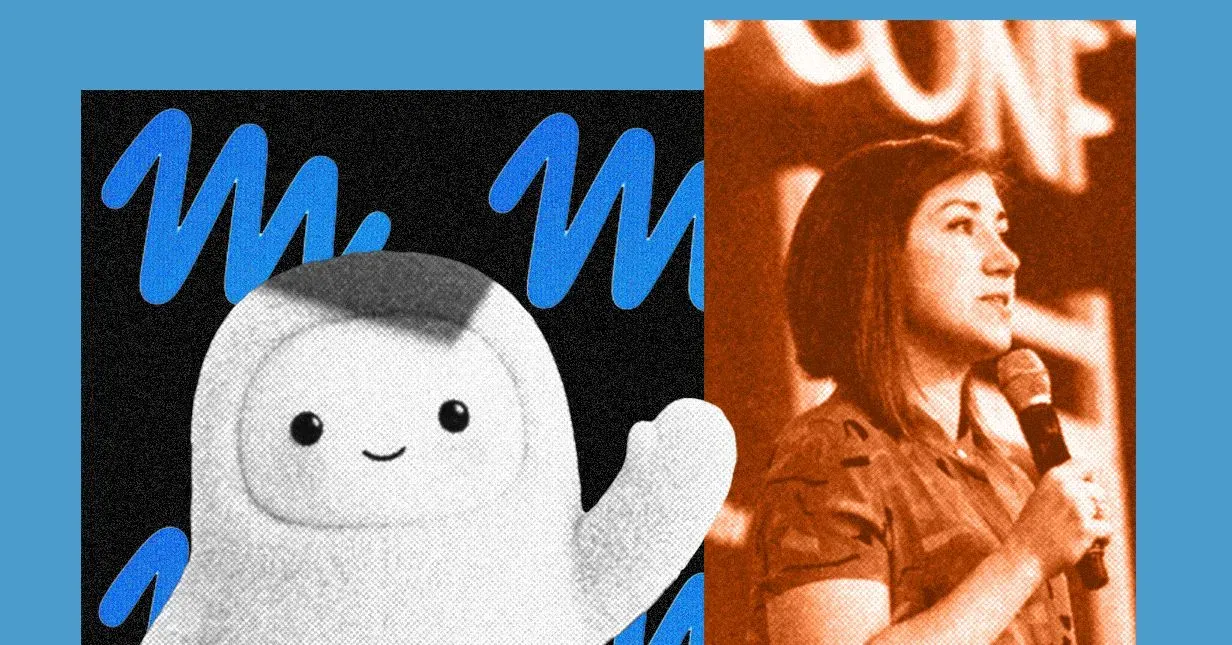
Meta's new AI assistant Muse has been met with widespread interest and criticism since its launch, but one aspect of the rollout that hasn't received much attention is the design of its logo by Bay Area lettering artist Jesscia Hische.
Hische took on a freelance gig to create the M logo for Meta's new AI agent, and she knew it would be a polarizing move. As a small business owner who relies on client work to keep her two art and stationery shops in Oakland afloat, she needed the money.
The news of Hische's involvement with Meta quickly went viral on social media platforms, where dozens of fellow designers criticized her for selling out. They accused her of compromising her artistic values by working with a company as contentious as Meta.
Hische responded to the criticism by explaining that she had to consider her financial situation when taking on the project. She has two brick-and-mortar shops in Oakland and employs four people, including herself, her mom, and two shop employees.
Despite her efforts to justify her decision, the backlash against Hische was intense. Critics took to social media to express their outrage, with some even posting photos of her house and speculating about her wealth and finances.
Hische had expected some pushback from the artist community, but she admits that the level of vitriol caught her off guard.
The backlash against generative AI has reached a fever pitch, making it clear that working in this field is seen as a betrayal by some.
Hische's experience serves as a stark reminder of the intense scrutiny and criticism faced by those involved in developing these technologies.
In an interview, Hische acknowledged that her client work had been slow in recent years, with only $10,000 in profit from both her shops last year.
She attributed this to the struggles of running brick-and-mortar businesses, which are not as profitable as they once were.
Hische's decision to take on the Meta project was motivated by a desire to bring in much-needed revenue and alleviate financial stress.
The design team behind Meta's new AI logo had some reservations about the initial concept.
They felt that it didn't quite capture the essence of the company's visual identity.
Some members of the team were skilled in typography, but even they acknowledged that designing a unique letterform is a challenging task.
To refine the existing work on the M, the team embarked on a massive effort to perfect the design.
The result was 32 different versions of the logo, each attempting to improve upon the previous one.
The logotype itself took an additional two weeks to complete, requiring even more attention to detail.
When asked what changes the team wanted to make, it became clear that they were dissatisfied with the single-stroke M design.
They felt that this approach resulted in a lack of subtlety around the shape, making it less visually appealing.
Type designers often experiment with adding and subtracting weight from strokes to create more interesting forms.
This process can lead to the creation of "inky moments" where strokes intersect and join, resulting in a heavier visual presence.
The team was looking for a more nuanced design that would fit seamlessly into Meta's existing brand universe.
As the criticism surrounding her AI logo design for Meta continued to escalate, the designer decided it was time to share more about her work publicly. This decision was motivated by a desire to provide context and transparency about her association with the company. Given that she is married to someone who has worked for Meta for many years, she felt it was essential to acknowledge this connection when discussing her role in designing the AI logo.
She also recognized that AI can be a sensitive topic for people, which is why she chose to share her thoughts and experiences within a specific audience that understands her relationship with both Meta and AI. By doing so, she aimed to provide a more nuanced perspective on her work and its implications.
The designer has a history of engaging with critics online, often using an approachable and conversational tone to de-escalate conflicts. However, in this instance, things took a different turn when one of her responses was misinterpreted by some of the people criticizing her. She had made a comment about how her job would help alleviate financial stress during the holiday season, but it was taken out of context.
As a result, she found herself being portrayed as a wealthy individual who was insensitive to the struggles of artists. This portrayal was far removed from her actual intentions and values, which prioritize fairness and treating employees with respect. The designer expressed that she wasn't particularly upset by the initial criticism, but rather frustrated by how it had been distorted.
The first day of responding to critics was relatively unemotional for her, as she focused on clarifying her position and explaining the context behind her comments. She emphasized that her goal is to pay her employees fairly and ensure their well-being, which is a core aspect of her business values.
Despite the challenges posed by online criticism, the designer remains committed to engaging with people in an open and transparent manner. By doing so, she hopes to build trust and foster more constructive dialogue about complex issues like AI and its impact on society.
The backlash against her involvement in designing Meta's new AI logo has been intense and far-reaching. Her project aimed to create a more inclusive and diverse visual identity for the company, but it seems that this effort was misinterpreted by many.
She emphasizes that she did not use any AI tools during the design process, contrary to what some critics have claimed. This fact is crucial in understanding her intentions and the nature of her work with Meta. Her goal was to promote a more collaborative approach between companies and independent artists.
The scale of the criticism has been overwhelming, with many people taking to social media to express their discontent. It's as if the entire online community had an opinion on the matter, making it feel like a never-ending storm. This level of public scrutiny can be both exhausting and disheartening for those caught in its midst.
One of the most challenging aspects of this experience has been the feeling of being deeply misunderstood. She feels that her passion for teaching and sharing knowledge is often misconstrued as a desire to profit from others' vulnerabilities. In reality, she charges modest fees for her workshops, which are designed to be accessible and inclusive.
The intensity of the backlash left her reeling, with feelings of sadness and regret washing over her like a wave. For two days, she struggled to come to terms with the situation, feeling as though everything she had worked for up until that point was somehow invalidated by this one incident. The weight of it all was almost too much to bear.
Despite the overwhelming criticism, she doesn't regret taking on the project. In fact, she sees her involvement in designing Meta's AI logo as an opportunity to promote a more collaborative and inclusive approach between companies and independent artists.
Fear is a palpable emotion in the world of AI and commercial art. The impact of AI on this industry has sparked real concerns among creatives. One artist's husband was initially enthusiastic about AI, but she took a more cautious stance at first, viewing it with skepticism.
As she delved deeper into the infrastructure and data-processing aspects of AI, her perspective began to shift. She started to see the benefits of using AI for tasks outside of creativity, which helped soften her initial reservations. Her husband eventually came around to seeing things from her point of view as well.
However, not everyone shares this nuanced understanding. Some anti-AI purists argue that AI is built on theft, with some even suggesting that it relies on stolen creative work. This artist acknowledges that AI has indeed scraped her books, which will likely result in a benefit for her under the Anthropic settlement.
The artist emphasizes that she doesn't use AI for generative art or other creative endeavors. Instead, she employs it for administrative tasks and coding assistance. The issue arises when AI takes on responsibilities that require human creativity, such as doing the heavy lifting on complex projects.
Ultimately, this artist's experience highlights the complexities of navigating the intersection of AI and commercial art.
Facts based on reporting originally published by Wired.
You may republish this story, in full or in part, if you credit News Central Site and link to it (licence CC BY 4.0). Photos are not included.