IceCube Researchers Propose Using Radio Telescopes to Track Cosmic Neutrinos
A team of scientists has proposed using radio telescopes to help identify the origins of cosmic neutrinos detected by experiments like IceCube.
Cosmic neutrinos are notoriously difficult to track due to their extremely low mass, making them one of the most elusive components of our universe. These particles can originate from a wide range of sources, including everyday objects like bananas and incredibly energetic events such as supernovae explosions.
Researchers have been working to identify the origins of neutrinos detected by experiments like IceCube, which won a Nobel Prize for its groundbreaking work in this field. As part of this effort, a team of scientists has proposed using radio telescopes to help solve the mystery of where these "ghost particles come from.
The approach relies on correlating data from radio telescopes with neutrino detections made by IceCube. While radio telescopes cannot directly detect neutrinos, they can provide valuable information about potential sources in space that could be emitting these particles. By matching up the two datasets, scientists may gain insights into the underlying physics of neutrino production.
Most particles interact with their surroundings through one of four fundamental forces: electromagnetism, gravity, and the strong or weak nuclear forces. Electromagnetism is responsible for a wide range of phenomena, including the functioning of electronic devices like computers and smartphones.
Neutrinos' elusive nature stems from their inability to interact with the universe through electromagnetism. They instead rely on the weak interaction force, which has a limited range of influence, only acting over distances smaller than the atomic nucleus.
As a result, neutrinos must pass extremely close to the centers of atoms in order to interact, otherwise they will simply pass through undetected. This makes them notoriously difficult to detect, but not impossible.
Scientists have been able to capture neutrinos from space since the 1960s, with most coming from our sun and at least one supernova event. These astrophysical neutrinos are a valuable source of information for researchers studying cosmic phenomena.
The IceCube Observatory in Antarctica has made significant strides in detecting neutrinos over the past decade by utilizing the dense ice as a neutrino telescope. The ice provides numerous opportunities for neutrinos to interact with water molecules, and detectors can identify radiation from these interactions when they occur.
The discovery of high-energy astrophysical neutrinos has opened up a new window on our universe, allowing researchers to study cosmic phenomena in unprecedented detail.
These particles are particularly useful for studying regions that light cannot penetrate, due to their reluctance to interact with their surroundings. This property makes them ideal for observing high-energy processes in areas where optical observation is impossible.
Scientists have been trying to pinpoint the origin of these neutrinos, but it's a challenging task. With so many possible sources, it's difficult to determine which ones are responsible for producing these ghost particles".
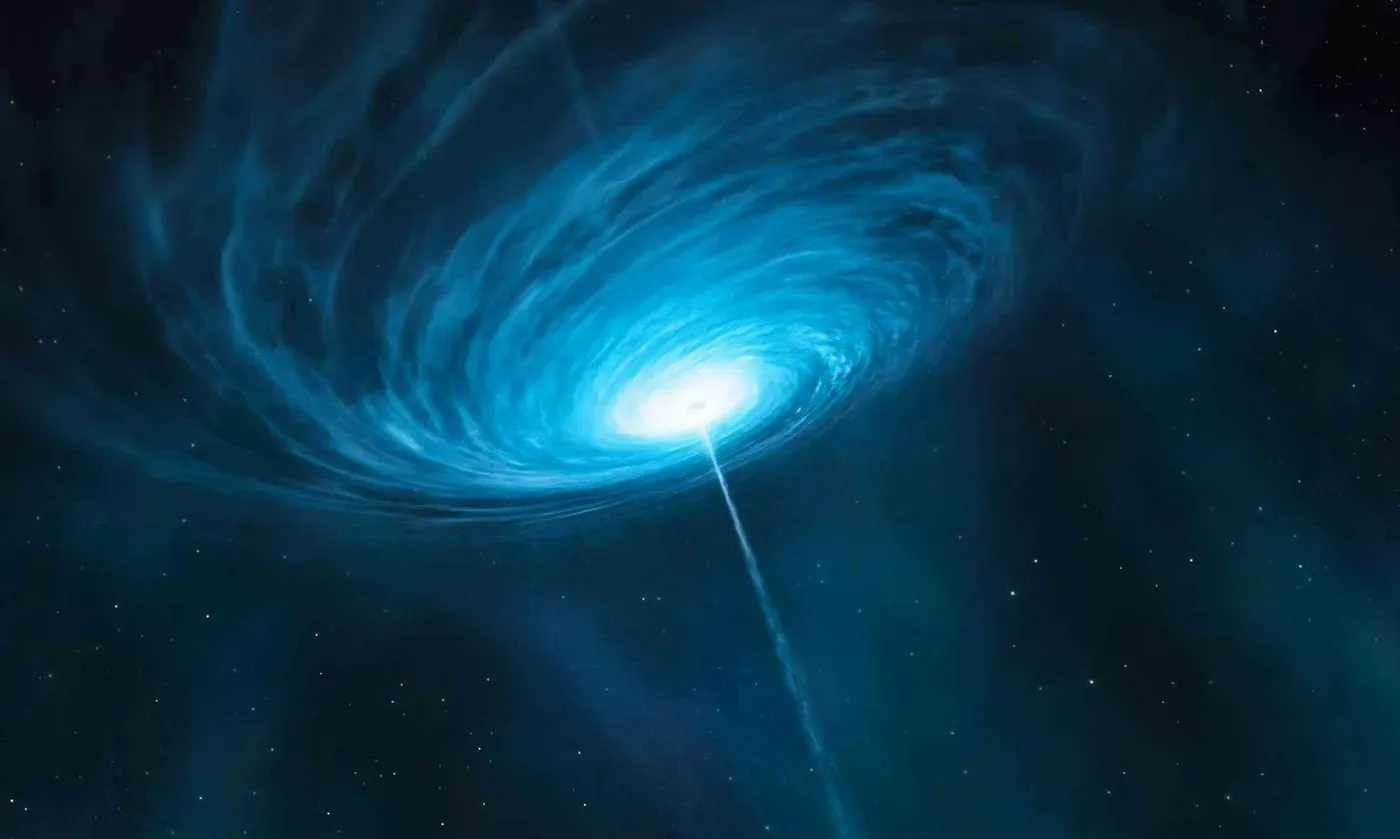
Several types of objects could be emitting neutrinos, including quasars - regions where matter is being ripped apart by massive black holes. In 2017, researchers detected a neutrino that seemed to originate from the direction of a quasar known as TXS 0506+056.
The detection of gamma-ray outbursts in conjunction with neutrino emissions provides valuable information about the sources of these particles. Neutrinos and gamma rays are both produced by the decay of subatomic particles, making it likely that their sources will also exhibit high-energy electromagnetic radiation.
The detection of high-energy neutrinos has been a challenge for scientists, and one possible explanation is that they originate from gamma-ray bursts. However, these events are not always visible to telescopes due to dust and gas in space.
Supermassive black holes can also obscure gamma rays, making it difficult to pinpoint their sources. But radio waves are less affected by these interstellar clouds of gas and dust, offering an alternative way to observe cosmic phenomena.
The Very Large Array in New Mexico has been tracking radio emissions from space since 2017 as part of the VLASS project. This research initiative aims to monitor changes in brightness over time, providing valuable insights into celestial activity.
Our team's analysis of data from VLASS revealed that most objects exhibiting fluctuating radio emissions are quasars, which have previously been linked to neutrino production by IceCube. This connection suggests a possible relationship between these two types of cosmic events.
When comparing the times of IceCube neutrino detections with the periods of VLASS-observed radio flares, we found an intriguing correlation that warrants further investigation into the origins of high-energy neutrinos.
When an astrophysical neutrino is detected by IceCube, there's a higher-than-expected chance that a radio source will be brightening in the same region of the sky. This phenomenon occurs more often than would be expected by mere coincidence.
However, it's essential to note that these radio flares are only associated with about 13% of the astrophysical neutrinos detected by IceCube, meaning there's still much to be discovered about the origins of most high-energy neutrinos.
Interestingly, the vast majority, more than 90%, of radio outbursts potentially linked to neutrinos go undetected by gamma-ray telescopes. This suggests that the source of these neutrinos might be hidden from view at gamma-ray wavelengths but could still be visible at radio frequencies.
To further investigate this intriguing correlation between neutrino detections and radio flares, scientists need more observations to confirm whether what they're seeing is real or just a result of chance.
The study of astrophysical neutrinos has reached an exciting milestone, with researchers discovering potential correlations between these elusive particles and radio flares.
Further investigation is necessary to confirm whether this correlation is a genuine phenomenon or simply a result of chance, but the prospect of using radio telescopes to shed light on the origins of neutrinos is a promising one.
Facts based on reporting originally published by Phys.org.
You may republish this story, in full or in part, if you credit News Central Site and link to it (licence CC BY 4.0). Photos are not included.