High Temperatures Alter Mealybug Feeding Behavior
A new study from Texas A&M AgriLife Research scientists suggests that high temperatures can alter the feeding behavior of mealybugs, potentially explaining why some infestations cause more...
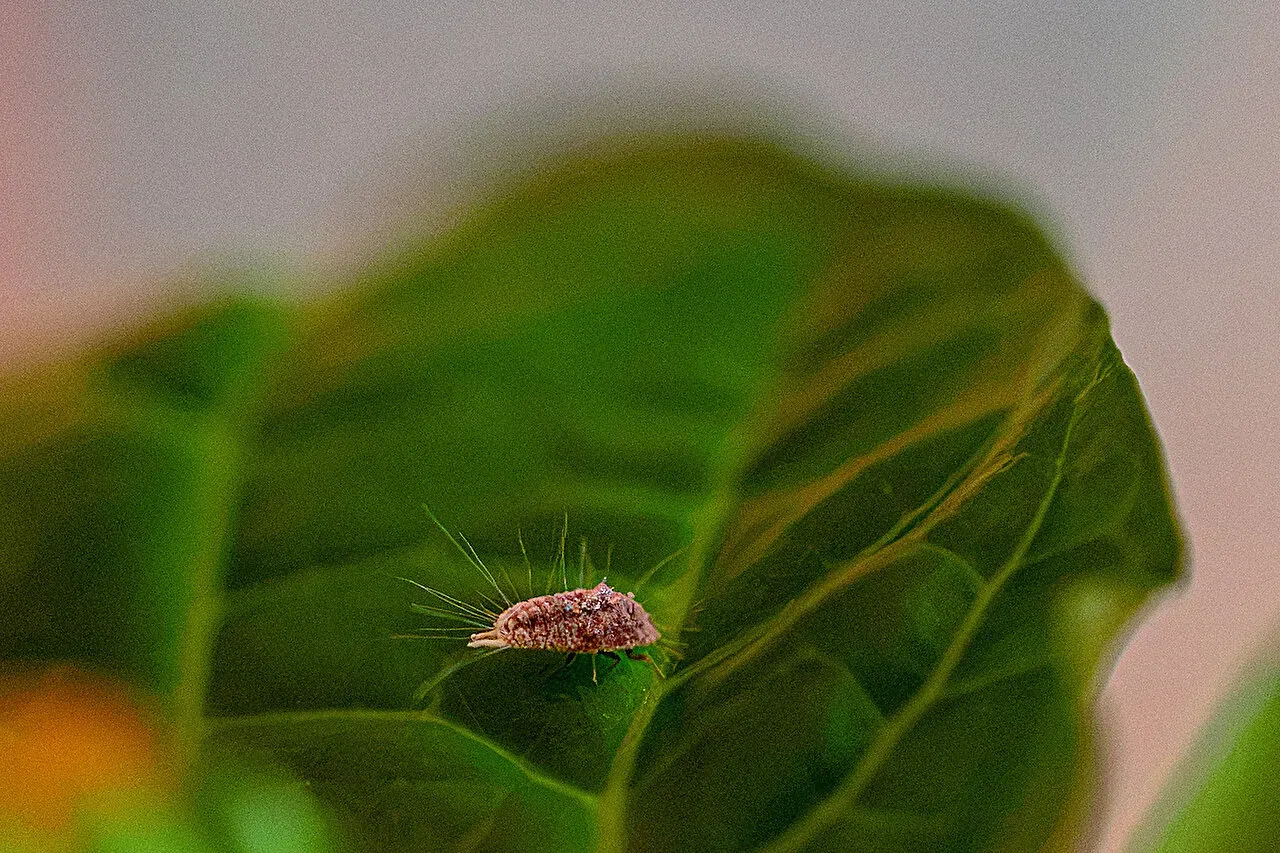
A new study from Texas A&M AgriLife Research scientists suggests that high temperatures can alter the feeding behavior of mealybugs, potentially explaining why some infestations cause more damage than others in pasturelands.
The research team, led by doctoral student Ashley Zavala, is investigating how environmental conditions affect mealybug feeding behaviors. This study aims to provide insights into the invasive pest's habits and help ranchers manage its impact on native grasses and regional livestock operations.
Mealybugs have been spreading rapidly across Texas since their first confirmed sighting in July 2025. The pest has now infested 114 counties, posing a significant threat to the state's $15.5 billion cattle industry.
The mealybug's presence is not limited to Texas; it has also been reported in Florida, Georgia, and Louisiana. Scientists are concerned that this invasive species could affect other agricultural products, including sugarcane and rice.
Ranchers rely on pasturelands for grazing and forage production, which makes the spread of the mealybug a pressing issue. The pest's impact is substantial, considering the economic importance of these lands to Texas' livestock industry.
The mealybug's feeding habits have a significant impact on pasture health, causing weakened grass that can lead to dieback. This condition can result in brown fields, dramatically thinned-out vegetation, or even complete crop failure.
Researchers are using electropenetrography (EPG) to study how mealybugs feed under various conditions. By attaching sensors to the insects and plants, they can record feeding activity as a waveform, similar to an electrocardiogram reading.
Chappell's team is comparing these waveforms to better understand what triggers changes in the mealybug's behavior. This knowledge could be crucial in developing effective management strategies for growers battling this invasive pest.
The research has broader implications beyond pastures, with Chappell's lab applying EPG to study a related mealybug species feeding on pepper plants. He believes there is a clear connection between these findings and the pasture mealybug issue.
The team hopes that by integrating insights into feeding behavior, plant stress, susceptibility, and weather patterns, growers can make more informed decisions about pesticide applications. This could lead to more targeted and effective management of the pest threat.
Intelligent agriculture systems can further refine the processing of data and improve the accuracy of forecasting tools to better manage pest threats.
The mealybug's feeding behavior is influenced by environmental stress, including high temperatures, which can lead to more severe infestations. This understanding could provide valuable insights into pest-plant interactions in specific environmental conditions.
Mealybugs feed on plant fluids, typically sugar-rich sap in the phloem, but they can also tap into the xylem, the tissue that carries water. When temperatures rise, insects may drink more xylem to stay hydrated, potentially increasing their feeding activity.
Heat also appears to increase the frequency of mealybug salivation in the phloem, which is significant because saliva contains enzymes and toxins that damage plants. As a result, hot conditions could lead to more harm from the same number of insects, exacerbating plant damage.
Collaborative research teams from various disciplines within the Texas A&M College of Agricultural and Life Sciences are working together to tackle the pasture mealybug problem.
The researchers have made some initial breakthroughs in understanding what drives pasture mealybug population growth, identifying canopy density, heat, humidity, and rainfall as contributing factors.
Their ongoing investigation is also focused on determining why certain forage plants are more susceptible to damage from these pests and how they recover after infestation.
To develop effective management strategies, the research teams aim to identify a set of tools and recommendations that can be used by producers to target pasture mealybug vulnerabilities.
Chappell's team has been tracking the movement and behavior of individual insects, while forage researchers are examining which varieties hold up best under stress.
The Texas A&M AgriLife Emerging Pest Task Force has identified pasture mealybug as a top priority, prompting its members to testify before state lawmakers on the issue of New World screwworm and pasture mealybug infestations.
Task force experts have been monitoring the situation closely, providing critical insights that will inform future policy decisions aimed at mitigating the impact of these pests on Texas' agricultural sector.
Facts based on reporting originally published by Phys.org.
You may republish this story, in full or in part, if you credit News Central Site and link to it (licence CC BY 4.0). Photos are not included.