Istanbul's Luxury Department Stores Redefine Retail Experience
A new concept in retail is taking hold in Istanbul, with luxury department stores encouraging guests to linger for hours or even days.
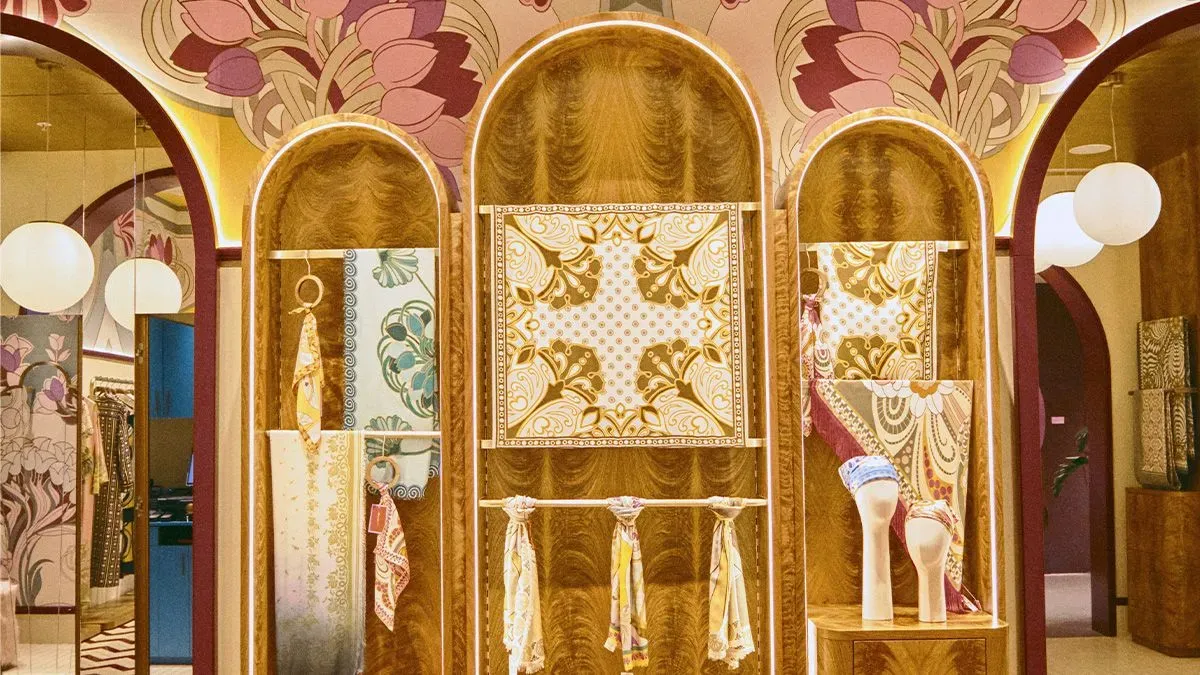
Istanbul is redefining its retail scene by embracing a new concept that encourages guests to linger for hours, even days, within luxury department stores. This welcoming approach is exemplified at Communité, a hybrid store that combines the best of retail and hospitality.
According to Sebla Refiğ Devidas, chief merchandising officer at Communité, their goal is to create an inviting atmosphere where clients feel at home. "We want our client to spend time here, to sit here, to play backgammon, to chat, to have a drink," she explains.
Communité's second location, opened in May, boasts a unique design that sets it apart from other retail spaces in Istanbul. The store features windows throughout, allowing natural sunlight to flood the interior and illuminate its curved shop-in-shops, clean furnishings, and marble plinths.
As we walk through the store, I notice an impressive array of brands on display, including Martine Rose, Simone Rocha, and Auralee. A beautifully lit restaurant in the Mayfair style is also a notable feature, as are the glass-paneled red-light therapy salon and box vitrines showcasing exquisite jewellery by Turkish designer Sevan Bıçakçı.
Located in Galataport, a cultural and shopping district adjacent to the Bosphorus, Communité is situated among some of Istanbul's most renowned luxury retailers. The area is home to Beymen, Türkiye's equivalent of Bergdorf Goodman, as well as Vakkorama, Vakko's accessible, contemporary store.
Galataport also hosts Turkish design-focused luxury chain Gizia Gate, further solidifying the district's status as a hub for high-end fashion and retail in Istanbul. These four names, Communité, Beymen, Vakko, and Gizia Gate, collectively dominate the Turkish fashion landscape, accounting for a significant share of the country's relatively small fashion retail market.
Beyond luxury shopping, Türkiye is recognized worldwide for its textile and leather industries, which supply major clothing manufacturers used by Western brands such as Isko Denim, Kipaş, and Bilsar. Meanwhile, value-conscious shoppers can explore stores offering factory seconds, lightly defective branded apparel sold at a discount, or browse the historic Grand Bazaar's extensive selection of counterfeit luxury goods.
Istanbul's massive market presents a unique opportunity for luxury brands to tap into the region's growing wealth and international appeal.
Data from Euromonitor reveals that Türkiye's luxury goods market experienced steady growth in 2025, despite ongoing macroeconomic pressures.
High-net-worth individuals continued to drive demand, while inflation caused by the Middle East crisis constrained discretionary spending among middle-income groups.
Gucci, Hermès, Prada, and Louis Vuitton are among the leading international brands in the personal luxury goods category, according to Euromonitor's report.
The market is expected to reach almost $28 billion in 2026, more than double the revenue seen in 2021, with Istanbul at its center.
Growing domestic wealth and a strong reputation as an international shopping destination make Istanbul an attractive location for luxury brands.
Tourism plays a significant role, with international visitors now accounting for 29% of personal luxury goods spending in Türkiye, up from 20% in 2019.
Online channels are also gaining traction, with e-commerce currently accounting for 21% of personal luxury sales in Türkiye, more than double the share in 2015.
Physical retail remains essential, allowing Istanbul to combine global luxury brands with Turkish fashion, craftsmanship, hospitality, and culture.
Competition among luxury retailers is intense within the relatively small market.
New entrants are vying for a share of the pie, while existing players are expanding their presence.
The retailer Communité is set to open two more stores on the European side and one on the Asian side in 2027, complementing its strong online platform.
Devidas' decision to leave her role as merchandising lead at Beymen in August 2024 was not taken lightly. Following a five-year non-compete clause, she and several colleagues from Boyner jumped ship to the newly founded Communité.
The team's research stage took them on a global journey, informing their objectives for clienteling, product assortments, and dwell time. Devidas emphasizes that they wanted to avoid repeating what they had done before.
Hospitality will play a crucial role in Communité's value proposition, according to Devidas. The emphasis on hospitality has earned the respect of insiders who have observed the team's efforts.
When visiting Communité, it becomes clear that much of the furniture is available for purchase. The store showcases a mix of local Turkish brands and international labels, including Japanese streetwear giant A Bathing Ape (Bape), which Devidas notes is an exclusive partnership in Türkiye.
In contrast to Communité's approach, Beymen Group is expanding its retail presence across the country with a more traditionally luxe strategy. The company owns 290 stores in various formats across Türkiye and Egypt.
Beymen's expansion plans are well underway, with new store openings and events showcasing its luxury ambitions. One such event was a ritzy program built around an exhibition at its flagship location in Tersane.
The Timeless Treasures exhibition celebrates traditional Anatolian envelope bags through the lens of contemporary Western and local designers. The event coincided with the one-year anniversary of the OMA-designed store and aimed to bridge a gap between the Turkish and global fashion landscape.
As Beymen continues to establish itself as a leading luxury department store in Türkiye, it's focusing on enhancing its store experiences and private-shopping service for high-net-worth individuals.
This strategic move is part of the company's efforts to cater to its primary target market, where consumer spending habits are driven by this demographic. With Mayhoola's investment, Beymen is strengthening its position in the domestic market and avoiding global expansion plans for now.
The decision to prioritize Türkiye stems from a desire to be deeply rooted in its location. According to Rachid Mohamed Rachid, CEO and chairman of Mayhoola, "the department store is more like a house that you bring people to." This approach emphasizes the importance of creating an immersive experience within the stores themselves.
Meanwhile, Vakko has been steadily growing its presence in Türkiye with 150 stores across the country. The company's diverse range of categories, including own-brand goods and various store formats such as Vakkorama and Vakko Couture, has helped it maintain a strong foothold in the local market.
Tarik, a 28-year-old employee at Vakkorama's Galataport location, attributes the brand's success to its curated selection of fashion-forward brands like Marni and Thom Browne, as well as unique pieces from labels such as Adidas that can't be found elsewhere in Türkiye. This blend of established and emerging designers has become a hallmark of Vakkorama's appeal.
For local Turkish designers seeking to make their mark on the global stage, landing deals with major wholesalers like Vakko can be a significant challenge, particularly for those just starting out. As Zeydanlı notes, "multi-brand stores such as V2K Designers play an important role in Istanbul's fashion ecosystem."
The challenges of establishing a brand in Istanbul's fashion landscape were not lost on Lug Von Siga. She recalls the early days as a time when professionalism was lacking, particularly in the prêt-à-porter sector.
This lack of expertise was compounded by the fact that major Turkish retailers focused primarily on foreign brands at the time. However, this has since changed, with many local players now opting for partnerships with emerging designers like Lug Von Siga.
Today, her brand is stocked by several prominent Turkish retailers, including Vakko and Communité, as well as a range of European stockists such as Harvey Nichols, Farfetch, and Harrods. This represents a significant shift in the market, one that reflects the growing demand for local talent.
Istanbul's retail landscape is characterized by large malls, which have become key hubs for shopping in the city. These complexes offer a more relaxed experience than what can be found in other fashion capitals like London and New York. Shoppers here often take their time, sipping coffee or Turkish tea while store advisors provide discreet advice to private clients.
Beyond these purpose-built districts, Istanbul also boasts an open-air shopping district known as Nişantaşı. Located on the European side of the city, this trendy neighborhood is home to a number of high-end brands, including Prada and Chanel. Here, one can find a mix of concept stores and flagship outlets from major players like Beymen and Vakko.
The area's relaxed atmosphere makes it an ideal destination for those looking to browse at their own pace. According to Turkish fashion photographer Fırat Koçak, Nişantaşı is also a hub for the city's creative community, with many editors, stylists, and photographers calling this district home. National treasure designer Ozgur Masur has a showroom here, as does Agis.
Emir Akdogan and Dylon Kader, beaming with pride, invite me into their streetwear store, Wunder's largest location in Istanbul, to give me a tour of its sleek interior.
Inside, I'm struck by the stark contrast between Wunder's minimalist aesthetic and the opulent boutiques that dominate the area. This modern design reflects the brand's focus on functional, contemporary style rather than luxurious excess.
Wunder's roots date back to 2015 when it first opened in Kadikoy, a district on Istanbul's Asian side, capitalizing on the global sneaker craze that was sweeping the world at the time.
Today, Wunder continues to be a major player in the Turkish market by offering highly anticipated sneakers from top brands like Nike and Salomon, as well as popular streetwear labels such as Stüssy and Carhartt.
Akdogan notes that Wunder's unique approach sets it apart from other stores in Istanbul, with its focus on cutting-edge designs rather than traditional department store fare.
Facts based on reporting originally published by Vogue.
You may republish this story, in full or in part, if you credit News Central Site and link to it (licence CC BY 4.0). Photos are not included.