Groundbreaking Discovery in Mouse Embryos Development
Scientists have successfully reconstructed the family tree of cells within mouse embryos over 13.5 days, providing valuable insights into how cells' early ancestry influences their later fates.
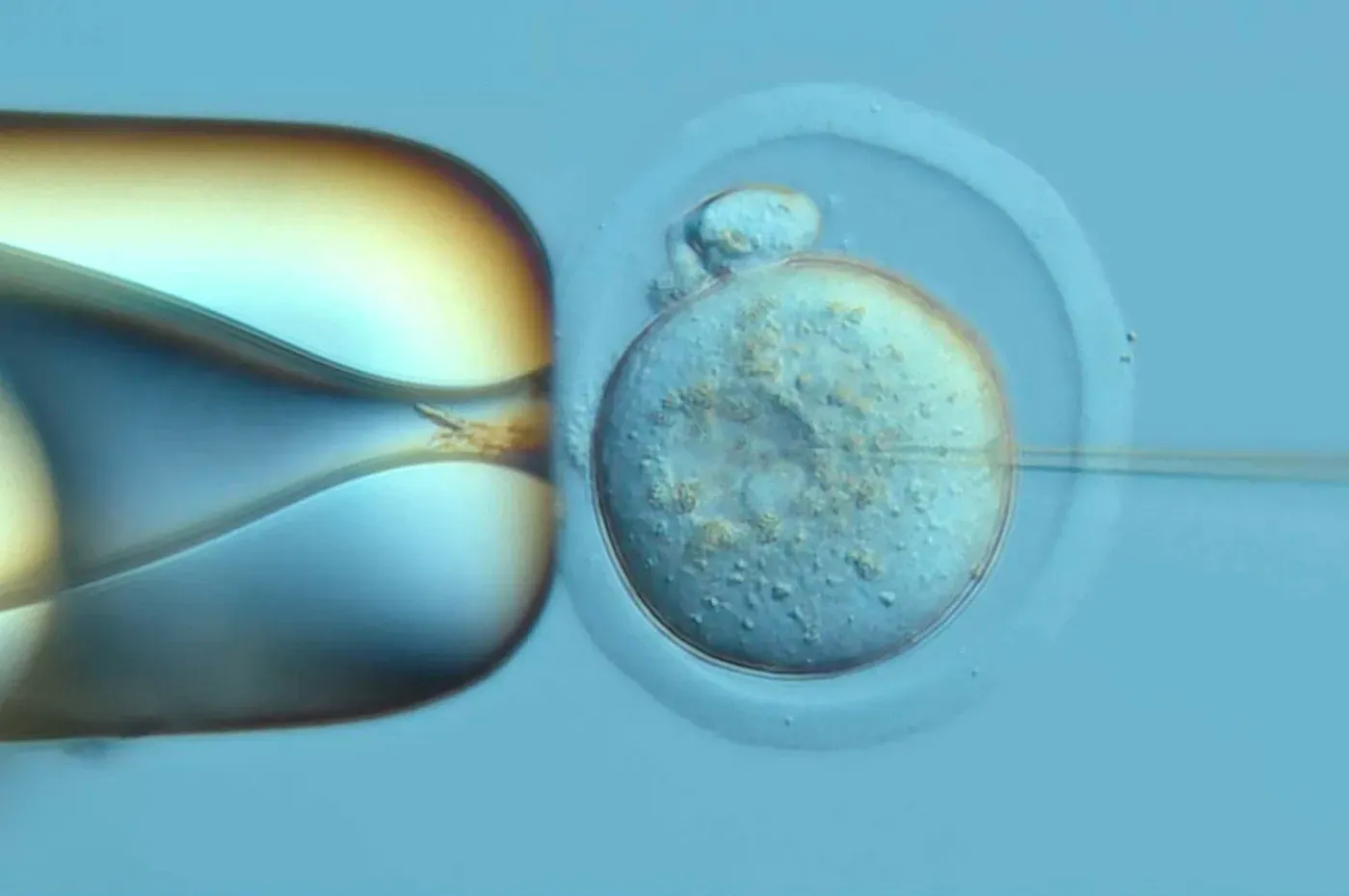
Scientists have made a groundbreaking discovery in understanding the development of mouse embryos, successfully reconstructing the family tree of cells within them. The research, which spanned 13.5 days from fertilization to the formation of body and organs, has provided valuable insights into how cells' early ancestry influences their later fates.
This achievement is significant as it could eventually shed light on various conditions such as congenital malformations, neurodevelopmental disorders, genetic disorders, and cancer. By studying cell lineages, researchers can better understand normal development and identify potential causes of abnormalities.
Dr. Jay Shendure, a professor of genome sciences at the University of Washington School of Medicine, emphasized the importance of tracking cells' ancestry in embryos. He noted that such research could ultimately advance our understanding of various developmental conditions and diseases.
The study's authors employed a novel technology called DNA Typewriter to achieve this milestone. This innovative tool was invented by Dr. Shendure and Junhong Choi, who is based at Sloan Kettering Cancer Center.
The findings will be published in Science on October 8, 2026, with Dr. Shendure and Dr. Chengxiang Qiu serving as co-senior authors of the paper.
The DNA Typewriter technology allows researchers to tap into the genetic material of a developing embryo by inserting a specially designed tape into the fertilized egg's genome. This tape serves as a recording medium that captures the cell's division history, making it possible for scientists to track the lineage of individual cells.
As the embryo grows and cells divide, the DNA Typewriter continues to record new information onto the genetic material, much like a ship's log keeps a record of its journey. Each time a cell divides, it adds a new character to the sequence, creating a chronological account of the cell's development.
The technology is designed to read back out of individual cells, making it possible for scientists to recover the recorded information from each cell's progeny. This allows researchers to identify which groups of cells share a common ancestor and track their lineage over time.
In contrast to simpler organisms like roundworms, mammals have complex body structures with vast numbers of cells, making it challenging to accurately trace their lineage. Previous attempts using older technologies produced valuable data but provided only a fragmented view of the cell's history.
The DNA Typewriter technology addresses this limitation by providing a more detailed and accurate record of cell division, enabling scientists to study the intricate processes that shape the development of complex organisms like mammals.
By allowing researchers to recover recorded information from individual cells, the DNA Typewriter opens up new avenues for studying embryonic development and cellular differentiation. Its potential applications extend beyond basic research, potentially shedding light on various diseases and conditions that arise during fetal development.
The traditional methods of recording DNA have some significant drawbacks. They can leave behind scars in the DNA, making it difficult to interpret the results accurately. Moreover, these methods are quite harsh on cells and often erase earlier records, rendering them useless for research purposes.
In contrast, the "DNA Typewriter" is a more gentle and precise approach that allows researchers to record cell lineages at much higher resolution over an extended period of time. This is because it writes DNA without fully severing the strands, keeping the recording steady and in strict order.
The research team tested this new method by attempting to record the development of 100 fertilized mouse eggs. Out of these, they were able to examine 10 embryos in detail. One embryo, designated as Embryo No. 3, stood out with a rich and clear history recorded by the system.
A closer look at Embryo No. 3 revealed some fascinating insights into the early stages of development. The recording captured the split of the fertilized egg into two cells, allowing researchers to trace the lineage of almost every cell in the embryo back to one or the other founding cell.
One notable finding was that the two founding cells produced diverse cell types at nearly equal ratios, but one of them went on to produce more descendants than the other. This discovery has significant implications for our understanding of fetal development and potentially sheds light on various diseases and conditions that arise during this critical period.
The researchers were able to pinpoint when during development each cell type first diverged from its common ancestor.
This was achieved by analyzing the recordings made by the 'DNA typewriter', which revealed that different cell types committed to their specific fates at varying times.
For example, blood cells and retinal cells seemed to commit relatively early in the developmental process, while the skin's outer layer didn't commit until later on.
The study's findings were consistent with previous research, but this new approach allowed for a more detailed understanding of how cell types become established during development.
The implications of this research extend beyond our current understanding of fetal development. By mapping out how one cell becomes a whole body, scientists can gain insights into how organs form correctly and how birth defects occur.
This knowledge could also inform the development of new therapies by providing a blueprint for engineering cells for specific uses.
The study's findings have significant implications for our understanding of cell development and differentiation during embryogenesis. By tracking individual cells' lineage history in a mouse embryo from its earliest stages to late organ formation, researchers can now gain valuable insights into the complex processes that shape an organism.
This knowledge could inform the development of new therapies by providing a blueprint for engineering cells for specific uses. Furthermore, it may also shed light on developmental disorders and birth defects, potentially leading to more effective prevention and treatment strategies. The comprehensive data generated by this study will undoubtedly serve as a valuable resource for future research in cell biology and developmental genetics.
Facts based on reporting originally published by Phys.org.
You may republish this story, in full or in part, if you credit News Central Site and link to it (licence CC BY 4.0). Photos are not included.