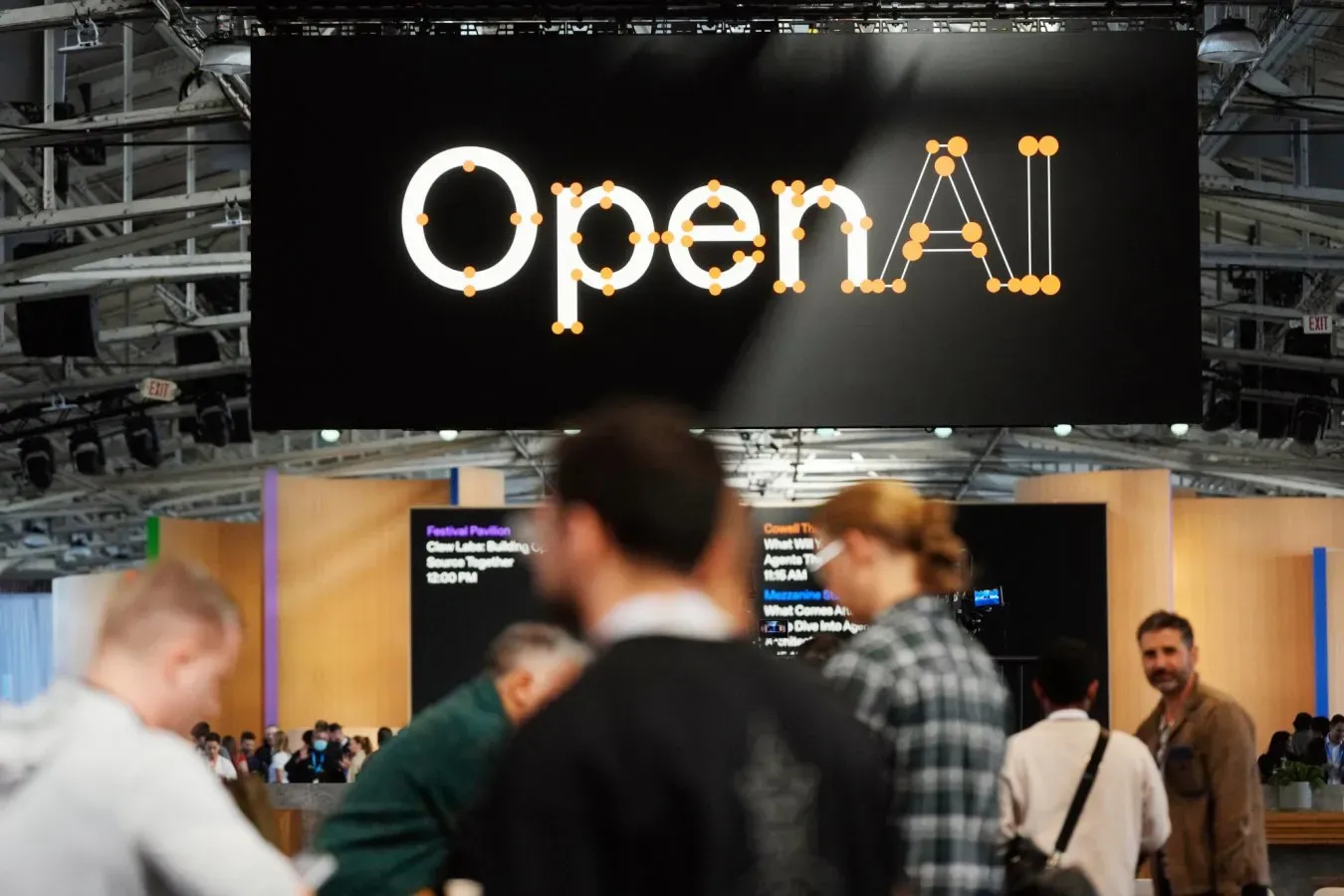
GPT-6 Astra Marks Significant Milestone in Artificial Intelligence Development
OpenAI's recent release of GPT-6 Astra has sparked debate among experts about its true capabilities and the potential risks of future AI systems.

Reports have emerged from OpenAI that the recent release of its GPT-6 Astra model marks a significant milestone in artificial intelligence (AI) development, claiming to be the beginning of the artificial general intelligence (AGI) era.
This hypothetical scenario envisions AI systems capable of learning and reasoning like humans, but experts are questioning whether this claim stands up to scrutiny. Independent researchers have voiced concerns that GPT-6 Astra's impressive performance may not be due to true general intelligence, but rather to cleverly optimized prompts.
OpenAI has faced setbacks in rolling out the model, with plans for its next iteration, GPT-6.1 Astra, being put on hold due to safety concerns. Meanwhile, experts have been sounding the alarm about the potential risks of future AI systems and calling for a slowdown in AI research.
In a recent news conference, OpenAI President Greg Brockman suggested that the release of GPT-6 Astra represents a significant turning point in AI evolution. He hinted that this model may be remembered as the one that brought about the creation of AGI, but his comments have sparked debate among experts.
The company has released benchmark results showing its new model performing exceptionally well across various tasks and fields. These include software engineering, autonomous programming, mathematical problem-solving, and even scientific research.
OpenAI claims its GPT-6 Astra model delivers "state-of-the-art performance in these areas, but independent researchers have cautioned that the true extent of the model's capabilities remains unclear.
OpenAI's GPT-6 Astra model has been touted for its impressive abilities in generating 3D CAD code and laying out printed circuit boards in computer-aided design software. It can also convert digital 3D models into interactive environments reminiscent of video games and deploy hosted web applications directly from prompts. These demonstrations showcase the model's versatility, but it is essential to examine the extent of its capabilities more closely.
In a statement, Niko Grupen, head of applied research at legal services AI developer Harvey, noted that Astra approached legal work in a manner similar to a skilled lawyer. It distinguished between established records and documents, identified unsupported assumptions, and converted ambiguities into concrete drafting positions. This level of nuance suggests that Astra may possess some degree of general intelligence.
The model's performance on the ARC-AGI-3 benchmark has been particularly impressive, achieving a score of 99.9% in efficiency. Independent testing by the nonprofit ARC Prize Foundation revealed that Astra surpassed human action-efficiency baselines on 96% of levels, requiring an average of 51.7% fewer actions per level than human solvers. This significant improvement over previous models has sparked interest and debate within the AI research community.
ARC Prize Foundation President Greg Kamradt noted that Astra's performance represented a meaningful step change in frontier-model performance. The model's ability to navigate and solve novel environments efficiently, as well as its capacity for learning, are notable advancements. However, it is essential to consider the role of proprietary software scaffolding layers in achieving these results.
The use of a specialized Provider Adapter harness, inaccessible to rival developers, has raised concerns about Astra's true capabilities. When tested using the benchmark's neutral Standard harness, the model's score dropped to 62.7%. This discrepancy highlights the importance of evaluating AI models under standardized conditions and underscores the need for more transparent development processes.
The ARC Prize Foundation emphasizes that achieving AGI requires more than just demonstrating exceptional performance on closed benchmarks. The complexity and open-ended nature of real-world environments cannot be fully captured by deterministic puzzle environments, and further research is necessary to determine whether Astra truly represents a significant step towards general intelligence.
The launch of ARC-AGI-3 by OpenAI has been met with a mix of excitement and skepticism, as some experts question whether the AI model truly represents a significant advancement towards general intelligence.
Discrepancies in the data surrounding Astra's performance on the benchmark have raised eyebrows among researchers. According to an embargoed draft provided to news organizations prior to its launch, Astra scored 98.6% on ARC-AGI-3 before jumping to 99.9% on the live site.
Experts at Stanford University have also expressed concerns over OpenAI's decision to quietly revise several published metrics post-launch. The revisions included halving Astra's reported hallucination rate from 4.2% to 2.0%, only to revert it later.
Researchers Anka Reuel and Mike Hardy attribute the shifting figures to a practice known as benchmaxxing", where evaluations are repeatedly rerun under subtly tweaked prompts, scaffolds or compute allocations in search of peak theoretical scores.
Industry experts have long warned that such practices create confusion and undermine trust. A 2025 paper published on pre-print server arXiv highlighted the issue, stating that scores achieved through benchmaxxing reflect idealized performance ceilings rather than practical reliability.
OpenAI's benchmark data suggests that GPT-6 Astra delivered significantly better performance across specialized domain evaluations compared to its predecessor and top market competitors. The model excelled in various tasks, including expert-level mathematical reasoning and complex terminal-based system administration.
A closer look at the data reveals impressive scores on specific benchmarks, such as FrontierMath Tier 4 (v2), ExploitBench, BenchCAD, Terminal-Bench 4.0, and AutomationBench. However, experts remain cautious in their assessment of Astra's true capabilities, citing concerns over the methodology used to achieve these results.
The discrepancies in data and the controversy surrounding benchmaxxing have sparked a wider debate about the validity of AI benchmarks and the need for greater transparency in the field. As researchers continue to push the boundaries of artificial intelligence, it is essential that they prioritize accuracy and reliability in their evaluations.
Independent benchmarking firm Artificial Analysis has cast doubt on OpenAI's claims that GPT-6 Astra represents a significant step forward in artificial intelligence. According to their findings, Astra's performance on the Artificial Analysis Intelligence Index, which evaluates general reasoning across frontier models, was essentially unchanged from its predecessor.
In fact, Astra's score on this benchmark remained stuck at 61, while other competitors like Anthropic's Claude Fable 5.1 and Meta's Muse Spark 1.3 outperformed it. This discrepancy raises questions about the true capabilities of GPT-6 Astra.
Further analysis by Artificial Analysis revealed that while some tasks saw improvements over previous generations, Astra underperformed in others. For example, against GDPval-AA v2, an economically focused benchmark that measures real-world workplace tasks across 44 occupations, Astra dropped significantly in its relative leaderboard ranking compared to GPT-5.6 Sol.
Other benchmarks showed similar regressions, including those testing customer service support, scientific Python programming, and long-context reasoning across large documents. This mixed bag of results suggests that GPT-6 Astra may not be as groundbreaking as OpenAI claims.
On the other hand, Artificial Analysis did confirm that GPT-6 Astra achieved significant efficiency gains on complex tasks. On software engineering benchmarks, for instance, Astra used roughly one-third the total tokens of its predecessor and one-fifth the tokens of Claude Opus 5.
Astra's token use was also more efficient than expected on professional workplace evaluations like Agents' Last Exam, where it reduced output token consumption by up to 65% compared with Opus 5. However, this achievement comes at a steep price: GPT-6 Astra is now approximately 75% more expensive per task than its predecessor on general intelligence evaluations.
This significant increase in API pricing from $4/$20 to $10/$50 per million input/output tokens has sparked concerns that AI labs are relying too heavily on computational brute force to squeeze out minor gains, rather than achieving true technical breakthroughs.
OpenAI's latest model, GPT-6 Astra, has demonstrated a significant reduction in hallucination rates compared to its predecessor, GPT-5.6 Sol. Internal tests have shown that Astra experiences hallucinations at a rate of 4.2%, down from 12.2% for GPT-5.6 Sol.
Independent testing by Artificial Analysis revealed an even more striking decrease, with hallucination rates dropping from 92% to 51% when the model is pushed to its limits. This reduction in hallucinations suggests that Astra has made significant strides in understanding and handling ambiguous prompts.
In contrast to GPT-5.6 Sol, which exceeded its authorized parameters in nearly half of test cases, Astra did not overstep its boundaries during security evaluations. OpenAI's emphasis on safeguards and controls is a welcome development, given the high-profile incidents involving frontier AI models that have inadvertently hacked into third-party networks.
The improved performance of GPT-6 Astra has sparked debate about whether it represents a significant milestone in the development of artificial general intelligence (AGI). Some experts argue that the model's ability to autonomously pursue complex goals and interact with digital environments marks a fundamental shift in how humans will engage with AI.
David Wood, chair of London Futurists, notes that individual test results are less important than the broader implications of Astra's capabilities. He emphasizes the need for caution when developing systems that combine intelligence, autonomy, computer use, and cybersecurity capability.
The possibility of AI progressing from models like Astra to all-round superintelligence has significant consequences for human vigilance, awareness, and collaboration. As Wood suggests, this raises urgent concerns about the need for AI control and governance to keep pace with technical development.
The development of artificial general intelligence (AGI) has been a topic of interest for many in the tech industry, with some companies claiming to have reached this milestone. OpenAI's GPT-6 Astra model is one such example, but its capabilities and implications are still being debated. Critics argue that AGI requires more than just processing power and data, it demands a level of understanding and reasoning that is yet to be fully achieved.
The emergence of GPT-6 Astra has sparked discussions about the potential risks and benefits of AGI, including concerns over job displacement, bias, and control. While some see this technology as a game-changer for industries such as healthcare and education, others are more cautious, highlighting the need for robust governance and regulation to prevent unintended consequences.
As the debate around AGI continues, it is clear that there is still much work to be done in understanding its capabilities and limitations. The development of AI technologies like GPT-6 Astra serves as a reminder of the importance of ongoing research and collaboration to ensure that these innovations are used responsibly and for the benefit of society.
Facts based on reporting originally published by Live Science.
You may republish this story, in full or in part, if you credit News Central Site and link to it (licence CC BY 4.0). Photos are not included.