Conservation Efforts Pay Off for Green Turtles
A species that was once considered endangered has been reclassified as "least concern" due to years of dedicated protection and conservation effort.
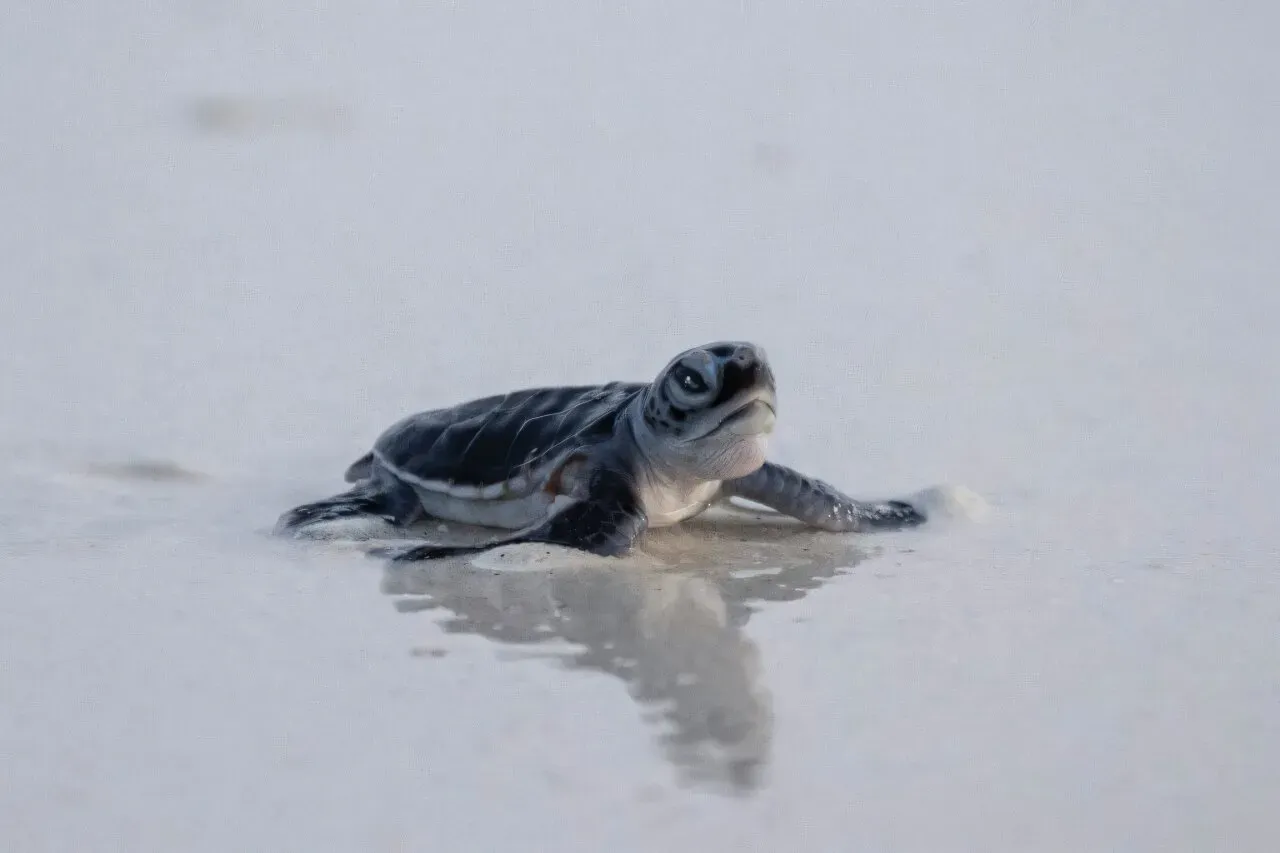
A remarkable conservation success story has emerged from the world of wildlife, as a species that was once on the brink of disaster has made a stunning turnaround. Green turtles, long considered an endangered species, have been reclassified by global conservation rankings as "least concern, a testament to years of dedicated effort and protection.
The news comes amidst alarming trends in the decline of many other species, with a recent report revealing that the average size of monitored wildlife populations has plummeted by 73% over the past 53 years. However, not all is lost, as around half of the thousands of vertebrates tracked for this assessment are showing signs of stability or even growth.
One key player in the green turtle's remarkable recovery is Malaysia, where conservation efforts have been instrumental in bringing the species back from the edge. Experts like Juanita Joseph have worked tirelessly to relocate eggs, establish marine protected areas, and push for trade bans, all crucial steps in safeguarding these incredible creatures.
Joseph's own personal connection to this issue is particularly poignant, as she has dedicated years to genetic research on green turtles and even convinced her father to abandon his habit of eating turtle eggs. Her efforts are a shining example of the dedication and perseverance required to make a real difference in conservation.
The conservation efforts of some countries have been paying off, but there's still a long way to go in protecting sea turtle populations.
Of the six other sea turtle species, all are currently vulnerable or critically endangered, except for the flatback turtle whose status remains uncertain due to limited data.
In addition to habitat destruction and pollution, turtles are also being hunted for their meat and shells, while getting caught in fishing nets is another major threat.
Malaysia stands out as a regional success story, with green turtle nesting numbers having tripled since the 1970s on its Turtle Islands.
On Malaysia's Omadal island, a women's cooperative has been instrumental in boosting green turtle conservation efforts.
The group, which includes Sitti Rasah Abdul from a local fishing community, relocated turtle eggs from beaches to a hatchery starting in 2012. This initiative aimed to protect the eggs from predators and poachers, thereby increasing the chances of successful hatching and survival.
The cooperative's conservation work initially received support from WWF but is now self-funded. A significant portion of their revenue comes from a handicraft and catering business that employs members of the community.
A notable 10% of this revenue is allocated towards turtle protection efforts, demonstrating the group's commitment to preserving green turtles for future generations.
The survival of their business on Mataking Island is intricately linked to the natural resources and breathtaking surroundings that attract tourists.
Sie's comment highlights the delicate balance between conservation efforts and the economic viability of ecotourism ventures like hers.
A key challenge in turtle conservation lies in understanding the lost years," a decade-long period where hatchlings spend in the open ocean, a phase shrouded in mystery due to limited scientific knowledge.
WWF-Malaysia's marine species strategy manager, Gavin Jolis, emphasizes the importance of pinpointing where turtles roam during this period and identifying their foraging and breeding grounds.
Conservation efforts for green turtles rely on understanding their life cycle and genetic makeup.
Researchers are studying the genetic fingerprints of hatchling sea turtles to better comprehend their origins and migration patterns. This involves analyzing bits of flipper tissue from hatchlings that did not survive, which helps identify a turtle's specific haplotype, a unique genetic signature. The data collected so far has already revealed connections between turtles found in Malaysia and those from Micronesia.
The research emphasizes the importance of taking a long-term approach to conservation efforts. Each challenge requires resilience and patience, as small gains can be made incrementally over time. Even seemingly minor successes, such as identifying the source of turtle shells intercepted in Britain, contribute to a broader understanding of green turtle migration patterns.
Facts based on reporting originally published by Phys.org.
You may republish this story, in full or in part, if you credit News Central Site and link to it (licence CC BY 4.0). Photos are not included.