Frequent Wildfires Bring Persistent Air Pollution to North America
Researchers at Colorado State University have developed an innovative tool, the smoke logger, to help understand the impact of wildfire smoke on wildlife health and behavior.
Wildfires have become a persistent threat to ecosystems across North America, bringing with them massive plumes of smoke that can linger in the air for weeks.
Researchers at Colorado State University have developed an innovative tool to help understand the impact of wildfire smoke on wildlife health and behavior: an open-source air quality monitoring device called the smoke logger.
The smoke logger is designed to be paired with systems that track wildlife location and physiological data, allowing scientists to gather valuable insights into how animals respond to smoke exposure in their natural habitats.
According to CSU professor George Wittemyer, who led the project along with U.S. Forest Service wildlife ecologist Mark Ditmer and CSU postdoctoral researcher Adam Parlin, wildfires have become a chronic problem that affects air quality for extended periods.
The researchers' aim is to understand how wildlife adjusts its behavior in response to smoke exposure, and they believe that the smoke logger will provide crucial information that can inform conservation efforts.
Wildfires are becoming increasingly frequent and severe, releasing large amounts of smoke into the atmosphere that can linger for extended periods. This has added a new stressor to wildlife populations, but air quality is often not monitored in wilderness areas.
The small and affordable smoke logger developed by researchers can be attached to animal-borne collars to record the concentration of hazardous particles animals are breathing. This device will provide valuable insights into how wildlife responds to severe smoke events.
Researchers have emphasized that there is a significant knowledge gap regarding the impact of wildfire smoke on animal behavior in the wild. To address this, the team designed the smoke logger as a tool to better understand the consequences of smoke exposure from an animal's perspective.
Wildlife studies are often resource-intensive and typically involve tracking health data such as heart rate along with GPS coordinates. Combining these data with smoke logger information will provide new insights into wildlife welfare and activity levels.
The researchers are collaborating with other scientists across the western United States to integrate their smoke loggers with existing studies on cougars, deer, and elk. They have also deployed sensors in the habitat of the endangered Sierra Nevada fisher, a small mammal related to weasels, to gather data on air quality in its range.
The researchers behind the wildlife collar sensor are now encouraging scientists to incorporate smoke loggers into their existing projects. This collaboration will help gather more comprehensive data on how wildfire smoke affects animal health. Alternatively, researchers can assemble their own smoke loggers for a relatively low cost of around $100 per unit.
To do this, they simply need to download the free, open-source design and programming from the online repository. This DIY approach allows scientists to tailor the sensor packages to suit their specific research needs without incurring significant expenses. By doing so, they can gain valuable insights into the impact of air pollution on individual animals.
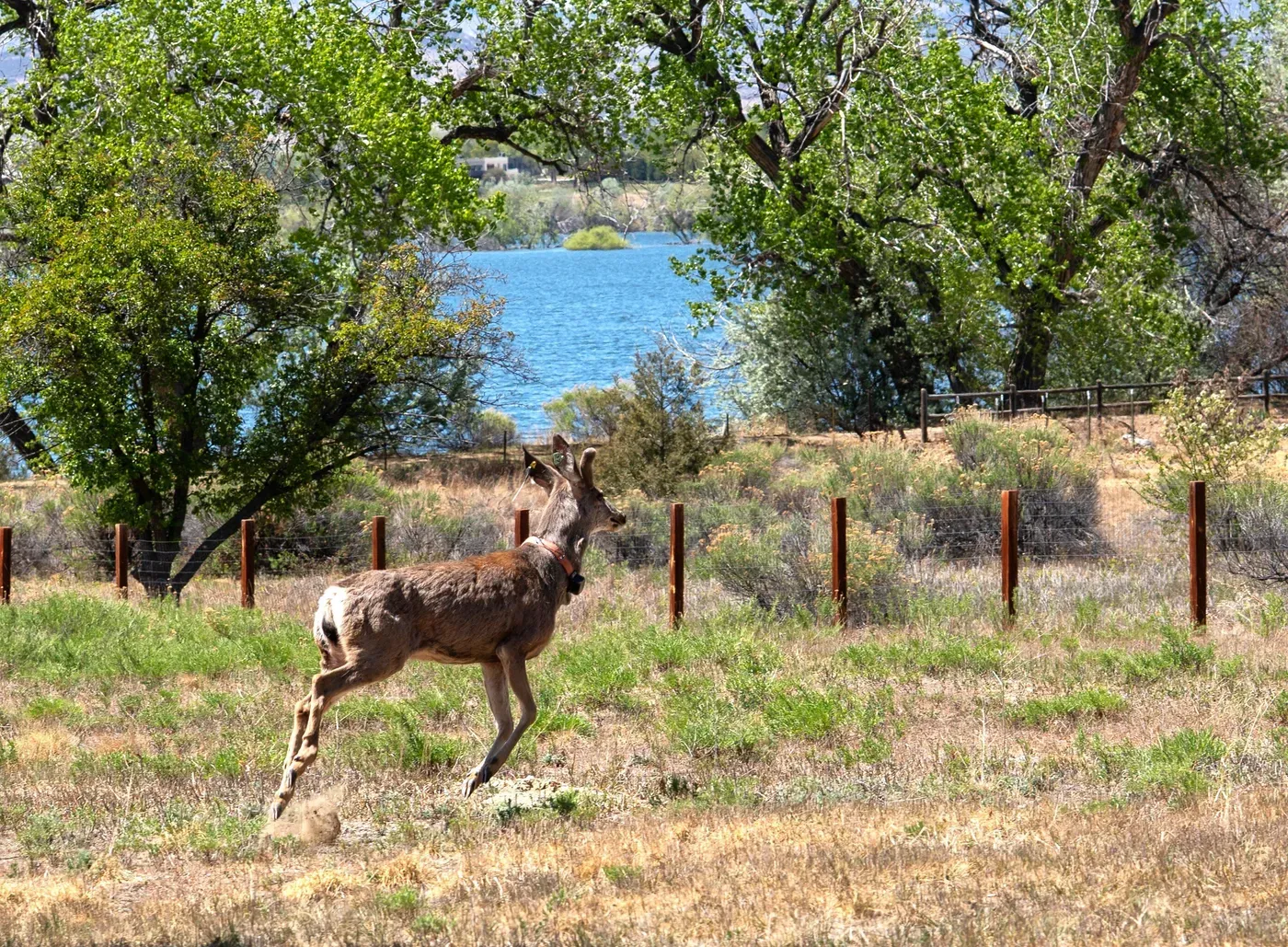
Preliminary tests with mule deer have already revealed that air quality can vary significantly between a single animal and nearby monitoring stations. In some cases, the difference was as much as 10 times greater or less than readings from the closest sensors, underscoring the localized nature of air quality.
The sensor's ability to detect even minor spikes in air pollution has also been demonstrated through its detection of minimal increases in urban-dwelling deer. This sensitivity highlights the potential for these collar-based sensors to provide a more nuanced understanding of animal exposure to poor air quality.
The researchers behind this innovative project sought to create an affordable tool for monitoring air quality, particularly in areas where wildlife roams free. To achieve this goal, they repurposed a low-cost sensor similar to those used by the PurpleAir network, which measures microscopic particles known as particulate matter 2.5.
These tiny particles are hazardous to both human and animal health, particularly when it comes to cardiovascular and respiratory issues. The sensors utilize a laser to detect these particles with remarkable accuracy, making them an invaluable asset in understanding air quality conditions.
The solar-powered smoke logger is designed for medium and large animals, requiring a collar to be worn by the animal during data collection. Once the device has accumulated sufficient data, it must be recovered so that the stored information can be downloaded and analyzed.
A key consideration in designing this system was the need to avoid draining the battery with costly transmission methods. Instead, air quality data is recorded every 30 minutes and stored for later retrieval when the device is recovered.
The sensor is equipped with a small air quality monitor that captures fine particulate matter (PM2.5) concentrations in real-time, providing valuable data on smoke exposure levels. This information can be critical for researchers studying the impact of wildfires on wildlife populations.
Once the device is recovered, the stored data can be analyzed to determine the duration and intensity of smoke exposure experienced by the animal.
Facts based on reporting originally published by Phys.org.
You may republish this story, in full or in part, if you credit News Central Site and link to it (licence CC BY 4.0). Photos are not included.