OpenAI Releases 722 Papers Demonstrating AI's Ability in Complex Mathematical Problems
The release of 722 papers by OpenAI marks a major milestone for AI research, tackling a wide range of mathematical topics with unprecedented ease.
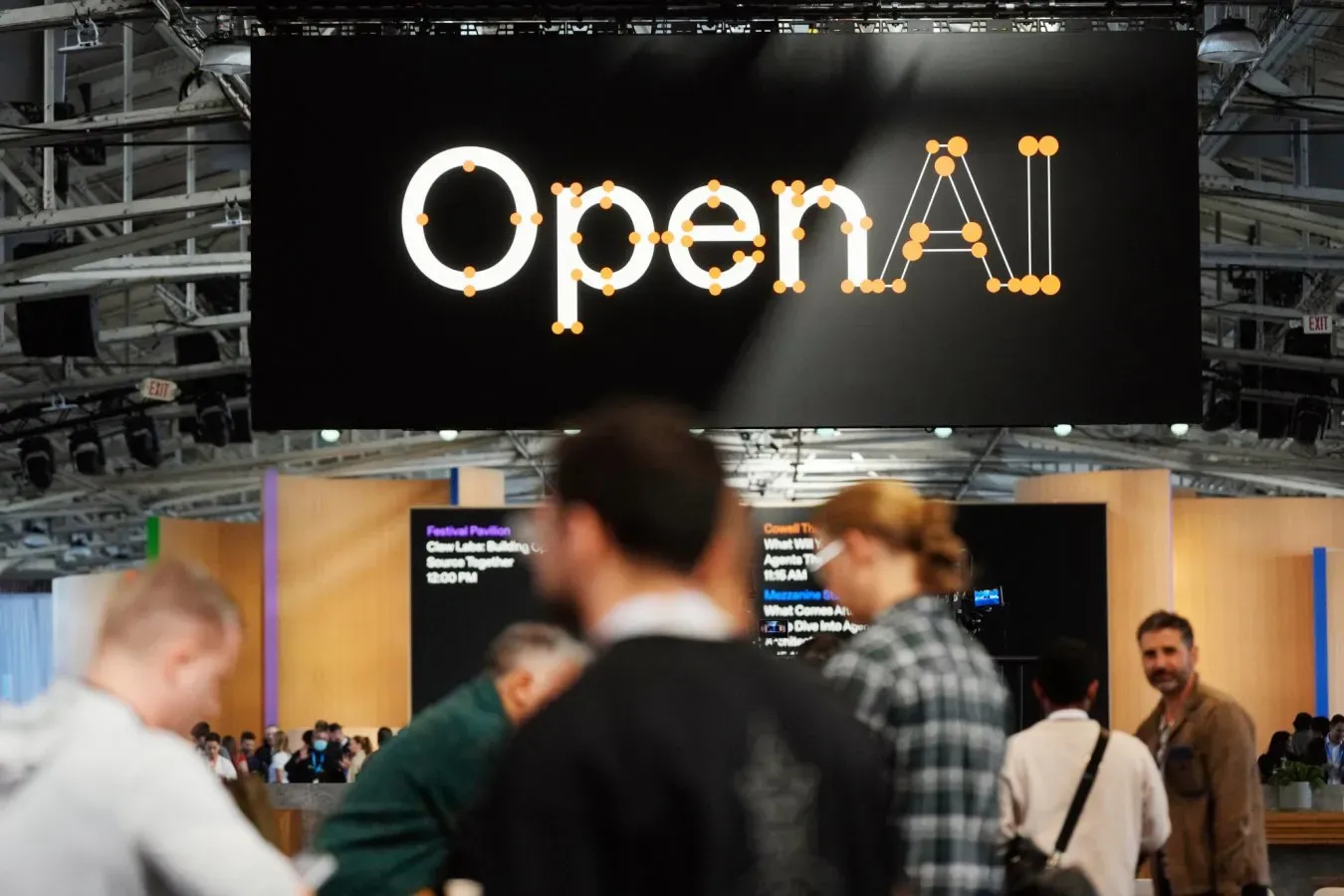
OpenAI has made a significant breakthrough in mathematics, releasing 722 papers that demonstrate the power of artificial intelligence in tackling complex mathematical problems.
The release on October 7th marks a major milestone for AI research, as OpenAI's models have been able to tackle a wide range of topics with unprecedented ease. The sheer volume of papers is staggering, covering everything from longstanding mathematical mysteries to minor improvements in lesser-known areas.
Many of the papers are lengthy and dense with complex calculations, making it challenging for mathematicians to quickly verify their accuracy. Furthermore, some of these papers have not been formalised, which means that even if they appear correct, there's no guarantee that a computer can check them properly.
Already, three papers have been retracted due to errors or inaccuracies, highlighting the need for careful verification in this field. Despite these challenges, initial reviews suggest that several papers are likely to make a significant impact, particularly those related to Millennium problems, seven mathematical puzzles considered among the most important and difficult in mathematics.
OpenAI has made significant inroads into solving some of mathematics' most enduring puzzles, including the Navier-Stokes equations and the Riemann hypothesis. The latter is an unproven rule about prime numbers that would provide a comprehensive map of their distribution across the number line if proven.
The company's models have not directly tackled the original Riemann hypothesis but instead focused on its less stringent variation, the quasi-Riemann hypothesis. This version deals with how far prime numbers deviate from their expected position in the number sequence. If the result holds up, it would mark a substantial breakthrough in years.
Mathematicians have been struggling to crack these complex problems for decades, and OpenAI's efforts may offer a crucial stepping stone towards full solutions. The company's papers also touch on two other Millennium problems: the Birch and Swinnington-Dyer conjecture and the Hodge conjecture.
These latter two problems are closely related to the Riemann hypothesis in that they too deal with prime numbers, although from different angles. OpenAI's models have reportedly proven partial versions of these conjectures, which could provide valuable insights for mathematicians working towards full solutions.
Researchers have made significant progress in expanding solutions to complex mathematical problems, including the Kakeya conjecture, which deals with the shape created by a rotating needle. This problem has long been a subject of interest among mathematicians, and OpenAI's latest findings offer new insights that could potentially lead to groundbreaking breakthroughs.
One notable development is the extension of existing solutions into four dimensions, a move that could have far-reaching implications for mathematical understanding if proven correct. While the full scope of this achievement remains to be seen, its potential to shake up established theories cannot be overstated. This breakthrough, if confirmed, would represent a major milestone in the field.
Other OpenAI papers focus on refining existing algorithms and improving their efficiency. For instance, one study claims that integer multiplication can theoretically be performed significantly faster than previously thought, with estimates suggesting a speedup of 2^(-182). While this improvement may seem negligible at first glance, equivalent to shaving off less than 1 divided by 14 million billion billion billion times the age of the universe from processing time, it still represents a valuable gain.
These incremental advancements, though modest, demonstrate that further refinements are indeed possible. Moreover, some problems tackled in the OpenAI papers take on a more accessible nature, such as the challenge of colouring points on a plane without adjacent points sharing the same hue.
The release of 722 new papers by OpenAI has left mathematicians with a daunting task: verifying the accuracy of AI-generated mathematical discoveries. One such discovery concerns the minimum number of colours needed to colour points on a plane without adjacent points sharing the same hue.
Researchers had previously estimated that five or six colours would suffice, but this latest work appears to rule out the possibility of using just five colours. The sheer volume of new research is overwhelming, making it challenging for mathematicians to review and validate each finding.
This influx of AI-generated maths could have far-reaching implications for the field as a whole. If these discoveries hold up to scrutiny, they may revolutionize mathematics, but if not, they could lead to confusion and wasted effort.
Facts based on reporting originally published by New Scientist.
You may republish this story, in full or in part, if you credit News Central Site and link to it (licence CC BY 4.0). Photos are not included.