Google's Demis Hassabis Speaks on AI at International AI Summit
Demis Hassabis made a hopeful case for artificial intelligence at the International AI Summit in Dublin, Ireland, speaking to global leaders about using AI to address climate issues.
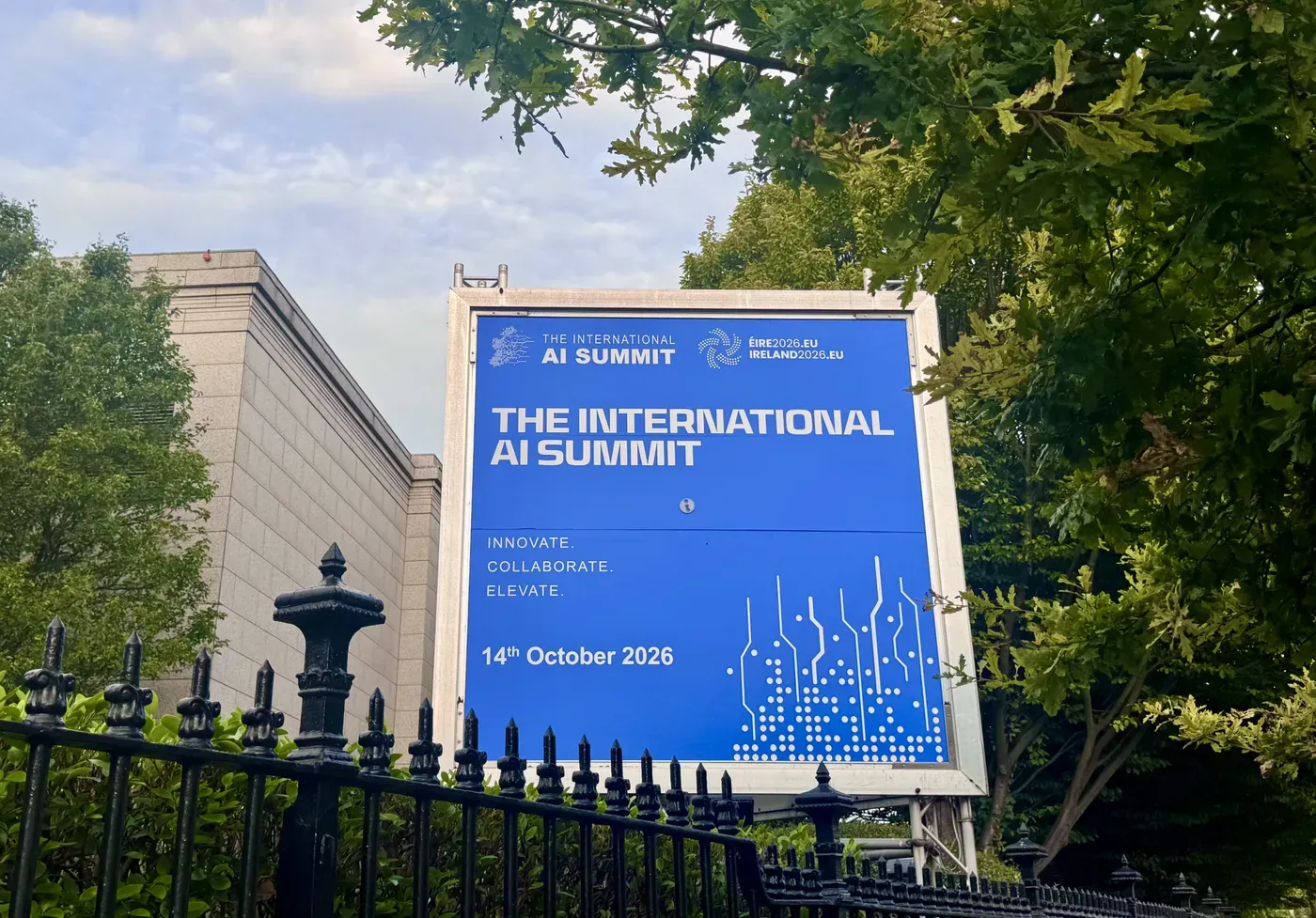
Google's Demis Hassabis made a hopeful case for artificial intelligence at the International AI Summit in Dublin, Ireland, speaking to global leaders about using AI to address climate issues. He believes that AI can provide the necessary technology to tackle environmental challenges.
Hassabis' optimism was on full display as he highlighted the potential of AI to make a positive impact. However, his talk also touched on recent developments in the field, including the rollout of Google's new Gemini 4 Argon model and the controversy surrounding OpenAI's claim to have solved the Navier-Stokes equation.
The Navier-Stokes equation is one of the most difficult mathematical problems in history, and OpenAI's achievement has been met with skepticism by some experts. Hassabis' brief mention of this topic was a reminder that AI continues to evolve at a rapid pace.
In related news, Hassabis spoke about the potential of artificial general intelligence (AGI) just last month at Google I/O in California. He described AGI as the "foothills of the singularity" and suggested that achieving it may not be far off.
Hassabis' discussion time at the conference was initially intended to provide an update on progress toward achieving Artificial General Intelligence (AGI). However, he seemed to have shifted focus away from this topic.
Instead, Hassabis highlighted AI's remarkable capabilities in areas such as mathematics, coding, and games like Go. He noted that these domains require a level of precision and computational power that AI systems excel at providing. In contrast, physical and natural sciences like physics, chemistry, and biology demand human creativity, judgment, and intuition.
Hassabis' emphasis on AI's strengths in specific areas was likely influenced by his own work with DeepMind. In 2024, he, along with colleague John Jumper and University of Washington scientist David Baker, received the Nobel Prize in Chemistry for developing an AI model that can predict protein structures.
The conference discussion turned to a pressing concern: the significant environmental impact of AI's growing infrastructure. The massive expansion of data centers is driving up demand for fossil-fuel power plants, exacerbating the climate crisis.
Google's Demis Hassabis is optimistic about the potential of artificial intelligence to drive breakthroughs in green technology and clean energy. He believes that AI systems can be designed to help mitigate the impact of climate change by improving climate modeling and weather forecasting.
According to Hassabis, AI will also play a crucial role in developing new sources of sustainable energy, including fusion reactors, advanced materials such as superconductors, better batteries, and improved solar panels. This could ultimately provide the technology needed to address the climate crisis.
Hassabis' vision for the future of AI and sustainability is one where these technologies work together to reduce humanity's reliance on fossil fuels and mitigate the effects of natural disasters like floods, fires, and hurricanes.
Facts based on reporting originally published by CNET.
You may republish this story, in full or in part, if you credit News Central Site and link to it (licence CC BY 4.0). Photos are not included.