Paul Simon and Art Garfunkel Sign with Big Records at Age 15
The duo began performing together as children, eventually landing a record deal and releasing their first single.
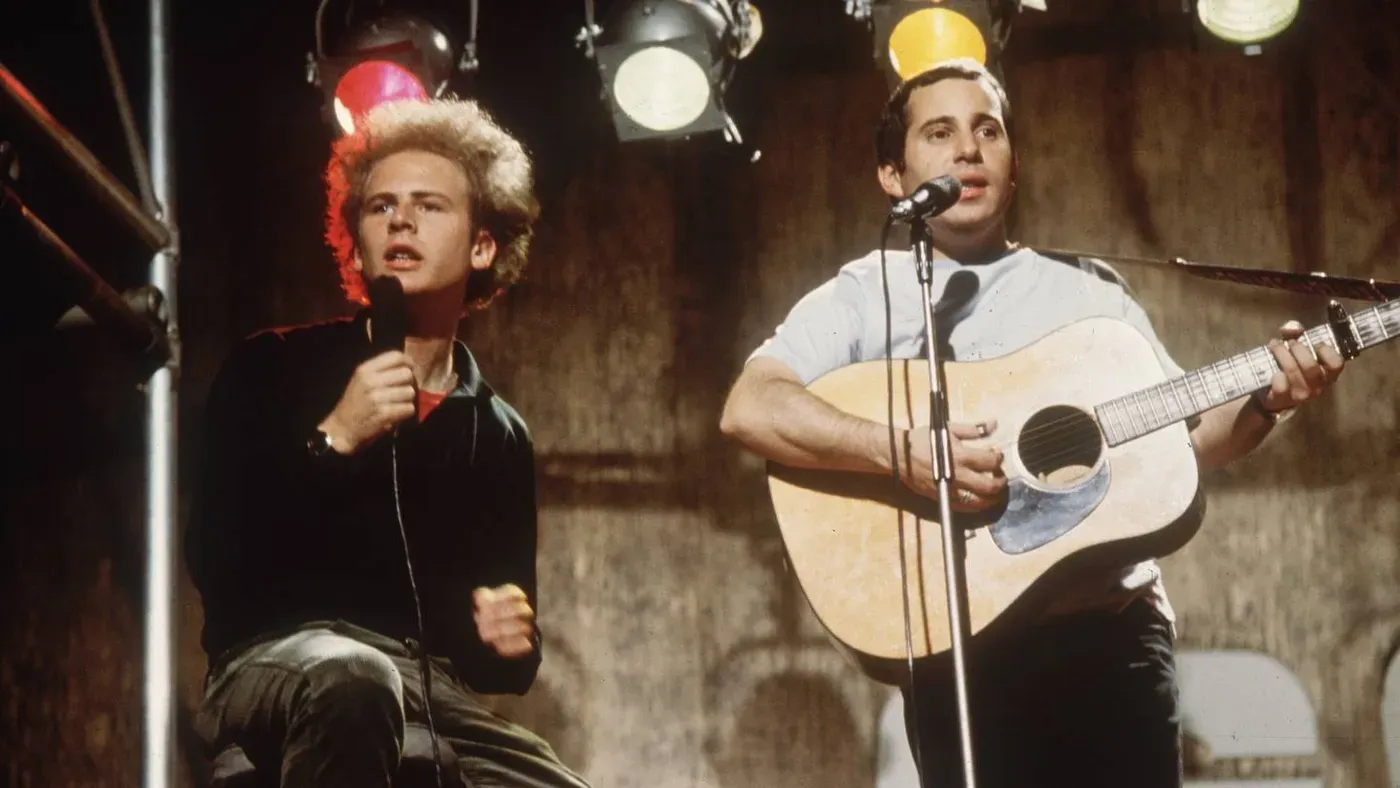
Paul Simon and Art Garfunkel, one of music's most iconic duos, have a remarkable history that spans from their childhood in Queens, New York to their rise to global fame. The two men grew up in the same neighborhood, attended the same schools, and shared a passion for popular music.
Their early experiences laid the foundation for their future success. As children, Simon and Garfunkel began performing together, starting with a sixth-grade production of Alice in Wonderland. This marked the beginning of a long-standing musical partnership that would go on to shape the course of pop history.
In their teenage years, the duo's talents caught the attention of record labels. By the time they were 15, Simon and Garfunkel had written and sold their first single, "Hey, Schoolgirl, and signed with Big Records, marking a significant milestone in their careers.
Simon and Garfunkel's musical journey is well-documented, but one aspect of their story remains relatively unknown, the origins of their most successful song as a duo. Despite their later success, the lead vocalist of this iconic track had initial reservations about performing it.
As their music career took off, Simon & Garfunkel continued to balance education with creative pursuits. The duo's early success was marked by their first professional contract with Big Records, secured at just 15 years old.
Their subsequent collaboration as Tom & Jerry led to the writing and release of songs, including Hey, Schoolgirl, which they had written and sold earlier. This experience laid the groundwork for their future work together.
After Simon graduated from Queens College, he reconnected with Garfunkel, who was studying at Columbia University. The duo reunited under a new moniker, Kane & Garr, and began performing in Greenwich Village.
Their music caught the attention of Tom Wilson, an A&R man from Columbia Records, leading to their signing with the label. This move marked a significant turning point in their career, paving the way for future success.
The pair's debut studio album, Wednesday Morning, 3 A.M., was released by Columbia Records in October 1964. The album received positive reviews and set the stage for their subsequent releases.
Following the success of their first few albums, Simon & Garfunkel went on to release three more well-received LPs: Sounds of Silence," "Parsley, Sage, Rosemary and Thyme," and "Bookends. These albums solidified their status as two of the most successful artists of their time.
The album Bridge Over Troubled Water has undergone a significant transformation over time. Initially met with mixed reviews upon its release in 1970, it is now widely regarded as one of the finest folk-rock works of that decade.
Several songs from the album have become deeply ingrained in popular culture. Cecilia" and "Bye Bye Love are just two examples of the timeless tracks that continue to resonate with audiences today. The album also features a haunting rendition of the Peruvian classic, El Cóndor Pasa.
A surprising aspect of Bridge Over Troubled Water is its title track's almost-alternate history. Despite becoming an iconic hit by reaching number one on the Billboard Hot 100 chart, it was nearly very different from what we know today.
Paul Simon drew inspiration for Bridge Over Troubled Water from a gospel song called Oh Mary Don't You Weep, performed by the legendary group the Swan Silvertones. According to Simon's own recollection, he would often listen to this record upon returning home and it would stay with him, influencing his work.
Simon took the melody of Oh Mary Don't You Weep and adapted it to incorporate gospel chord changes. This creative process reflects the artist's interest in exploring different musical styles and traditions.
The impact of Simon's unique approach can be heard in the final version of Bridge Over Troubled Water, which features a distinctive blend of folk, rock, and gospel influences.
The influence of gospel music on Simon's songwriting is evident in Bridge Over Troubled Water. The track was inspired by the classic gospel number Oh Mary Don't You Weep performed by the Swan Silvertones.
When Simon first played his demo to Art Garfunkel, he reportedly didn't want to sing lead vocals. According to Simon, his partner felt that he should have taken on the task himself. This initial reluctance was a surprising twist given Garfunkel's distinctive contribution to the final version of the song.
In hindsight, it seems clear that Simon was initially hesitant about having Garfunkel sing lead on Bridge Over Troubled Water". Simon has stated that many times he wished he had taken on the responsibility himself. This would have been a significant departure from the eventual arrangement.
It's worth noting that decades later, Garfunkel claimed that his initial hesitation was an act of generosity. He felt that the song was so strong that it should be led by Simon, rather than himself.
Paul Simon had written a song so powerful that it sparked an unexpected debate within the duo. Initially, Art Garfunkel felt that the song was too strong to be led by him and instead should be spearheaded by Simon.
This bold gesture of generosity on Garfunkel's part may have been genuine, but its nature remains unclear even decades later. Regardless of his true intentions, it is intriguing to consider an alternate reality where this iconic number might not have featured Garfunkel's voice as the lead singer.
Facts based on reporting originally published by Mental Floss.
You may republish this story, in full or in part, if you credit News Central Site and link to it (licence CC BY 4.0). Photos are not included.