Ganoderma lucidum and Ganoderma lingzhi Distinguished After Centuries of Confusion
For centuries, a crucial distinction between two species of fungi has eluded scientists: Ganoderma lucidum, a European bracket fungus described in 1781, and Ganoderma lingzhi, an East Asian...
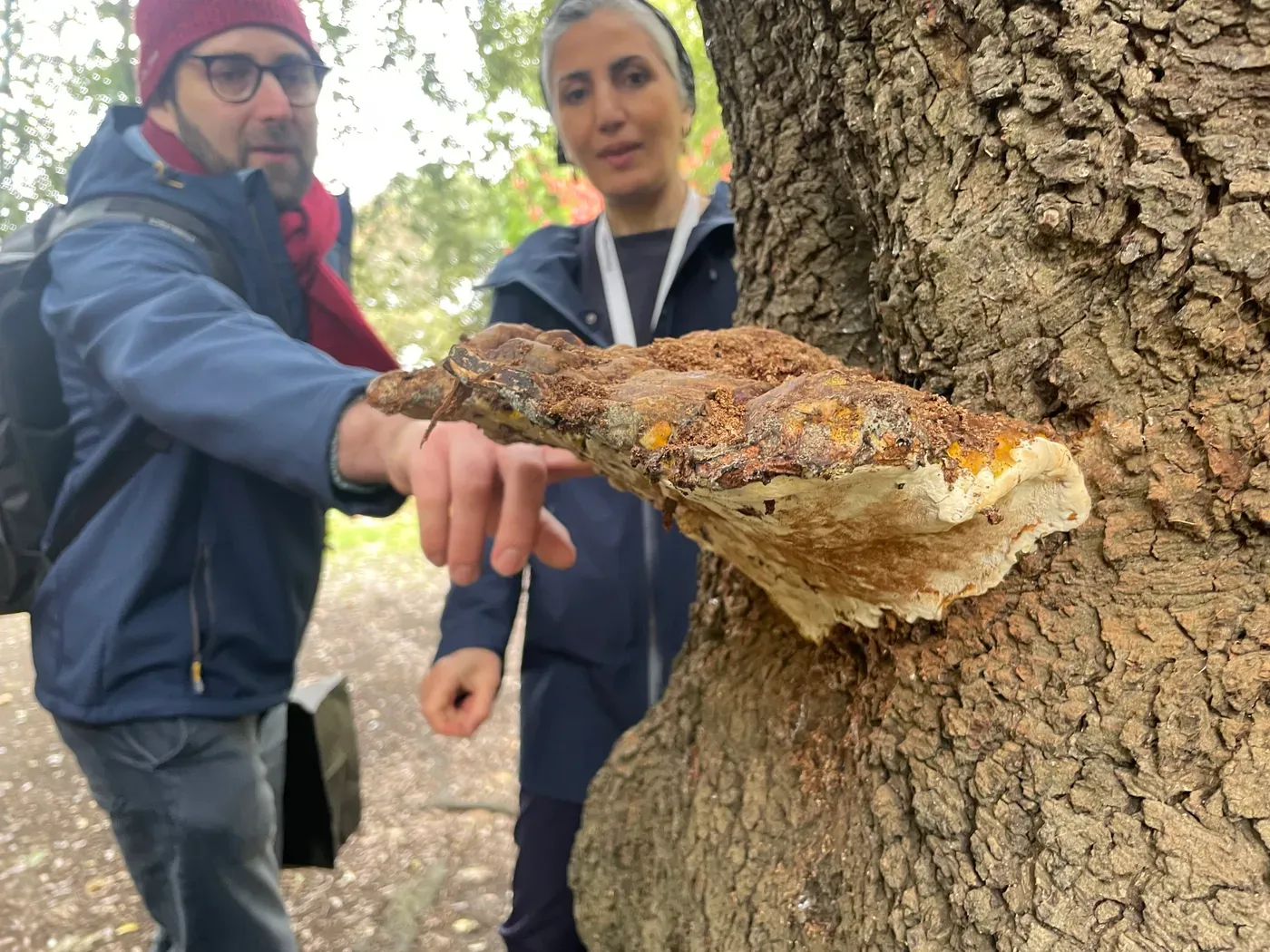
For centuries, a crucial distinction between two species of fungi has eluded scientists: Ganoderma lucidum, a European bracket fungus described in 1781, and Ganoderma lingzhi, an East Asian species associated with medicinal lingzhi or reishi. This confusion has led to widespread misidentification of the two species.
The consequences have been significant, affecting not only consumers but also the traditional Chinese medicine industry, which is estimated to be worth over £200 billion ($271.14 billion). The similarity in appearance between these fungi has made it difficult for scientists and medical professionals to distinguish between them.
Despite their similarities, G. lingzhi holds a special place in traditional medicine due to its purported anti-inflammatory and anticancer properties. However, the frequent confusion around its identity has hindered pharmaceutical research on this species, leaving many questions unanswered about its medicinal benefits.
The widespread use of these fungi as supplements in North American and European markets has raised concerns about consumer safety and satisfaction, particularly given the unclear distinction between G. lucidum and G. lingzhi.
The compounds produced by Ganoderma species have long been of interest to scientists, particularly beta-glucans and triterpenoids. The latter group has shown promising results in treating brain tumor cells in mice, sparking further research into their medicinal properties.
Historic fungal specimens housed at Kew's Fungarium have provided valuable insights for researchers studying the Ganoderma species. By analyzing these specimens, scientists are now confident that two previously thought to be identical species diverged from one another at least 16 million years ago.
This distinction is crucial in understanding the unique characteristics of each species. The researchers propose a new common name for G. lucidum - "false lingzhi - to clarify its identity and prevent confusion with other Ganoderma species.
The similarity between these two fungi was previously overstated, according to Dr. Torda Varga, who led the project. She notes that treating them as identical is comparable to grouping humans and orangutans together as a single species, highlighting the significant differences that can arise over millions of years of evolution.
These differences extend beyond physical characteristics to include variations in chemical properties, which are particularly relevant when studying fungi used in traditional medicine. Accurate identification, like that achieved by the researchers, is essential for ensuring authenticity and quality control.
The origins of this mix-up date back to 1781, when botanist William Curtis first described G. lucidum as a species. Unfortunately, only an illustration of the original type specimen survives, leaving researchers without physical material to study for centuries.
The naming conventions for medicinal Ganoderma species have been a source of confusion due to their shared common and Latin names. Specifically, G. lucidum has been attributed to various fungi that resemble one another but are distinct species.
This misattribution has led to inconsistent identification and incorrect attribution of pharmacological data to G. lucidum over the years. The lack of clear distinction between these similar species has contributed to the confusion in the scientific community.
In 2025, Dr. Viktor Papp from the Hungarian University of Agriculture and Life Sciences visited Kew's Fungarium collections to study historic specimens and resolve the long-standing confusion surrounding G. lucidum. During his visit, he discovered a mislabeled fungus collected near London that matched Curtis' original description from 1781.
This discovery provided the team with valuable genetic material for sequencing, which became a crucial reference point in identifying the species accurately. The researchers used the resulting DNA data to compare against publicly available sequences assigned to G. lucidum.
The conventional method of DNA barcoding, which relies on short genomic fragments characteristic of each species, proved ineffective for Ganoderma identification. Out of 1,130 public sequences attributed to G. lucidum, only 149 were accurately identified as such using this method.
The study's findings have shed light on another aspect of confusion within this group of fungi. To accurately identify species, researchers should rely on multiple genetic fragments combined with evolutionary modeling to ensure confident identification.
Studying the whole genome not only aids in accurate identification but also has the potential to reveal new medicinal compounds. However, when the reference material was integrated into existing G. lucidum" genomes, it revealed that these genomes actually belong to different species. This means no complete G. lucidum genome is available for studying its biology and medicinal properties.
There are indications that G. lucidum may possess bioactive properties, but further research is needed to fully understand its biology and potential medicinal uses. This additional study would also help policymakers and industry stakeholders avoid confusion by ensuring accurate identification of species.
Research into the Ganoderma genus continues to yield interesting results, with distinct clades emerging in different regions. The East Asian lineage has been identified as possibly representing a new species, and a Chinese research group recently officially described it as G. sinolucidum.
The mystery surrounding a medicinal mushroom mixture known as sinolucidum has been solved by scientists after 245 years. This blend of lingzhi mushrooms was believed to have health benefits due to its supposed unique composition, but researchers found it to be nothing more than a combination of common species.
Further investigation revealed that the distinct properties attributed to sinolucidum were actually a result of contamination with other substances, not an inherent characteristic of the mixture itself.
Facts based on reporting originally published by Phys.org.
You may republish this story, in full or in part, if you credit News Central Site and link to it (licence CC BY 4.0). Photos are not included.