Trans individuals find new ways to express themselves through affordable fashion swaps
Clothing swaps provide a sense of safety and community for marginalized communities.
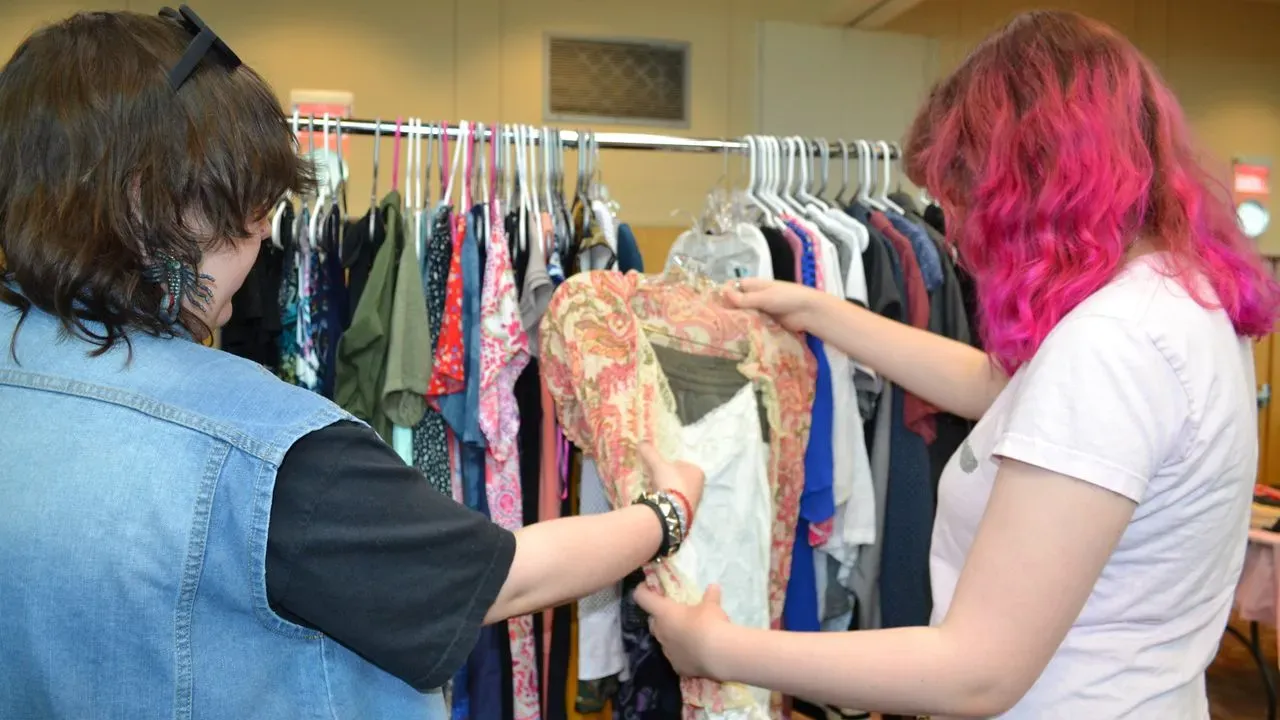
Trans individuals across the United States are finding new ways to express themselves through clothing swaps, which provide not only affordable fashion but also a sense of safety and community.
For those who attend these events, like Isaiah Kirk in Chicago, it's about more than just picking out a trendy outfit - it's about embracing their identity without fear of judgment or rejection. Kirk recently left the Uncommon Closet with a stylish combination of jeans and a Pokémon graphic tee, all for free.
Kirk identifies as nonbinary and transmasculine, and like many others in similar circumstances, finds solace in clothing that allows them to express themselves authentically. As anti-trans legislation continues to be implemented nationwide, these gatherings have become crucial for fostering a sense of belonging among marginalized communities.
AJ Mix, who runs community outreach at the Uncommon Closet, has seen firsthand the impact of these events on clients struggling with body dysmorphia or dysphoria. Many are trans or queer individuals who've faced discrimination for not conforming to societal expectations surrounding their assigned sex at birth.
The Uncommon Closet's mission is not just about providing clothes, but also a sense of safety and comfort for those who need it most. According to Mix, their clients often come from traumatic experiences related to shopping, making even simple tasks like buying clothes a daunting task.
As a result, Mix offers a therapeutic approach to personal styling, often accompanying clients on trips to stores that may be intimidating or overwhelming without support. This personalized service is particularly important for trans women who are early in their transition and may not feel comfortable navigating traditional shopping environments alone.
Mix initially planned the Uncommon Closet's clothing swap as a one-time event during its grand reopening in 2024, but the high demand for this free service prompted them to expand it into a regular occurrence. Today, they host three swaps per year, tailored to Chicago's seasonal weather shifts: spring, summer, and winter.
The popularity of Mix's clothing swaps can be attributed in part to the influx of individuals from the South moving to Chicago due to the changing political climate. This demographic shift has created a need for accessible and inclusive services like the Uncommon Closet's.
The Uncommon Closet's founder has witnessed firsthand the joy of scoring a binder at one of their clothing swaps, where attendees can take home gently used items for free.
These meetups are not just about acquiring new clothes, but also about building connections and finding a sense of belonging within the trans community. Carroll notes that often people arrive alone but leave with new friends and a stronger connection to their community.
The need for accessible services like these clothing swaps is underscored by Christabell Nunez, who wanted to create a safe space in Austin where marginalized individuals of all body sizes could explore fashion without judgment or scrutiny.
The clothes swaps are designed to be a take-what-you-need affair, with participants encouraged to help themselves to as much clothing as they can use without restriction. However, there is one caveat: attendees are asked not to resell the donated items for profit.
Librarians are also getting in on the action, recognizing that these swaps provide an opportunity to promote inclusivity and diversity within their communities. For instance, at a library's first swap event, a refugee mother was able to find new clothes for her children after fleeing her home country with only two suitcases of belongings.
In Texas, where anti-trans laws have been proposed in large numbers, including the highest number in the United States in 2021, librarians are working hard to ensure that their programming and literature is inclusive. This includes making a conscious effort to showcase diverse voices and perspectives.
Meanwhile, on the other side of the state line in Tennessee, Jack Knoxville had his own reasons for starting a clothing swap back in 2016: he felt there was a lack of positive representation for trans individuals in his home state, which only exacerbated existing feelings of marginalization.
Clothing swaps are not just about exchanging old clothes for new ones; they're also about building confidence and resilience in trans individuals. For those who participate, the experience can be transformative, equipping them with essential items for daily life, such as warm clothing for winter months or professional attire for job interviews.
The impact of these swaps is profound, with participants often reporting feelings of euphoria and empowerment, much like getting a fresh haircut. This sense of confidence can stay with individuals long after the swap ends, helping them navigate challenging situations with greater ease. By sharing their expertise, Knoxville has empowered others to host similar events in their own cities, fostering a culture of creativity and resourcefulness within trans communities.
Facts based on reporting originally published by Vogue.
You may republish this story, in full or in part, if you credit News Central Site and link to it (licence CC BY 4.0). Photos are not included.