French Economist Hosts Summit in Paris After California Setback
Gabriel Zucman is hosting a summit in Paris on Saturday to discuss taxing billionaires.
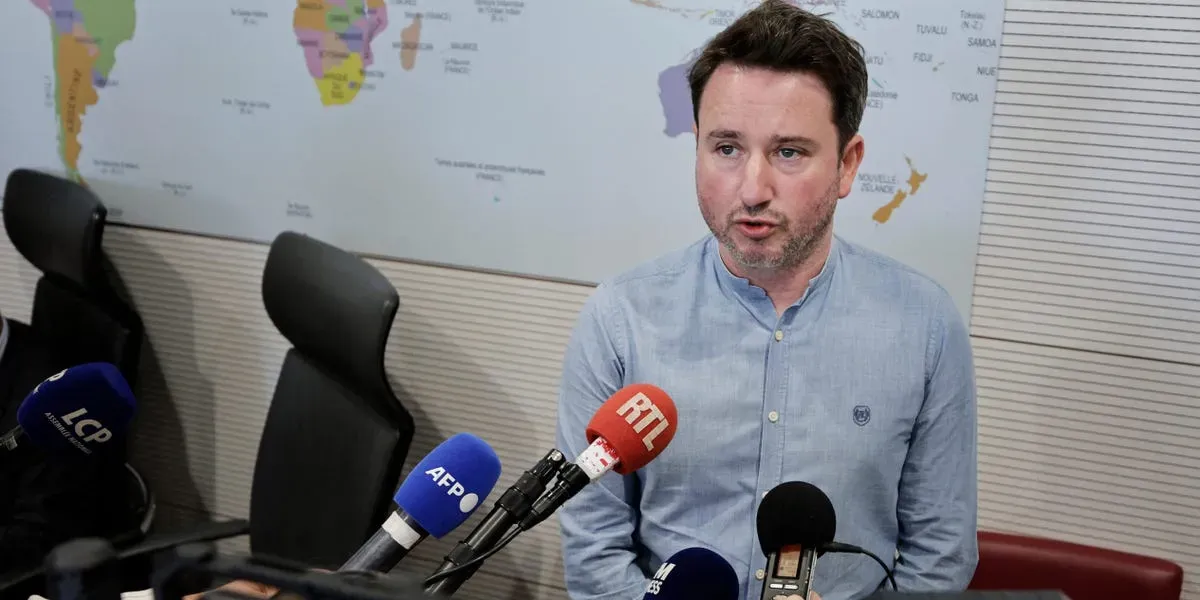
A French economist is taking his fight against billionaire tax avoidance to the global stage after a setback in California.
Gabriel Zucman, who has spent over a decade developing ways to tax the ultra-rich, will host a summit in Paris on Saturday to confront what he calls "international oligarchy. This comes just weeks after California voters rejected a billionaire tax backed by Zucman. The campaign against it was heavily funded by tech mogul Sergey Brin and other opponents.
Zucman views his loss as only a temporary setback, citing broad public support for taxing billionaires across the globe. He believes that even in defeat, progress can be made, pointing to recent midterm election results in the US where several Democrats who campaigned on taxing the ultra-rich won their seats.
The French billionaire's fight for a minimum tax on the largest fortunes is gaining international attention, with left-wing leaders from Italy, Brazil, Spain, and the UK expected to attend an upcoming event.
A key document in this effort is the Paris Manifesto, published just days ago, which outlines a comprehensive agenda for progressive change. The manifesto calls for a range of measures, including rules for artificial intelligence and protections for independent media.
The question on everyone's mind is whether Zucman's ideas will resonate with policymakers outside France. His signature proposal, a minimum annual tax of 2% on the largest fortunes, was rejected by the French Senate last year, but he remains undeterred.
Eva Joly, a prominent figure in French politics and a former European lawmaker for the Greens, has given her full-throated endorsement to Zucman's program. It's a real program to save our democracy," she declared, highlighting the urgent need for reform.
As global talks on taxing the super-rich stall under the current US presidency of the G20, Zucman is looking ahead to next year when Britain takes over the rotating presidency and may be more receptive to his ideas.
Tax reform efforts are gaining momentum across Europe as various countries explore ways to tackle corporate taxation and wealth inequality.
In several European nations, including the Netherlands, Belgium, and Spain, bills are being drafted to target the wealthy, according to economist Gabriel Zucman. The British government is also beginning to consider implementing a similar measure.
The issue of low taxes on multinationals was highlighted by an official who argued that such policies distort competition with domestic firms. This expert stressed that addressing this problem falls squarely within the purview of the European Commission and Parliament.
European Council President António Costa is reportedly weighing a tax on US tech giants to fund the EU's next seven-year budget, following Trump's disappointing performance in the midterms which eased concerns about potential Washington retaliation.
The French billionaire's proposal for a 2% wealth tax is gaining international attention following his defeat in California.
Zucman has claimed that he had invited prominent figures from across Europe to support his idea, but both former EU competition chief Margrethe Vestager and former Italian Prime Minister Mario Draghi declined the invitation.
In France, however, Zucman's proposed 2% annual wealth tax has found some supporters among left-wing parties ahead of next spring's presidential election. The far-left France Unbowed party and the Greens have fully endorsed his proposal.
François Geerolf, an economist at Sciences Po's OFCE, has questioned the merits of Zucman's plan in a recent paper, arguing that it could do more harm than good by imposing an annual tax on fortunes rather than closing loopholes used by billionaires to shield their income from taxation.
The criticism against Zucman's tax plan continues to grow, with some experts questioning its potential impact on France's economy.
Estimates suggesting the tax would raise €20 billion annually in France have been disputed by economists, who argue that the actual proceeds could be significantly lower, ranging from €2 billion to €6 billion per year.
A campaign group backed by business executive Eric Maumy has also weighed in against Zucman's plan, releasing a study that characterizes it as confiscatory and unconstitutional.
Facts based on reporting originally published by Business Insider.
You may republish this story, in full or in part, if you credit News Central Site and link to it (licence CC BY 4.0). Photos are not included.