Possible Cyberattack on US Military Commissaries Under Investigation
The Pentagon is leading an investigation into possible cyberattacks on US military commissaries following refrigeration control malfunctions.
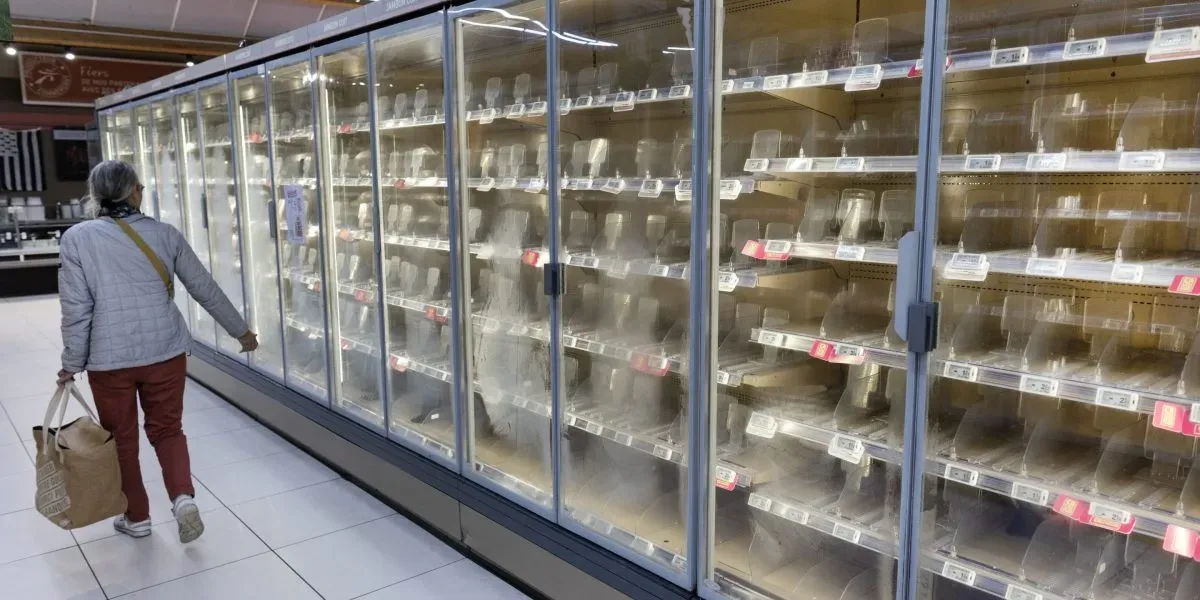
Reports are emerging of a possible cyberattack on US military commissaries, with the Pentagon's criminal investigators leading a joint probe into freezer failures at these stores in August.
The investigation is treating the incidents as potential cyberattacks, although there is currently no concrete evidence to support this theory.
Similarities between the two incidents have raised concerns among security experts, who note that hundreds of French supermarkets experienced identical refrigeration control malfunctions just weeks ago.
French supermarkets Intermarché and E.Leclerc reportedly suffered an estimated €270,000 in combined stock damage due to the malfunctioning freezers, according to local news outlet Sud Ouest .
Experts warn that cyberattacks targeting refrigeration systems can have devastating financial consequences for businesses, as spoiled or damaged goods cannot be recovered.
A key principle in military strategy is that logistics and supplies are essential for success on the battlefield. This is particularly true when it comes to perishable goods, which require refrigeration to remain safe for consumption. It's therefore not surprising that hackers have begun targeting refrigeration systems in a significant way.
In France, hundreds of supermarkets fell victim to this type of attack earlier this month. The temperature in their freezers and refrigerators was raised overnight to over 122 degrees Fahrenheit, causing food spoilage and even fires at some locations. The affected stores included Carrefour, Monoprix, and Intermarché outlets.
The investigation into these outages has been a collaborative effort between the Pentagon and French authorities. This partnership is also looking into similar incidents reported across Europe. These attacks have significant financial implications for businesses that rely on refrigeration to store perishable goods.
The U.S. military's own commissaries were impacted by refrigerator outages in August. More than half a dozen bases experienced disruptions, including Fort Irwin in California, Holloman Air Force Base in New Mexico, and Little Rock Air Force Base in Arkansas. Commissaries typically offer discounted goods to service members, costing around 25% less than civilian grocery stores.
The possibility that these outages were the result of hacking was first reported by The Substack Signal and Silence. As concerns about cybersecurity threats grow, experts are warning of the devastating financial consequences for businesses affected by such attacks.
The Pentagon has confirmed that its Defense Criminal Investigative Service is leading a joint investigation into the recent outages at hundreds of French supermarkets.
Cybersecurity threats have been escalating globally in recent years, with numerous high-profile attacks targeting corporations and government agencies. This September alone saw more than a dozen major cyber incidents, according to the Center for Strategic and International Studies. The economic impact of these attacks is also significant, with Cybersecurity Ventures projecting that cybercrime will cost the global economy $10.8 trillion this year.
The rapid development of artificial intelligence capabilities has made hacking increasingly sophisticated, while the proliferation of internet-connected appliances has created a growing number of potential targets. Cybersecurity experts have long warned that it was only a matter of time before practical household devices like refrigerators became vulnerable to cyberattacks.
As concerns about cybersecurity threats grow, experts are warning of the devastating financial consequences for businesses affected by such attacks. According to Nadiya Kostyuk, an assistant professor at the Carnegie Mellon Institute for Strategy and Technology, many household appliances have "a lot of really cool features" but their security is often not a top priority during design.
Kostyuk notes that it's surprising it took so long for refrigerators to be targeted by hackers. She hopes future inventions will prioritize security in their design, and existing devices will be updated to mitigate potential cyberattack vectors.
The vulnerabilities exploited by hackers in French supermarkets were linked to specific remote controllers for refrigeration systems, including Danfoss AK-SM and AK-SC series devices, as well as Copeland xweb and Dixell xweb units.
These devices, if running outdated firmware, can be accessed through the internet, allowing hackers to take control of them. The French authorities have identified this as a key factor in the outages that affected hundreds of supermarkets.
The reliance on commercial refrigeration systems with similar architecture across multiple chains creates an attractive target for hackers. According to cybersecurity experts, once one system is compromised, it's often possible to generalize the vulnerability to other connected systems.
This approach can be particularly effective when targeting supply stores, where outages can have significant practical consequences. In addition to disrupting food supplies, such incidents can also compromise hygiene and morale among affected personnel.
NATO's cybersecurity headquarters in Mons, Belgium, plays a crucial role in identifying and sharing hacking techniques among allied countries. This partnership allows for swift information-sharing when significant attacks occur, potentially triggering NATO's collective defense mechanism under Article 5.
This article defines a threat against one country as an effective threat against all 32 member nations, emphasizing the interconnected nature of global cybersecurity threats. The U.S. has taken a proactive approach by launching a joint investigation with France to gather intelligence and prevent future attacks.
The Pentagon is now considering whether similar incidents may have affected U.S. military bases, highlighting the growing importance of cyber warfare in modern military operations.
Facts based on reporting originally published by Fortune.
You may republish this story, in full or in part, if you credit News Central Site and link to it (licence CC BY 4.0). Photos are not included.