Evidence of Earth's Oldest Life Found in Ancient Rocks
A comprehensive review of 50 years of research has shed light on the significance of ancient microbialite fossils found in Western Australia.
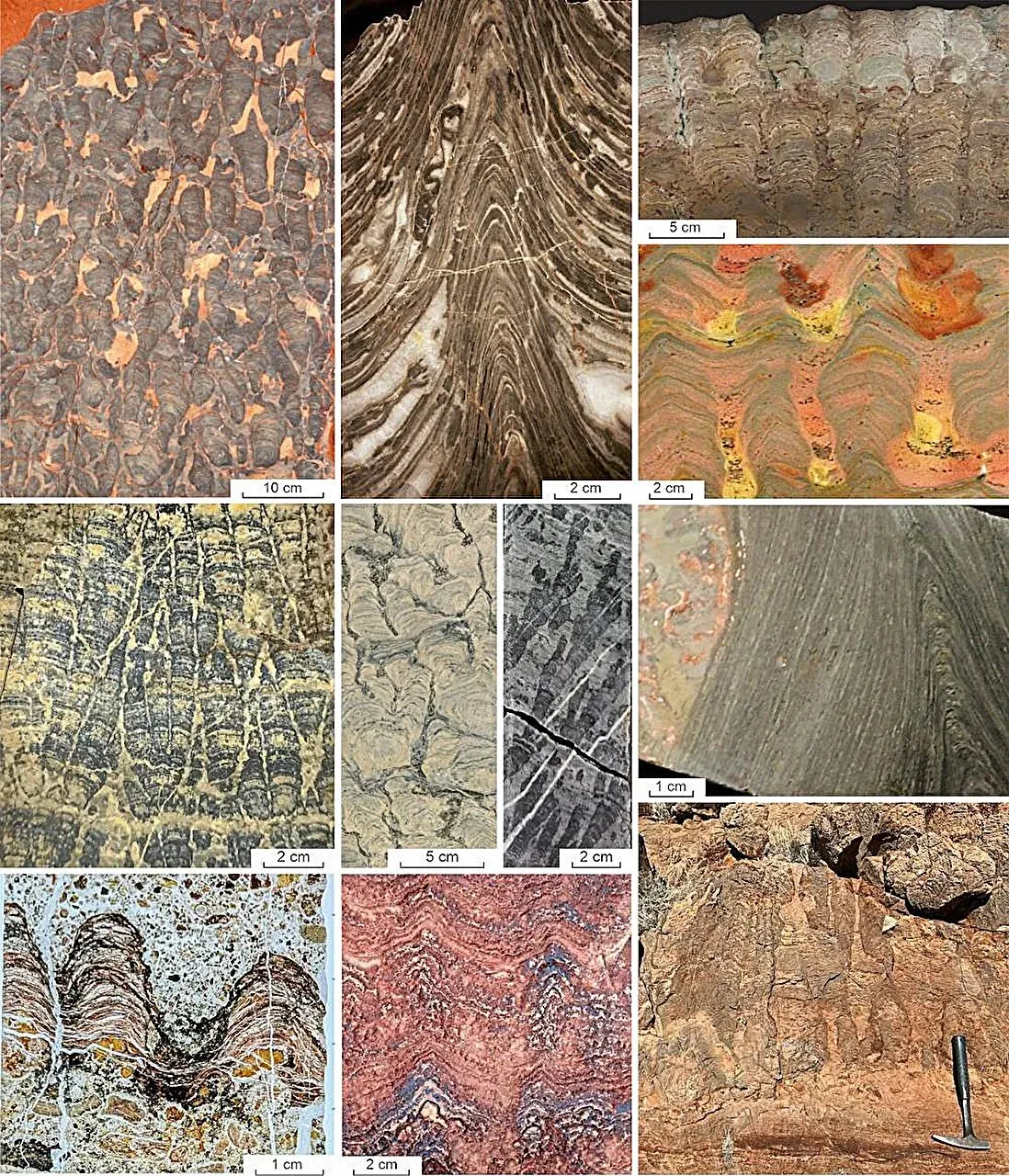
Earth's oldest evidence of life is etched in ancient rocks, a testament to a bygone era when the planet was vastly different from the vibrant world we know today. The earliest visible signs of life on Earth are found in microbialites, fossils that date back billions of years and offer a window into the past.
These ancient formations can be seen in Western Australia, where researchers have uncovered an extensive archive of microbialites. From the oldest known examples preserved in rocks over 3.5 billion years old in the Pilbara region to living communities in the UNESCO World Heritage area of Shark Bay, this vast collection provides a unique insight into the evolution and resilience of life on Earth.
A comprehensive review of 50 years of research on microbialites in Western Australia has shed light on the significance of this fossil record. Published in the journal Alcheringa, the study summarizes the findings from decades of scientific inquiry and highlights the importance of preserving these ancient formations for future generations.
The fragile nature of microbialite fossils poses a significant threat to their long-term survival. Fossil sites are susceptible to overcollection and degradation, while living communities are facing increasing pressures due to environmental changes and human activities.
Fossil sites like Lake Clifton and Shark Bay are facing a double threat: overcollection and degradation of existing fossil remains, as well as environmental changes and human activities affecting living microbialite communities.
One recent incident at Lake Clifton serves as a stark reminder of the risks involved. In May 2024, a group of aurora chasers inadvertently trampled 2,000-year-old thrombolites in a restricted area, causing irreparable damage to these ancient structures.
Microbialites are complex formations that arise from the interactions between communities of microbes and their environment. They can take many shapes and sizes, depending on the specific conditions under which they form.
The internal structure of microbialites is particularly significant for scientists studying this phenomenon. Thrombolites, for example, have a distinctive clotted texture, whereas stromatolites are characterized by layered structures.
Living microbialite communities continue to play a crucial role in our understanding of Earth's history and the emergence of complex life forms. By studying these modern sites, researchers can gain valuable insights into the processes that formed microbialites in ancient rock formations.
The formation of microbialites has left behind a rich record of life's response to environmental upheaval on Earth, particularly during major mass extinctions.
Western Australia's unique geological history offers a glimpse into this deep-time record, which spans at least one and potentially two of the planet's five most significant extinction events.
This ancient record suggests that the sudden increase in microbialite formation often preceded or coincided with major ecological disruptions and subsequent mass extinctions in the past.
However, despite these valuable insights, researchers have identified several significant knowledge gaps in their understanding of microbialites.
The distinction between structures formed by life and those created through nonbiological processes remains a subject of debate among scientists.
The fragility of microbialites is a surprising contradiction given their rocklike appearance and geological longevity. Despite their seemingly unchanging nature, they are surprisingly vulnerable to environmental disturbance. Their slow growth rates mean that physical damage can take decades or centuries to repair, if it's even possible.
Living microbialites are highly sensitive to changes in their environment, making them prone to damage from human activities such as climate change and increased visitation. This sensitivity is a concern for modern microbialite sites, which face growing pressures from various sources. The delicate balance of these ecosystems can be disrupted by even slight changes.
Fossilized microbialites are also at risk, particularly in Western Australia where tourism, collecting, and scientific sampling have caused damage to these irreplaceable sites. As geological features, their protection falls under geoheritage, a poorly recognized and under-resourced area in Australia. The lack of national frameworks and resources for geoheritage has been highlighted by the 2021 Australian State of the Environment report.
The loss of microbialite sites is not only a concern for their scientific value but also for the insights they offer into how ecosystems respond to environmental change. The archive of fossilized microbialites provides a deep-time perspective on ecological disruption and changing conditions, raising questions about how far these insights can inform our understanding of modern challenges facing life on Earth.
The preservation of these ancient fossilized microbialites is crucial not just for understanding Earth's history but also for ensuring that future generations have access to this valuable information.
These archives are at risk of disappearing due to natural processes and human activities such as erosion, pollution, and climate change, which threaten the very existence of these delicate formations.
Facts based on reporting originally published by Phys.org.
You may republish this story, in full or in part, if you credit News Central Site and link to it (licence CC BY 4.0). Photos are not included.