Geological Mystery Solved by Korean Researchers
A team of researchers from Korea has shed new light on how massive iron ore deposits formed throughout geological history.
A long-standing geological mystery has been shed some light on by a team of researchers from Korea who have made an intriguing discovery about iron deposits on Earth's surface. The metal is ubiquitous and essential to many human endeavors, yet scientists have struggled to explain how massive iron ore deposits formed throughout geological history.
Until now, the prevailing theory was that ancient photosynthetic bacteria were responsible for oxidizing iron, causing it to precipitate out of solution in oceans. However, this explanation has left several questions unanswered about the role of light and oxygen in the process.
Researchers from Yonsei University have identified a novel mechanism by which microorganisms can oxidize iron without the need for sunlight or oxygen. The team discovered key genes and iron-oxidizing microbes in marine sediments beneath the Antarctic Larsen C Ice Shelf, an environment isolated from both light and oxygen.
Analysis of environmental DNA preserved in these sediments revealed that the microbes possess a protein capable of oxidizing iron. This finding offers significant insights into the origins of massive iron formations on ancient Earth and challenges prevailing theories about their development.
The discovery has implications for our understanding of geological history, particularly with regards to how the planet's iron deposits accumulated over millions of years. While this research is an important breakthrough in its own right, it also raises further questions that require investigation by the scientific community.
A new class of bacteria has been identified through metagenomic analysis, capable of oxidizing iron(II) in environments lacking light and oxygen. This discovery highlights a previously unknown mechanism for iron oxidation that does not rely on sunlight.
The significance of this finding lies in the critical role that iron and oxygen play in understanding Earth's history and the evolution of life. Massive banded iron formations (BIFs), composed of alternating layers of iron and silica, have long been attributed to photosynthetic bacteria.
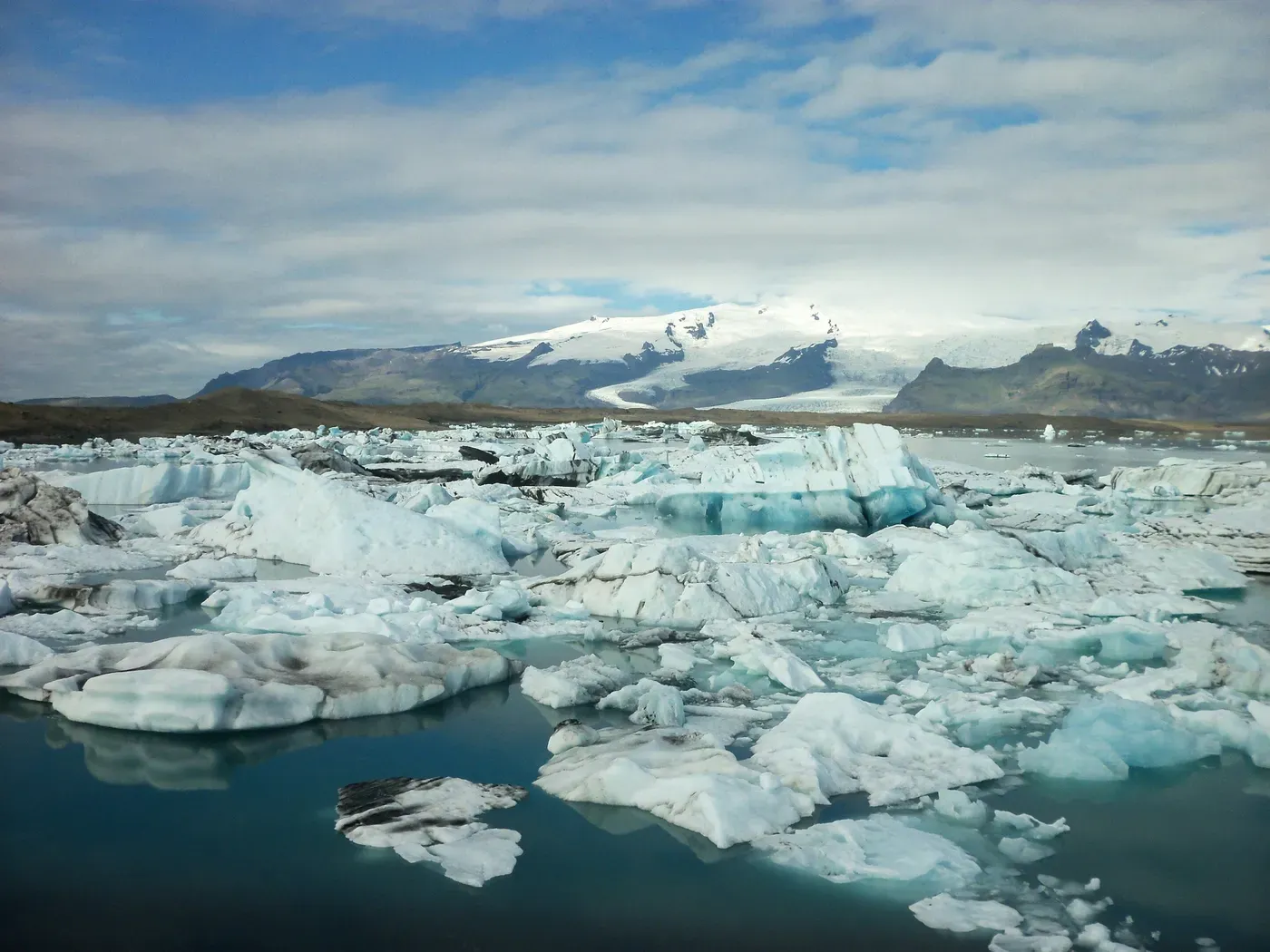
However, BIFs from the Cryogenian "Snowball Earth period posed a challenge to this hypothesis. The planet is believed to have been covered by hundreds of meters of ice during this era, making it difficult for photosynthetic bacteria to thrive.
The research team found crucial clues beneath Antarctic ice shelves, where a 2.4-meter-long sediment core was collected from the seafloor in 2013. This Holocene sediment core preserves records of the marine environment that shifted as the ice shelf changed over a span of about 12,000 years.
The genetic information of the microbiota contained in the environmental DNA from this core was analyzed by the research team. This allowed them to identify a new class of bacteria capable of oxidizing iron(II) without relying on sunlight or oxygen.
The researchers discovered a pattern of alternating dominance between two distinct microbial groups associated with bacteria in sediment layers resembling BIFs formed beneath the ice shelf. This cyclical pattern could provide a biological explanation for the repetitive banding seen in BIFs.
Further analysis revealed that these bacteria acted as network hubs within the anaerobic microbial ecosystem, playing a crucial role in the formation of these iron-rich deposits. The team reconstructed and analyzed the genome of one of these keystone species, uncovering a new lineage of chemolithotrophic bacteria.
The bacterium, provisionally named Candidatus Mariimomonas ferrooxydans," was found to possess a unique gene encoding the Cyc2 protein, believed to be involved in iron oxidation. This discovery provided valuable insights into the biological processes that may have contributed to the formation of BIFs during the Snowball Earth period.
The researchers also conducted experimental validation by cloning the cyc2 gene into E. coli and observing its expression, which led to rapid iron(II) oxidation and precipitation. This process could potentially result in the accumulation of insoluble iron(III) on the seafloor over time, contributing to the formation of iron minerals.
The findings suggest that microbes living without sunlight or oxygen may have played a significant role in the formation of BIFs during Snowball Earth, providing new insights into this enigmatic period in Earth's history.
Microorganisms living without sunlight or oxygen may have played a significant role in forming banded iron formations during Snowball Earth.
The study sheds light on how these microorganisms survived and cycled iron in ice-covered oceans during this period. It also suggests that a new microbiological mechanism for the formation of bIFs could be responsible, one that doesn't rely solely on photosynthesis as previously thought.
Iron oxidation by chemolithotrophic bacteria may have been a universal biogeochemical process throughout geological history, operating not only in light-deprived environments but also from the Archean to the early Proterozoic eons. This includes a time when anoxygenic photosynthesis had yet to emerge as an option.
The discovery of this new iron oxidation pathway challenges the conventional model of iron deposit formation and could fundamentally change our understanding of iron formation in various fields. It has significant implications for Earth science, geology, life science, microbiology, and other related disciplines.
This study's innovative approach involved analyzing DNA from Antarctic sediments to reconstruct environmental conditions and microbial ecosystems from over 10,000 years ago. By connecting genome reconstruction with functional validation, the researchers were able to solve long-standing puzzles in Earth's history using an empirical research methodology that goes beyond sequence data analysis.
The study has shed new light on the formation of iron deposits during Earth's Snowball Earth period by proposing an alternative explanation to traditional photosynthesis-centered theories.
Researchers found a sediment layer beneath an Antarctic ice shelf that is analogous to BIFs from the Snowball Earth period and used advanced microbiome analysis techniques to confirm the presence of chemolithotrophic iron-oxidizing bacteria, which can contribute to iron deposit formation without sunlight. This discovery expands our understanding of how Earth's surface environments and microbial metabolisms interact, transform, and evolve together.
The findings suggest that a new perspective is needed to understand the complex relationships between microorganisms and their environment, particularly in the context of iron biomineralization during Snowball Earth.
Facts based on reporting originally published by Phys.org.
You may republish this story, in full or in part, if you credit News Central Site and link to it (licence CC BY 4.0). Photos are not included.