Canadian Wildfires Could Cost Up to $2 Trillion if Climate Change Continues Unchecked
A new study estimates that Canadian wildfires could cost up to $2 trillion by the end of the century if climate change is not curbed, with significant economic and societal costs associated with wildfire activity driven by global warming.
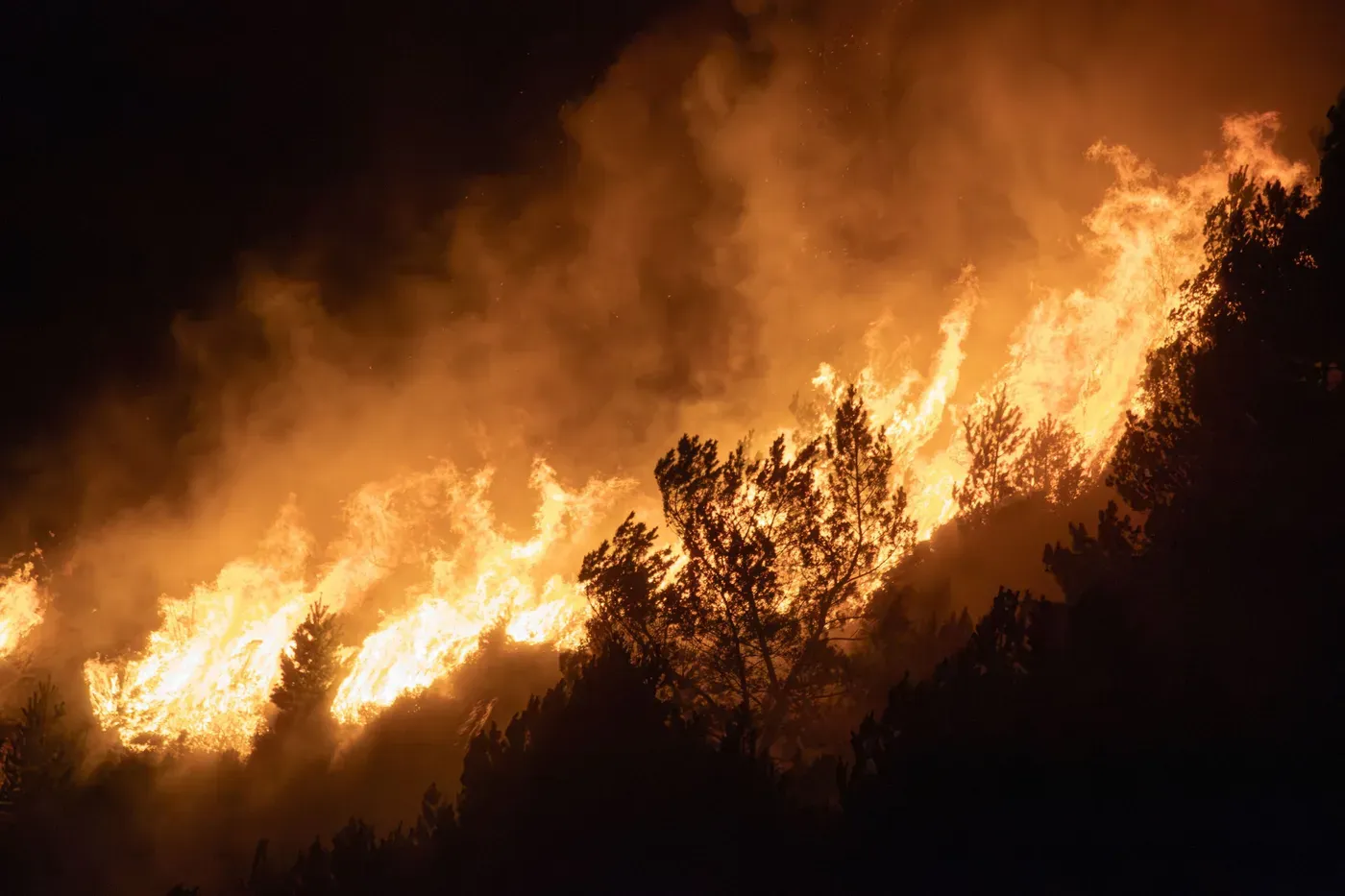
A new study by Simon Fraser University has estimated that the cost of Canadian wildfires over the 21st century could reach as high as $2 trillion if climate change is not curbed.
The study's findings highlight the significant economic and societal costs associated with wildfire activity driven by global warming. According to the research, these costs are heavily influenced by the actions taken to mitigate climate change in the present day.
Lead author Sian Kou-Giesbrecht emphasizes that the severity of wildfire impacts depends on current efforts to reduce greenhouse gas emissions. If global warming is kept to 2°C or less, projected wildfire costs will remain relatively stable, similar to recent decades.
However, if current trends continue and fossil fuels remain a dominant source of energy, the study suggests that wildfire costs will skyrocket in the coming years.
The study's projections are based on three possible global warming scenarios, each representing a different level of temperature increase by the end of the century. The first scenario assumes that global temperatures will rise to 2°C or less, while the second and third scenarios project increases to 3-4°C and 4-5°C respectively.
The researchers used these scenarios to calculate the costs associated with wildfire suppression, timber loss, and nature-based recreation loss in Canada, as well as the global societal costs of wildfire carbon emissions. They also factored in changes in crop loss, damage caused by sea level rise, and declines in human health worldwide.
In a more optimistic assessment, the researchers suggest that a global temperature rise between 3 and 4°C is a more realistic worst-case scenario, primarily due to advancements in green energy development outside of Canada. This projection assumes that these developments will help mitigate the impact of climate change on global temperatures.
Under this scenario, the study estimates that the total annual cost of climate change-driven wildfire impacts will reach $43 billion by the end of the century, with cumulative costs exceeding $2.1 trillion over the 21st century.
The estimated costs of climate change-driven wildfires in Canada may be even higher than predicted, according to a new study. The projection model used by researchers did not take into account various additional expenses such as health impacts, evacuations, infrastructure loss, and economic disruptions within the country.
These omissions likely result in conservative estimates, suggests Sian Kou-Giesbrecht, one of the authors of the study. A notable example of the devastating effects of wildfires is Canada's 2023 record-breaking event, which forced over 200 communities to evacuate and exposed millions of people to hazardous air pollutants.
The study emphasizes that drastic reductions in greenhouse gas emissions are essential to mitigate the economic and environmental consequences of wildfires in Canada. Holding global temperature rise to 2°C is considered a crucial step towards achieving this goal.
Facts based on reporting originally published by Phys.org.
You may republish this story, in full or in part, if you credit News Central Site and link to it (licence CC BY 4.0). Photos are not included.