Australia's Climate Policy Under Scrutiny Due to Emissions Reduction Mechanism Flaw
A report has found that Australia's Safeguard Mechanism is failing to drive decarbonization due to its reliance on low-quality offsets.
Australia's climate policy is under scrutiny due to a major flaw in its emissions reduction mechanism. According to a new report, the Safeguard Mechanism (SGM) is failing to drive decarbonization and reduce emissions in the industrial and mining sectors. The problem lies in an overreliance on low-integrity offsets, which are cheap but ineffective in cutting pollution.
A team of researchers from top universities has assessed the impact of these low-quality carbon credits on Australia's climate policy. The investigation involved experts from the Australian National University, Oxford University, UNSW, and other institutions. They found that the SGM is heavily reliant on cheap offsets, which undermine its effectiveness.
The Safeguard Mechanism is a cornerstone of Australia's climate policy, with an intensity-based emissions trading scheme that applies to facilities emitting over 100,000 tonnes of CO₂-equivalent annually. This accounts for around 29% of national emissions. However, the mechanism has been criticized for its reliance on low-integrity credits.
Experts warn that this approach is artificially suppressing the carbon price faced by SGM facilities, including large gas and coal entities. These companies account for a significant proportion of emissions covered by the scheme, approximately 55%. The consequences are severe, as this approach fails to drive meaningful reductions in pollution.
The Australian government's handling of the ACCU scheme has been criticized for resulting in a surplus of cheap, low-integrity credits. This is an issue that needs urgent attention, said Professor Andrew Macintosh, co-director of the Australian National University Centre for Environmental Markets.
The study revealed that a suppressed carbon price is hindering decarbonization efforts by encouraging reliance on low-cost, low-integrity ACCUs.
This has led to higher emissions and minimal transformation in industries such as manufacturing and mining, according to Professor Macintosh.
A new analysis of human-induced regeneration (HIR) projects, the largest type in the ACCU market and the world's biggest pure carbon removal project type by credit issuances, was conducted for the report.
Last year, HIR projects accounted for 40% of all units issued in the ACCU market and are set to reach 50% of annual issuances soon.
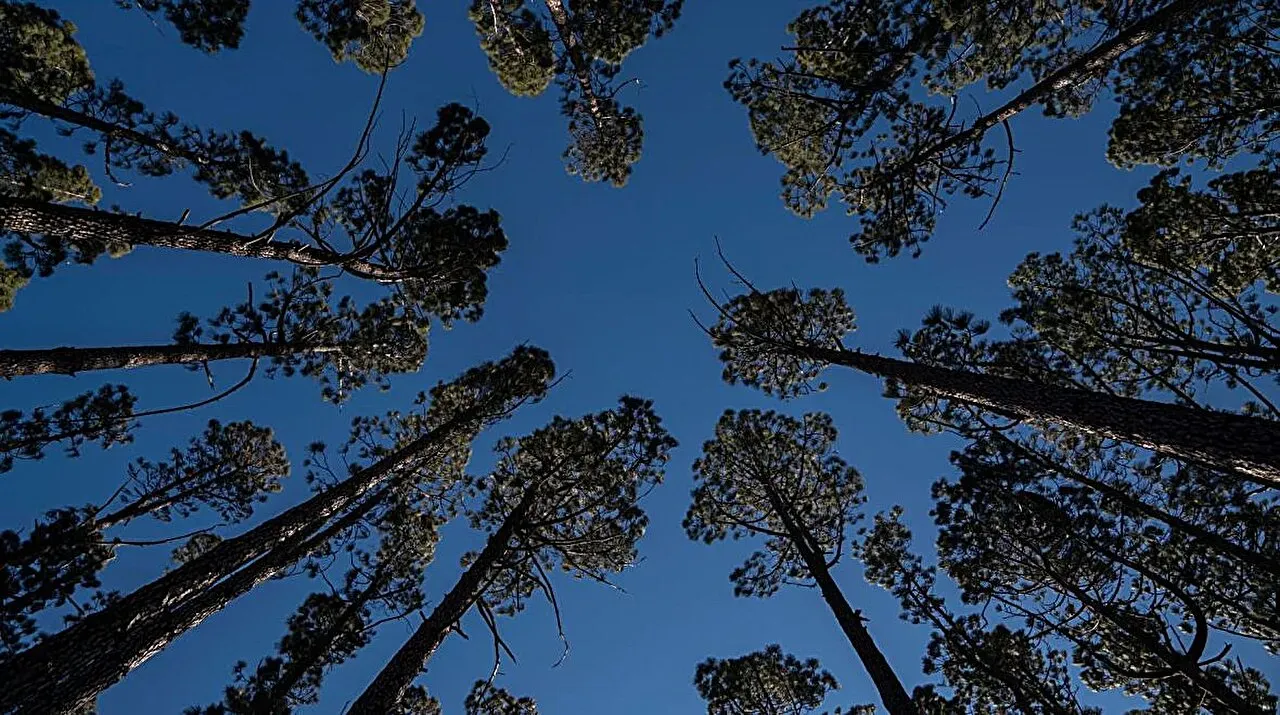
These massive projects cover a staggering 38 million hectares, with claims that they are regenerating native forests across an area of at least 7.4 million hectares.
The analysis used datasets derived from high-resolution Sentinel-2 imagery and very high-resolution (30–50 cm) imagery to assess the performance of these HIR projects.
Most of these projects have failed to regenerate native forests, with a significant disparity found between observed and expected regeneration based on credit issuances.
The claimed area of regeneration is likely to exceed 15 million hectares, an area larger than two-thirds of Victoria's size, if current trends continue.
The results of a comprehensive analysis of high-integrity regrowth (HIR) projects have revealed a stark reality about their effectiveness.
When scrutinized on a per-hectare basis, it becomes evident that most HIR projects have failed to deliver significant regeneration or even resulted in negative outcomes for tree cover.
Government agencies have consistently maintained that these projects are performing as expected, citing various reports commissioned by the government itself as evidence of their efficacy. However, this assertion has been debunked by the research findings.
The sheer scale of the problem is underscored by the fact that HIR projects have accumulated over 60 million Australian carbon credit units (ACCUs), valued at between $1.5 billion and $2 billion.
Facts based on reporting originally published by Phys.org.
You may republish this story, in full or in part, if you credit News Central Site and link to it (licence CC BY 4.0). Photos are not included.