Artificial Intelligence May Soon Recommend Layoffs at Companies
A startup CEO is predicting that artificial intelligence could soon play a significant role in deciding which employees to lay off.
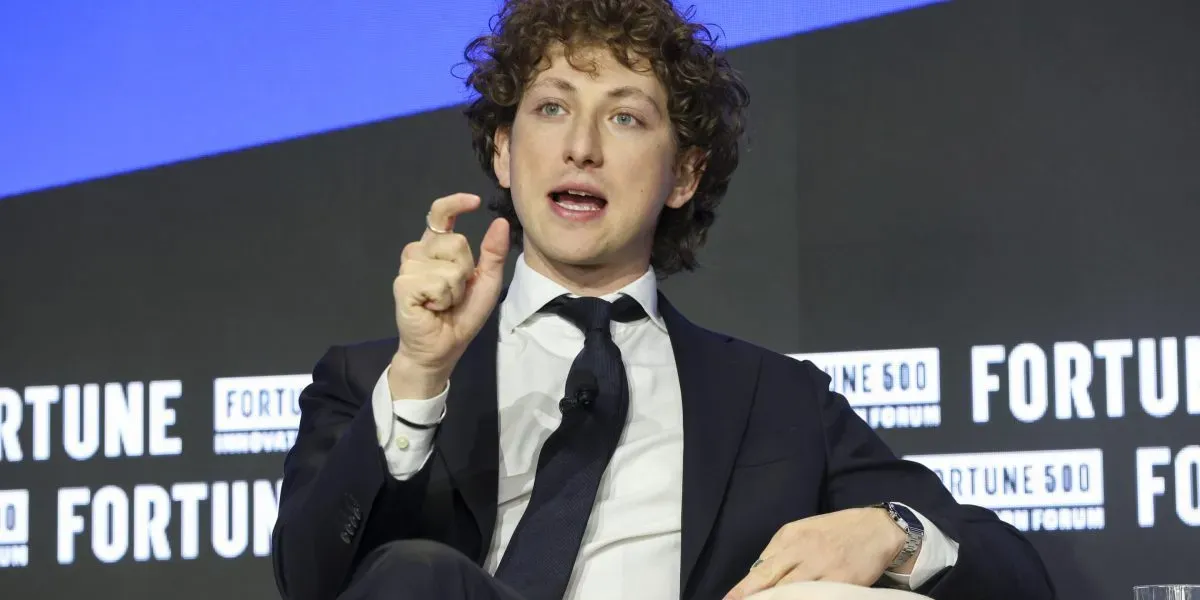
A startup CEO is predicting that artificial intelligence could soon play a significant role in deciding which employees to lay off, sparking concerns about job security and the impact of automation on the workforce.
Michael Ioffe, cofounder and CEO of Arist, made this prediction while speaking at the Fortune 500 Innovation Forum in Detroit. According to Ioffe, AI agents will be recommending significant enterprise shifts, including layoffs, within the next few years. This is not a far-fetched idea, given that Arist's technology has already been adopted by over 15% of the Fortune 500 companies.
Arist's AI agents use various methods to gather insights and make recommendations, such as interviewing employees and analyzing company data. What's remarkable about this technology is its speed - it can gather insights from thousands of employees in just 72 hours, a process that would traditionally require teams of consultants. This efficiency has contributed to Arist's rapid adoption by top companies.
While Ioffe acknowledges the potential risks of relying too heavily on AI, he insists that executives will always make the final call when it comes to significant decisions like layoffs. According to him, AI agents will simply provide recommendations that can inform these decisions.
However, some critics are warning that companies may be using AI as a scapegoat for layoffs made for other reasons. HR leaders have cautioned against cutting workers without a clear plan for how their roles will be replaced by automation, as this can lead to the loss of valuable talent and skills within an organization.
As AI technology advances, it's becoming increasingly capable of analyzing vast amounts of data and providing insights that were previously beyond human reach. For Michael Ioffe, CEO of Arist, this speed is a major draw - he believes that companies can get answers in days rather than months when they're facing challenges such as declining sales or struggling products.
Ioffe's company didn't start out with the goal of competing with consulting firms, but rather was born from his own passion project. At 19, he developed a text-message-based learning platform to deliver education to students in war-torn Yemen, and later shifted Arist towards training employees at Fortune 500 companies. As one of OpenAI's early partners, Ioffe saw firsthand the potential for AI to drive business outcomes.
Ioffe has observed that companies often pay millions to consultants who fail to accurately diagnose problems a staggering 90% of the time. In contrast, Arist's AI-powered agents can provide more accurate and actionable insights at a fraction of the cost. This is because they're not just analyzing data - they're also able to weigh responses from employees against information such as tenure, performance, and past engagement scores.
To make informed decisions, executives need to understand what's happening inside their company. Arist's agents can help by deciding whom to interview, asking relevant questions, and pushing back if an executive is trying to frame a question to get the answer they want. This ensures that the system provides unbiased insights that are based on data rather than assumptions.
The next step for AI-powered decision-making would be to recommend actions such as layoffs - but only after it has a deep understanding of what's happening inside the company. To achieve this, Arist's agents can analyze vast amounts of data and identify patterns that might not be immediately apparent to human executives.
To gather valuable information, an AI agent would need access to candid employee feedback, which could be a sensitive issue for companies.
However, Michael Ioffe believes that employees may actually open up more freely to AI agents than they would to human colleagues or managers, allowing companies to uncover underlying problems that might otherwise remain hidden. This increased transparency could prove beneficial in the long run.
Ioffe's remarks on employee candor were delivered with a hint of humor: "Turns out that humans are not that good at listening." He emphasized AI's potential to expedite decision-making processes by providing rapid insights into company operations.
Facts based on reporting originally published by Fortune.
You may republish this story, in full or in part, if you credit News Central Site and link to it (licence CC BY 4.0). Photos are not included.