William Greaves Hosts Harlem Renaissance Gathering in 1972
A gathering at Duke Ellington's home in Harlem led to a series of films about influential individuals from the Harlem Renaissance.
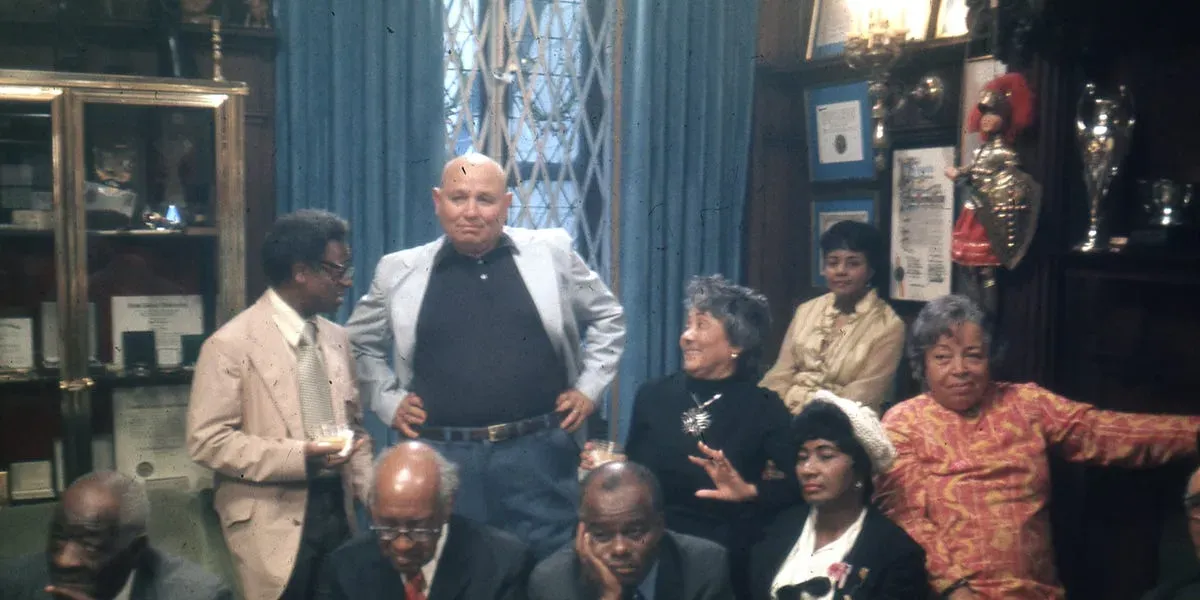
In 1972, filmmaker William Greaves hosted a cocktail party at the Harlem townhome of Duke Ellington to bring together key figures from the Harlem Renaissance, a cultural movement that thrived in New York's Harlem neighborhood during the 1920s and '30s.
The guest list was carefully curated by Greaves, who aimed to gather an impressive array of Black intellectuals, artists, writers, librarians, actors, musicians, and dancers who had contributed significantly to the movement.
Greaves' vision for creating a series of films about influential individuals began to take shape at this gathering, where he sought to facilitate discussions among the surviving leaders of the Harlem Renaissance.
The footage from that evening was later restored by Greaves' late wife, Louise Archambault Greaves, who paved the way for its revival.
David Greaves, William's son, revisited the original footage with his daughter Liani, a producer. The resulting film, Once Upon a Time in Harlem, is an impressive example of cinéma vérité filmmaking.
Among those featured in the film are James Van Der Zee, who had a career spanning over eight decades as a photographer; Richard Bruce Nugent, a poet and painter known for his work on queer themes; and Regina Andrews, the first Black librarian to lead a branch of the New York Public Library.
The documentary's New York Film Festival premiere has finally marked a milestone in its five-decade journey to completion. The film's release is a testament to the dedication and perseverance of its creator, who has worked tirelessly to bring this vital piece of Black history to life.
One of the most striking aspects of the documentary is its use of quotes from prominent figures associated with the Harlem Renaissance. These quotes were not fabricated for dramatic effect, but rather taken directly from their own writings. For example, one notable quote suggests that certain individuals were seen as metaphors for the divine, and it's this perspective that sets the tone for the film.
The documentary's creator has spoken about the importance of staying true to the original vision of the people featured in the film. This commitment is evident in the way the quotes are presented, without any embellishment or interpretation. The goal was not to sensationalize or distort history, but rather to preserve it in its raw form.
A personal connection to the subject matter adds an extra layer of significance to the documentary. One of the cameramen involved in filming a key event was none other than the creator's own father. While he doesn't recall the specifics of that day, his experience speaks to the importance of preserving historical events for future generations.
The film's creator has spoken about the challenges of balancing artistic vision with historical accuracy. This delicate balance is crucial in ensuring that the documentary remains true to its mission and does justice to the people it represents.
David Greaves' experience working with his father on a small company is relevant to understanding the documentary's production.
Greaves was involved in various aspects of filmmaking, including sound and camera work, for around three years before taking on this project.
As one of the only camerapersons, he was given a lot of responsibility and had to learn quickly from his colleagues.
In an editing room setting, particularly with cinema verité style filming, it's essential to know what shots are needed and how they will be used in the final cut.
The ability to anticipate and plan for these elements is crucial to creating a cohesive narrative.
Greaves has said that he was driven by a desire to make this documentary, rather than letting anyone else take on the task.
While there may have been some personal motivations at play, Greaves' role as president of the company gave him a sense of ownership and responsibility for the project's success.
Working alongside his daughter Liani, who is credited as a producer, added an extra layer of meaning to the documentary's themes of legacy and lineage.
This aspect of the film's production also highlights the importance of family involvement in preserving cultural heritage.
The involvement of Liani Greaves in Once Upon a Time In Harlem has been a positive experience for her mother, who ensured she was part of the project.
Liani's participation has brought an added benefit: her mother gets to see her child in action, which is a special moment for any parent. This role-reversal has also allowed them to enjoy each other's company in a new way.
The film's production team has been working with a vast archive of footage that had been collecting dust for over five decades. Now, it's being put to good use, and the result is a documentary that brings Harlem's rich history to life.
Harlem's significance as a hub of Black creativity and intellectualism during the Harlem Renaissance cannot be overstated. The neighborhood played a crucial role in facilitating this movement, attracting seekers of knowledge and self-discovery from across the country.
The film's portrayal of Harlem as its own character is a deliberate choice, highlighting the area's importance as a magnet for those seeking intellectualism and Black identity. This aspect of the film's production showcases the significance of preserving cultural heritage through family involvement.
The vibrant streets of Harlem have undergone significant changes over the years. When visiting the area, it's clear that the intellectual center that once thrived there has spread out to other cities like California, Chicago, and Philadelphia.
Despite this shift, there is still a thriving creative scene in Harlem. Young poets' groups and various arts organizations continue to bring people together, reminiscent of the collaborative spirit that defined the era of Regina Andrews and Noble Sissle. Their contributions helped shape the cultural landscape of the time.
The absence of a central figure like Andrews or Greaves's father, who brought together artists from diverse disciplines, is noticeable. These individuals had Rolodexes filled with contacts across various fields, facilitating interactions that led to innovative collaborations. This level of interconnectedness is harder to imagine in today's Harlem.
A meeting similar to the ones held during this period might be difficult to replicate now. The pressure and urgency that drove artists to come together are still present, but the social dynamics have changed. It's challenging to envision a space where top talent from different fields would regularly gather socially.
The legacy of these cultural hubs continues to inspire new generations. While it may be impossible to recreate the exact same atmosphere, the impact of their work remains evident in the pockets of culture that still exist in Harlem. These enclaves keep the spirit of collaboration alive, even if they don't quite match the level of interconnectedness seen during this pivotal era.
The realization that these kinds of gatherings might not be possible today is a poignant reminder of how times have changed. The creative energy and sense of community that defined Harlem's heyday are still present, but they exist in different forms, making it harder to imagine a space where artists from various disciplines come together as freely as they once did.
The way people interact has changed significantly since the time depicted in David Greaves' film. Today, people are glued to their phones, constantly checking notifications and attending virtual meetings through platforms like Zoom.
In contrast, the individuals featured in the film were from an era where face-to-face interactions were the norm. They would visit each other's homes or meet at public spaces, engaging in meaningful conversations without the distraction of digital devices.
The sense of community that defined Harlem during its heyday was partly due to the economic opportunities it offered, as Regina notes. The neighborhood was a hub for African Americans seeking employment and a sense of belonging, earning it the nickname "the Mecca of the New Negro".
Facts based on reporting originally published by Harper's Bazaar.
You may republish this story, in full or in part, if you credit News Central Site and link to it (licence CC BY 4.0). Photos are not included.