American Brands Revive Traditional Selvedge Denim Production
A new era for selvedge denim enthusiasts is underway as American brands are once again producing high-quality, traditional denim jeans, made on narrow antique looms that produce a unique texture and character in the fabric.
A new era has dawned for selvedge denim enthusiasts as American brands are once again getting into the business of producing high-quality, traditional denim jeans.
Selvedge denim is made on narrow antique looms that produce a unique texture and character in the fabric, prized by many fans of the style. Mike McLachlan, founder of Manresa clothing brand in Connecticut, has always been drawn to this type of denim, which he believes is aesthetically superior to modern jeans.
McLachlan's fondness for traditional selvedge denim lies not only in its appearance but also in its history and authenticity. It represents a connection to the golden era of denim production, before it was mass-produced by the global fashion industry.
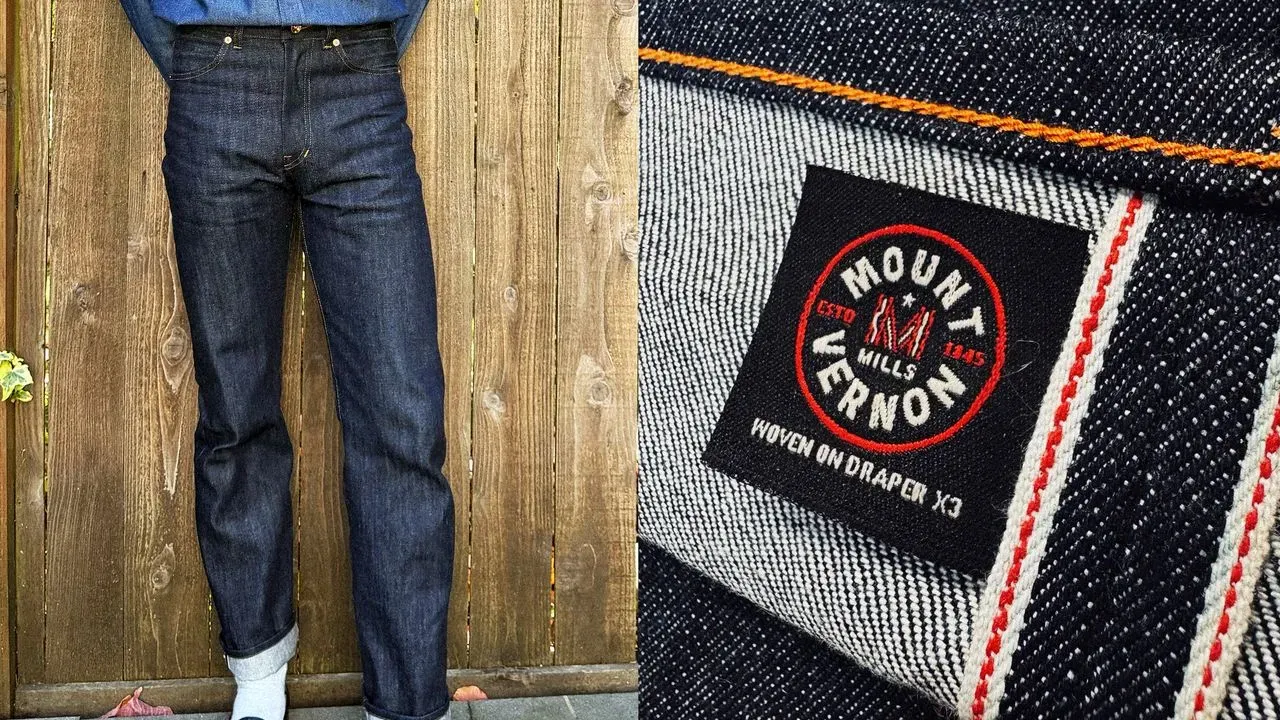
The Connecticut brand founder has recently come across a pair of one-of-a-kind prototype jeans that embody his ideal of classic American selvedge denim. These unique dungarees are made possible through collaborations with Trion and Mount Vernon Mills in Georgia, which have painstakingly restored antique shuttle looms to produce the fabric.
Thanks to this revival effort, enthusiasts like McLachlan will soon have access to authentic selvedge denim jeans that would be at home on the racks of 1950s Sears stores.
A major milestone was reached at Mount Vernon Mills, America's largest denim producer, when 40-some Draper X3 looms were salvaged from the Cone White Oak denim mill in Greensboro, North Carolina.
The historic looms, which date back to the 20th century, were carefully transported to Mount Vernon Mills and are now being put into operation. This marks a significant development for enthusiasts of American-made selvedge denim, who have been eagerly awaiting this revival effort.
For those familiar with the struggles faced by the US denim industry in recent years, the arrival of these looms is a welcome turn of events. The Cone White Oak mill was once renowned for producing high-quality denim fabrics, and its legacy is being revived at Mount Vernon Mills.
The company's director of marketing and specialty sales, Tim Harris, has been instrumental in documenting the progress of the looms on social media platforms like TikTok and Instagram.
The equipment brought over from Vidalia Mills' purchase of White Oak's assets was in disrepair after years of storage.
Mount Vernon Mills' team discovered a mix of functional and non-functional parts, including thousands of springs and levers that had not been manufactured since the 1970s.
Restoring the Draper looms to their former state has proven to be an arduous process for Mount Vernon Mills.
The company's equipment is comprised of vintage machines dating back to the 1950s, which were originally used at Cone White Oak mill, a facility that had been supplying selvedge denim to prominent American brands since its opening in 1905.
Before White Oak's closure in 2017, it was the last remaining commercial producer of selvedge denim in the United States, leaving behind a legacy of American-made selvedge that many feared would disappear.
The revival of American-made selvedge denim has taken a significant step forward with the restoration of antique machinery at Mount Vernon Mills in Trion, Georgia. A team of technicians from Greensboro was dispatched to train staff on maintaining and operating the vintage equipment.
Twenty out of 45 Draper looms have been brought back online, each named after iconic American cultural figures such as Elvis Presley and Aretha Franklin. This is a notable achievement given the challenges posed by these antique machines, which are slower and more labor-intensive than their modern counterparts.
The process of running these vintage looms represents a substantial investment for Mount Vernon Mills, considering the relatively small output it produces. To put this into perspective, the company hopes to manufacture 20,000 yards of selvedge denim per week at full capacity, compared to millions of conventional denim yards generated by its modern machinery.
The demand for Mount Vernon Mills' new selvedge production is impressive, with many buyers eager to transform it into jeans. Harris, a representative from the mill, has expressed amazement at the response received so far. People are reaching out to be part of this revival effort and support American-made selvedge denim.
Kyle Moredocks is one such individual who has already shown interest in Mount Vernon Mills' product by acquiring a sample of their selvedge denim. His enthusiasm joins that of many others, all united in their desire to revive the tradition of American-made selvedge denim.
Moredocks, founder of a Portland-based brand that offers customized jeans, jackets, and shirts on demand, faces challenges in meeting minimum orders for large textile mills due to his small-scale production.
His company's model relies on making smaller batches of products, which makes it difficult to meet the volume requirements of large textile mills. However, Mount Vernon has introduced a new selvedge denim program that allows small brands like Moredocks' and Manresa to place orders at significantly lower minimums than usual.
The program is notable for catering to smaller businesses, providing them with access to high-quality American-made selvedge denim at more manageable price points. Harris highlights the uniqueness of this approach, emphasizing that it's not about mass-producing identical denim, but rather creating handcrafted products that stand out from the norm.
Mount Vernon's new program offers two types of 13- and 15-ounce denims: the Revere and the Franklin, both of which are dark indigo washed and pre-shrunk. Harris explains that the choice of names was deliberate, aiming to evoke a sense of revolution and innovation through their selection.
As the last remaining yards of Japanese selvedge denim are being worked through at Manresa, McLachlan is preparing to release his signature 207 jeans in Mount Vernon Mills denim soon.
He plans to produce a heavier 15-ounce version for colder months and a lighter 13-ounce version for warmer months. This decision aims to cater to the varying needs of customers based on seasonal preferences.
McLachlan has been testing his prototype Mount Vernon 207s, wearing them every day to get a feel for their performance. According to him, these jeans have a more relaxed fit and drape compared to their Japanese counterparts, making them extremely comfortable from the start.
Facts based on reporting originally published by GQ.
You may republish this story, in full or in part, if you credit News Central Site and link to it (licence CC BY 4.0). Photos are not included.