US Treasury Department Explores Unconventional Measures to Manage Debt
The US Treasury Department is exploring unconventional measures to manage its massive debt, including potentially repricing its gold reserves at market rates.
The US Treasury Department's efforts to manage its massive debt have led to increased speculation about unconventional measures to alleviate pressure on interest expenses.
With a federal budget deficit of $2 trillion and annual debt-interest costs exceeding $1 trillion, policymakers are under growing scrutiny to find creative solutions.
In recent months, the Treasury has employed unorthodox tactics such as buying back long-dated debt and intervening in foreign exchange markets, including propping up the yen to help Japan avoid selling its US Treasuries.
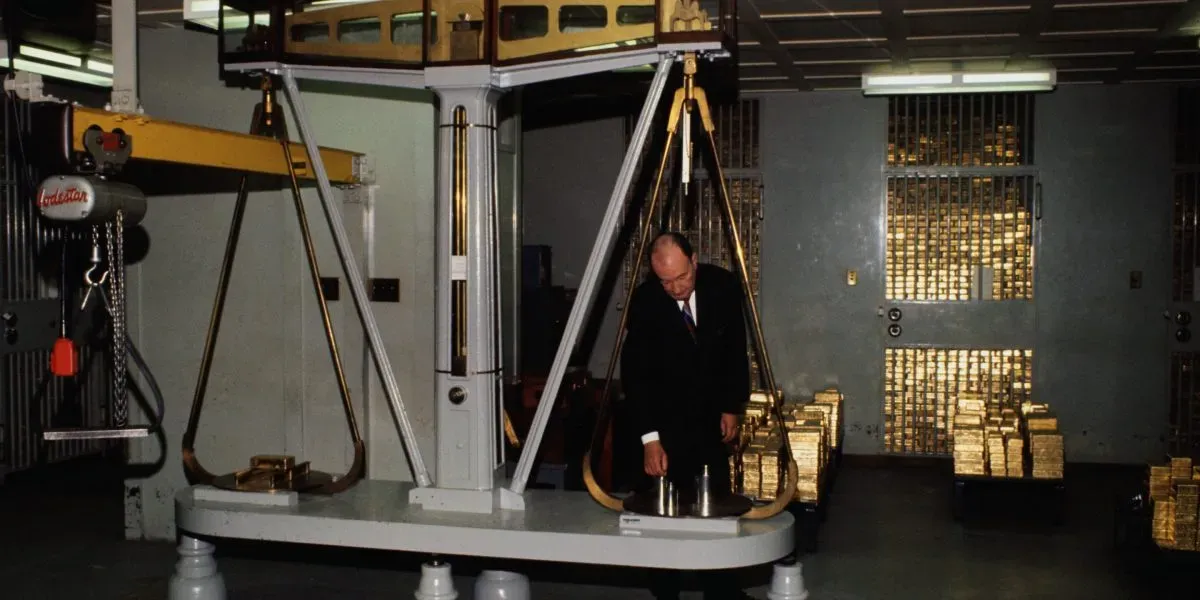
The massive gold reserves held by the US government have become a focal point of attention, with some analysts suggesting that repricing these holdings at market rates could provide a significant injection of cash.
The US government's massive gold reserves continue to be a topic of interest, with some analysts suggesting that repricing these holdings at market rates could provide a significant injection of cash.
However, comments by Treasury officials have also sparked speculation about the potential for the administration to monetize its gold assets. Last year, Secretary Scott Bessent mentioned that the government would "monetize the asset side of the U.S. balance sheet" and create a sovereign wealth fund, fueling talk that repricing gold could be part of this plan.
Despite denials from the administration that such a move is being seriously considered, scrutiny into US gold reserves persists. A recent bill in Congress proposed establishing a strategic bitcoin reserve, which would involve repricing U.S. gold holdings as well.
This has led some to question the value and security of the government's gold stash. For instance, President Donald Trump recently expressed skepticism about the existence of gold at Fort Knox, suggesting that it may not be there after all.
The idea that the US Treasury could simply reprice its gold reserves to market rates and reap a $1 trillion windfall is considered far-fetched by many experts. However, it's not entirely impossible, given the government's need for additional funding.
Analysts warn that such an action would have severe consequences, particularly in terms of inflation. A sudden influx of $1 trillion could lead to increased prices across various sectors, exacerbating existing inflationary pressures.
The impact on the US dollar would also be significant, with a potential decline in its value resulting from the increased money supply. Moreover, investors would demand higher returns for holding long-term debt due to rising risks associated with geopolitical turmoil and economic downturns.
These risks are already being reflected in Treasury yields, which have surged recently due to expectations of Fed rate hikes, robust growth, and persistent inflation.
The US holds the world's largest gold reserves, valued at $1 trillion at market rates. However, some countries have successfully revalued their gold reserves in recent decades, providing a potential lesson for America.
Germany, Italy, Lebanon, Curacao and St. Maarten, and South Africa are among the nations that have revalued their gold reserves over the past 30 years. In cases like Italy, Curacao and St. Maarten, their central banks utilized the proceeds from revaluation to reduce their debt burden.
The US faces a massive $40 trillion in gross national debt, with annual budget deficits reaching $2 trillion. Even if the country were to revalue its gold reserves, it would likely not be enough to significantly address this issue, as other structural challenges would remain unaddressed.
Facts based on reporting originally published by Fortune.
You may republish this story, in full or in part, if you credit News Central Site and link to it (licence CC BY 4.0). Photos are not included.