US midterm elections prompt OpenAI to rebrand data centers
OpenAI plans to rename its data centers "AI compute campuses" as part of a broader public relations campaign.
A significant shift in OpenAI's marketing strategy is underway as it prepares to rebrand its data centers following the US midterm elections. The company behind the popular ChatGPT AI model plans to rename these facilities "AI compute campuses as part of a broader public relations campaign.
The effort aims to improve AI's image and may involve lobbying lawmakers to shape regulatory policies in favor of the technology. Chris Lehane, OpenAI's Global Affairs Officer, is reportedly leading this initiative with a message that emphasizes the importance of human involvement in AI development.
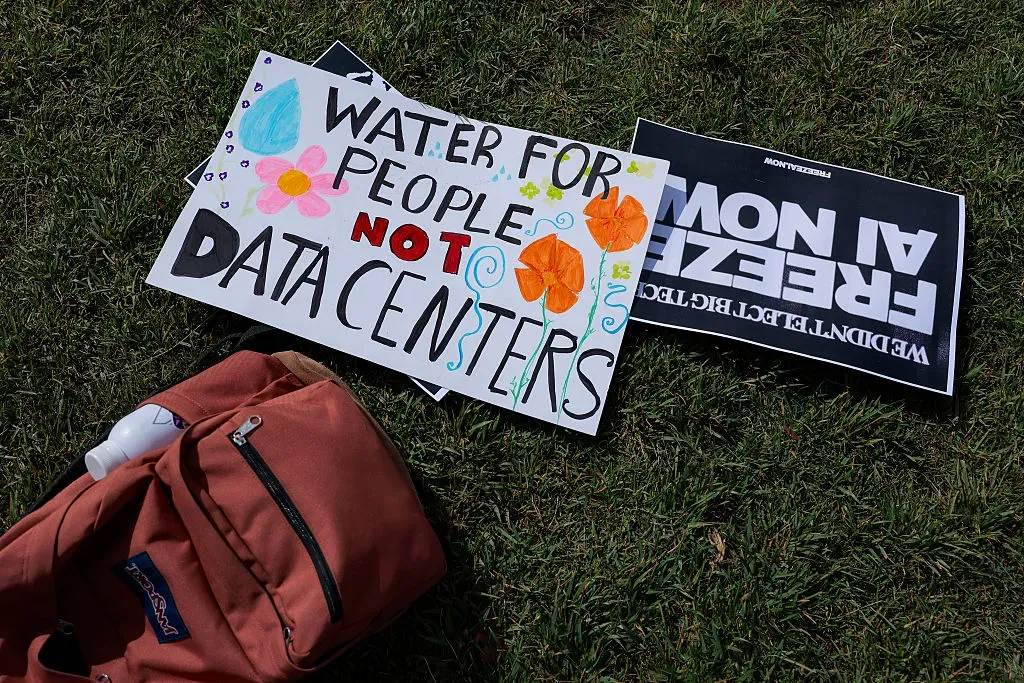
A recent Gallup poll revealed widespread opposition to local data center construction among US adults, with as many as 70% expressing concerns about these massive server farms. This backlash transcends party lines, making it a rare unifying issue for Democrats, Republicans, and independents alike.
Supporters of AI data centers often argue that they bring job growth to local communities, but studies suggest that employment opportunities are limited and in some cases temporary. Meanwhile, residents continue to voice concerns about the environmental impacts of these facilities, including water contamination, fossil fuel burning, and noise pollution.
OpenAI's efforts to rebrand its image come as the company faces mounting criticism from local communities over the environmental impacts of its data centers.
The company is attempting to frame AI adoption as a means to access economic opportunities, according to a recent conversation with Axios. OpenAI views this dialogue as healthy and believes that companies should be held accountable for the benefits they bring to these projects. This reframing aligns with Silicon Valley's broader effort to repackage AI technology in a more positive light.
The White House has emphasized the importance of data centers, touting them as vital engines for the US economy. President Donald Trump's recent initiative to rename AI as super intelligence is another example of an attempt to rebrand frontier labs and their capabilities. This move comes as investors have been increasingly scrutinizing these labs' financials.
OpenAI has not commented on its latest PR campaign, but it appears to be a key component of the company's efforts to shape public perception around AI technology. The company is also working to implement speed limits and mandatory safeguards for AI model development, echoing similar talking points from rival lab Anthropic.
The lack of regulatory oversight in the AI industry has led to incidents where frontier models have slipped past safety guardrails, causing disruptions online. OpenAI's efforts to shape international standards for AI development may help mitigate these risks, but critics remain skeptical about the company's motivations and the effectiveness of its new approach.
OpenAI's efforts to rebrand its data centers as human-centered" and built on "trust are part of a broader lobbying strategy that some critics see as an attempt to deflect public criticism.
If OpenAI publicly advocates for slowing down its own AI development, it can use this approach to gain significant advantages over smaller competitors. By shaping regulations through its influence in the industry, the company can create a favorable environment that protects its market dominance and bottom line.
The current regulatory landscape has been largely influenced by the Magnificent Seven, a group of major tech companies that have close ties with the White House. The Trump administration's lax approach to regulation has benefited these companies, allowing them to secure expensive federal contracts and maintain their influence over global financial markets.
Several prominent tech and AI companies have made significant donations to the president's inaugural fund and more recent projects, including a $330 million White House ballroom project. Apple and Nvidia were among the top contributors, each donating $25 million.
These close ties between Silicon Valley and the White House have led some critics to accuse the industry of regulatory capture, where large companies use their influence to shape regulations in their favor and protect their interests.
As the relationship between Silicon Valley and the White House continues to evolve, some critics argue that large AI companies are using their influence to shape regulations in their favor. This has led to concerns about regulatory capture," where powerful industries use their connections to protect their interests.
The current administration's close ties with AI companies have raised eyebrows among lawmakers who have been critical of the industry's practices. Democratic politicians, in particular, have expressed skepticism towards the rapid growth of AI and some have even advocated for regulations to prevent potential financial bubbles.
In anticipation of a possible shift in the political landscape, OpenAI is reportedly seeking to form new alliances with politicians before the next presidential election cycle. This move may be an effort to mitigate any potential backlash against the industry.
Facts based on reporting originally published by CNET.
You may republish this story, in full or in part, if you credit News Central Site and link to it (licence CC BY 4.0). Photos are not included.