Turkey's COP31 Climate Summit Highlights AI's Environmental Impact
Nine countries have signed an international pledge to make AI more sustainable at the summit in Turkey.
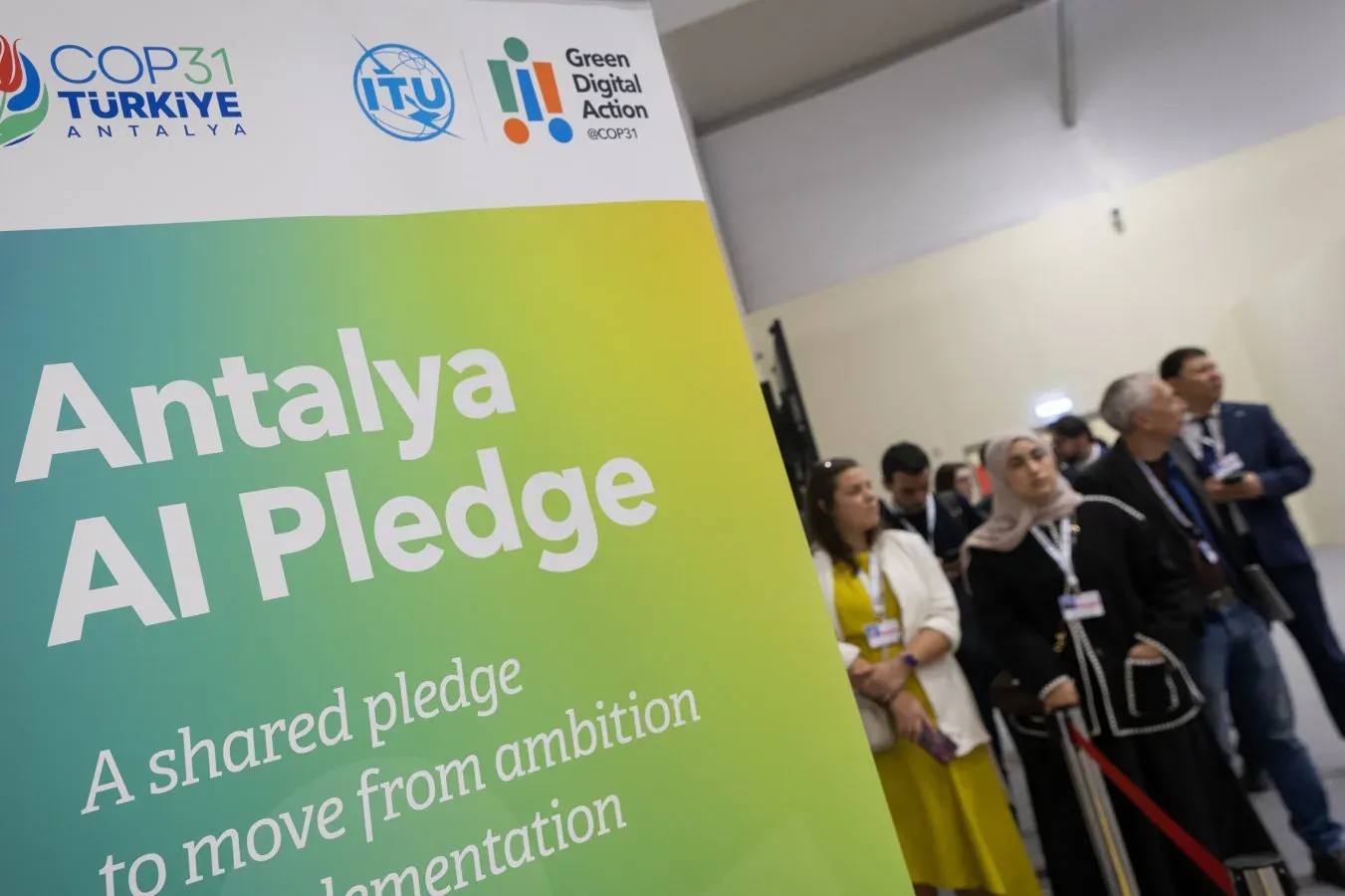
The COP31 climate summit in Turkey has highlighted the growing concern over the environmental impact of artificial intelligence (AI). Despite warnings that AI's increasing energy demands threaten climate goals, only nine countries have signed an international pledge to make AI more sustainable.
The Antalya Artificial Intelligence Pledge was launched on November 16th at the summit. The initiative aims to reduce the environmental footprint of AI by promoting cleaner energy use and more efficient data centers. It also seeks to increase transparency about the technology's impact on the environment.
Critics, however, argue that the analogy used to describe AI as a double-edged sword is misleading. They point out that traditional machine learning can be used in applications such as weather forecasting without requiring significant amounts of energy.
According to independent analyst Ketan Joshi, generative AI is not always necessary for achieving environmental benefits, and energy-intensive models can often be avoided.
The rapid expansion of artificial intelligence is putting unprecedented pressure on global electricity grids, leading to a surge in energy consumption from data centres focused on AI research and development.
According to recent estimates, electricity consumption from these data centres increased by 50 per cent in 2025 alone, highlighting the urgent need for sustainable solutions. This growth is largely driven by the increasing demand for processing power required to train and run large-scale AI models. As a result, technology companies are facing mounting pressure to reduce their carbon footprint.
Despite some companies' efforts to invest in renewable energy sources, many are still reliant on fossil fuels to support their rapid expansion. Even those that have made significant investments in renewables, such as Amazon and Google, are increasingly turning to fossil fuels to meet the growing demand for electricity. This trend is a major concern, as it undermines efforts to reduce emissions and transition to more sustainable energy sources.
The voluntary pledge signed by nine countries so far, Andorra, Brazil, Colombia, Luxembourg, Sierra Leone, Somalia, South Korea, Turkey, and Uganda, sets out four key areas of action to mitigate the environmental impact of AI. These include increasing the use of low- and zero-emission energy, improving energy efficiency, measuring environmental impacts, and providing financial and technical support for developing countries to harness AI's potential in tackling climate change.
The voluntary nature of the pledge has raised concerns that it may not lead to meaningful change. Countries can opt for additional commitments, such as requiring AI companies to disclose their energy consumption and environmental impacts. This would provide a clearer picture of the sector's true sustainability. By doing so, governments could hold these companies accountable.
Critics argue that voluntary promises are unlikely to be effective without stricter regulations. The pledge allows countries to continue relying on fossil gas, rather than transitioning to renewable electricity. This is seen as a missed opportunity for real progress. The call for low- and zero-emission energy is too vague to drive meaningful change.
The ITU has stated that the pledge's progress will be reviewed annually at UN climate summits until 2030. This includes COP32 next year, which marks the first review of the initiative. Critics fear that this process may not provide sufficient oversight or accountability. The lack of concrete measures and timelines for implementation is a concern.
The pledge has been defended by its supporters as a necessary step towards responsible AI development. However, critics argue that it may provide cover for continued environmental degradation. Without stricter regulations and clear targets, the initiative's impact remains uncertain.
Facts based on reporting originally published by New Scientist.
You may republish this story, in full or in part, if you credit News Central Site and link to it (licence CC BY 4.0). Photos are not included.