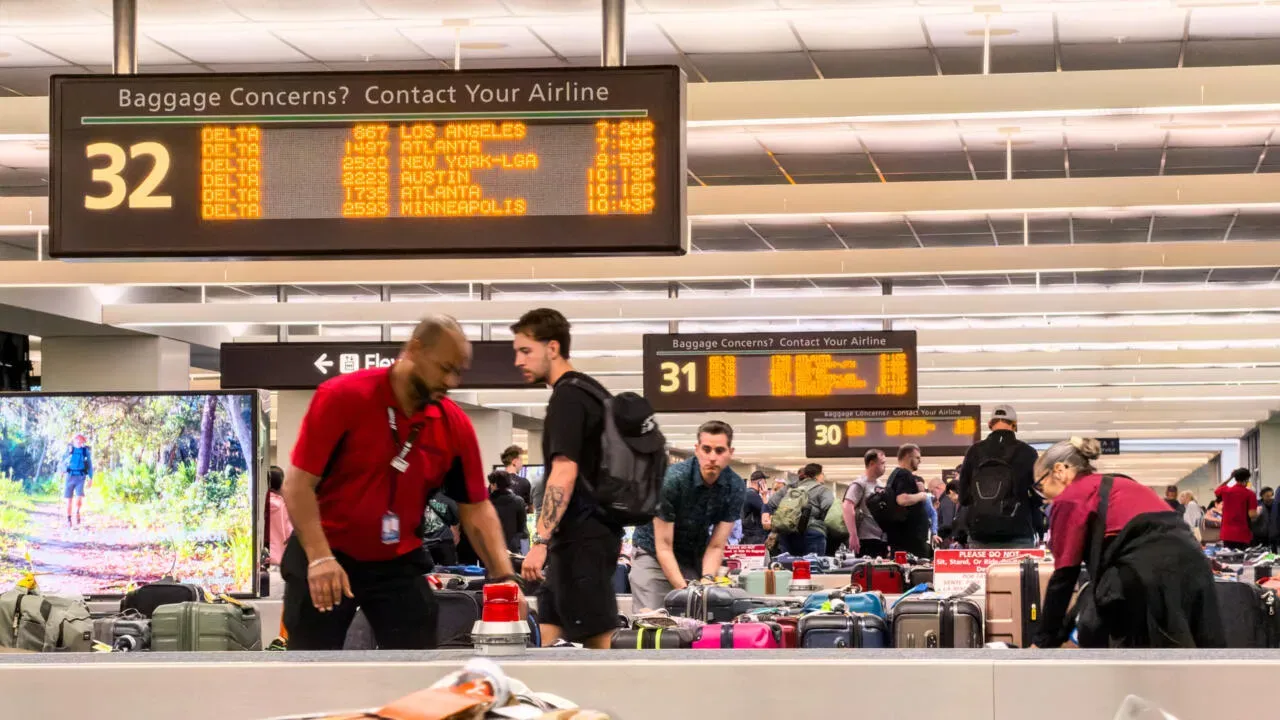
Nationwide Air Travel Shutdown Raises Questions About AI Role
The Department of Homeland Security has offered little clarity on the cause of last Friday's nationwide air travel shutdown, suggesting new AI software might be at fault.

Reports of a nationwide air travel shutdown last Friday have left many wondering if AI was at fault.
The Department of Homeland Security has offered little clarity on the matter, instead suggesting that new AI software might be to blame for the outage.
In an interview with Fox News, Secretary Markwayne Mullin revealed that he's been told by someone "very smart with tech that the recent high-profile outages, including those at JPMorgan and Microsoft, could all be linked to the introduction of new AI systems.
Mullin seemed uncertain about the claim, admitting that it kinda makes sense" but also leaving room for other possibilities.
The complexity of modern infrastructure has been a pressing concern long before the advent of AI. Technologists have consistently highlighted the fragility and poor maintenance of America's digital and physical systems, which can lead to far-reaching consequences.
These issues are not unique to any particular administration or ideology. Even with highly competent public servants in charge, the inherent complexity of these problems would persist. It is a challenge that requires a multifaceted approach, rather than simply assigning blame.
The 2003 blackout serves as a stark reminder of this reality. A software glitch in Ohio led to widespread power outages across the country, including major cities like New York City. This incident demonstrates how seemingly isolated issues can have devastating effects on critical infrastructure.
As AI continues to evolve and become increasingly integrated into these systems, concerns about its reliability and control are growing. Developers themselves often admit that they don't fully understand their creations or know how to manage them effectively.
As we navigate the complexities of modern technology, it's becoming increasingly difficult to separate fact from fiction when it comes to outages and disruptions.
One thing is certain: these events are happening more frequently, and with greater intensity. Whether it's a power grid failure or a social media meltdown, the impact on our daily lives is undeniable.
Journalists like Josh Tyrangiel have likened our digital experience to living in Software Beirut, where anything can break at any time. This hyper-volatile environment makes it challenging for individuals to prepare for potential disruptions.
For the average person, there's little that can be done to mitigate these risks. Stockpiling supplies, such as soup cans and water bottles, may seem like a futile effort, but it's a reminder of our vulnerability in the face of technological uncertainty.
In contrast, members of the media have a responsibility to provide clarity and context during outages, asking tough questions and seeking answers from those responsible.
The increasing number of outages has sparked debates about their causes, but one thing is clear: it's a challenging situation for all parties involved.
To provide clarity during such times, it's essential to separate fact from fiction and avoid spreading misinformation. One simple yet effective way to do this is by remaining silent when faced with unverified information or hoaxes.
A recent experience highlighted the importance of verifying information before sharing it with others. A social media post claiming a blackout on November 17 was brought up in an interview, but upon investigation, it turned out to be a made-up story with no basis in reality.
To provide accurate and helpful responses to such queries, experts should be consulted and their findings shared with the public, rather than spreading unverified information that can cause more confusion.
Facts based on reporting originally published by Business Insider.
You may republish this story, in full or in part, if you credit News Central Site and link to it (licence CC BY 4.0). Photos are not included.