Trump Administration Unveils $46 Billion Border Wall Plan
The Trump administration plans to construct a $46 billion border wall stretching from the Pacific Ocean to the Gulf of Mexico, aiming to bolster security along the U.S.-Mexico border.
The Trump administration has announced plans to construct a $46 billion border wall stretching from the Pacific Ocean to the Gulf of Mexico, a project that has been years in the making and represents one of President Donald Trump's signature infrastructure initiatives.
This ambitious undertaking is aimed at bolstering security along the U.S.-Mexico border, an area where illegal crossings have historically been a concern. However, in Texas' Big Bend region, local landowners are mounting fierce resistance against the administration's plans to cede parts of their property for the wall.
The landowners' opposition is largely driven by concerns that the border wall is a misguided use of taxpayer dollars and will cause significant environmental damage. Many have also expressed frustration with the lack of transparency surrounding the project, citing inadequate compensation for land taken or damaged during construction.
Despite the administration's assertion that walls, vehicle barriers, surveillance technology, and patrol roads are necessary to maintain low levels of illegal crossings, local opposition remains strong. The region has historically seen relatively few instances of unauthorized border crossing, which has only added to the skepticism surrounding the project.
In a significant setback for the administration, a judge has temporarily halted construction across the Big Bend region while landowners' lawsuits against the government continue. This development is being hailed as a major victory by those who have been fighting against the wall's construction.
Landowner David Keller, one of several individuals suing to stop the project, has expressed relief at the recent court decision. According to Keller, the administration was "woefully unprepared for the level of resistance they encountered in the region.
The Trump administration's push for a border wall has been met with bipartisan opposition in some areas, with many questioning the need for such an extensive and expensive project given the current security situation along the U.S.-Mexico border.
Customs and Border Protection has been actively building a border barrier, averaging around 12 miles or 20 kilometers per week. This effort has reached a significant milestone, surpassing 200 miles of new walls constructed under the Trump administration.
The focus is now on Big Bend, where construction began in September. The administration plans to invest a substantial $7.5 billion to fortify the border along a region spanning over 500 miles. This extensive project aims to secure a vast stretch of land that includes some of the most remote and rugged terrain along the U.S.-Mexico border.
In recent months, Border Patrol has been actively enforcing immigration laws in Big Bend. In August, they made 161 arrests within this area, which accounts for roughly one quarter of the entire southern border. The number of apprehensions is significantly lower compared to other areas, with a total of 8,870 people arrested along the southern border that same month.
CBP Commissioner Rodney Scott has emphasized the importance of securing the border. He stated that The American people have already seen the consequences of an unprotected border, and reiterated that no region should be left vulnerable to exploitation.
A significant aspect of the Big Bend project is the private ownership of much of the land in Texas. Unlike other areas along the U.S.-Mexico border, where federal lands are more prevalent, the majority of the territory in this region is privately or state-owned.
To build the wall, the government must acquire authorization from property owners to survey and construct the barrier. If owners refuse, the government can take them to court. The process of eminent domain allows the government to seize private property for public use, providing fair compensation in exchange.
The Burbach family is one example of landowners resisting the construction plans. Dianna and Dan Burbach began receiving paperwork in July, requesting permission to survey their property and outlining where the project would run behind their house. An August letter warned that failure to comply could result in court action within 90 days.
The No Big Bend Wall Coalition, which claims to represent over 200 landowners, has taken a significant step in its fight against the border wall by filing a lawsuit to block construction. The coalition's argument is that Homeland Security is misusing its authority in an area with minimal illegal cross-border activity.
According to court documents, plaintiffs argue that the administration has exceeded its congressional authority by issuing broad waivers to circumvent environmental and other regulations. This move would allow the government to bypass crucial safeguards, potentially harming local ecosystems and communities.
A federal judge has issued a temporary restraining order, temporarily halting wall construction in the Big Bend area. Landowners see this as a significant victory, but they remain cautious about its long-term implications. Keller described the ruling as unqualified good news" for opponents of the border wall.
The government has responded to the judge's order by filing an appeal, seeking to have it overturned. In their court submission, officials argued that leaving segments along the border without adequate security infrastructure could lead to a funnel effect, where unauthorized immigration or smuggling is redirected towards areas with fewer fortifications.
This argument suggests that the administration believes the Big Bend region would become a hotspot for illicit activities if other sections of the border are secured. However, opponents argue that this is a flawed assumption and that the area's unique geography and low levels of cross-border activity make it an unlikely candidate for such a scenario.
Landowners are also pressuring local governments to withhold support from contractors working on the project. In some cases, property owners are attending county meetings in an effort to sway officials against assisting with construction.
As the court battle continues, landowners remain determined to protect their properties and the environment. The outcome of this dispute will have significant implications for both the region's ecosystem and the future of border security policies.
Residents of Terrell County have been actively protesting against the leasing of airport land to a barrier contractor, although their efforts were ultimately unsuccessful.
In neighboring Jeff Davis County, a proposed agreement allowing another contractor to use a county road has yet to be approved due to ongoing opposition from local residents and officials.
The financial benefits for these cash-strapped counties are clear, with some officials arguing that they have little leverage in the face of federal plans. However, this argument is not universally accepted, as some landowners believe their collective efforts can make a significant difference.
Terrell County Judge Dale Lynn Carruthers acknowledged the limitations of local control when she stated that if the county refused to lease the airport land, the contractor would simply purchase it from elsewhere. Her comments underscored the challenges faced by local communities in resisting federal plans for border infrastructure.
Despite these difficulties, some landowners remain optimistic about their ability to influence the outcome of this dispute. They argue that a united front can be an effective way to resist unwanted development and protect local interests.
The U.S. Customs and Border Protection agency has confirmed that it continues to seek voluntary access agreements with landowners while completing the project's design. However, disputes over access will be referred to the Justice Department when necessary, and landowners will receive compensation regardless of how access is obtained.
The issue of border security remains a contentious one, with both supporters and critics of Trump's policies voicing their concerns about the need for a multi-billion dollar infrastructure project in Big Bend.
Laura Allen, a rancher who voted for Trump twice, is receiving notices that a vehicle barrier will be constructed on her property, where she raises sheep and goats. The proposed barrier has sparked concerns among local landowners, including Allen, about the necessity of spending billions on infrastructure in Big Bend.
Allen credits Trump with securing the border but argues that a wall in this region is not justified. She had expected more targeted security measures rather than an extensive barrier system. This sentiment reflects growing unease among some Republicans who feel that Trump's policies are being misapplied in certain areas.
Terrell County Sheriff Thad Cleveland, a former Border Patrol agent with 26 years of experience, shares these concerns. He believes drones and surveillance towers would be more effective in detecting and preventing illegal border crossings in the rugged terrain of Big Bend.
Cleveland notes that the county has an advantage when it comes to policing due to its vast expanse and remote location. This allows for a more measured approach to security, rather than relying solely on physical barriers.
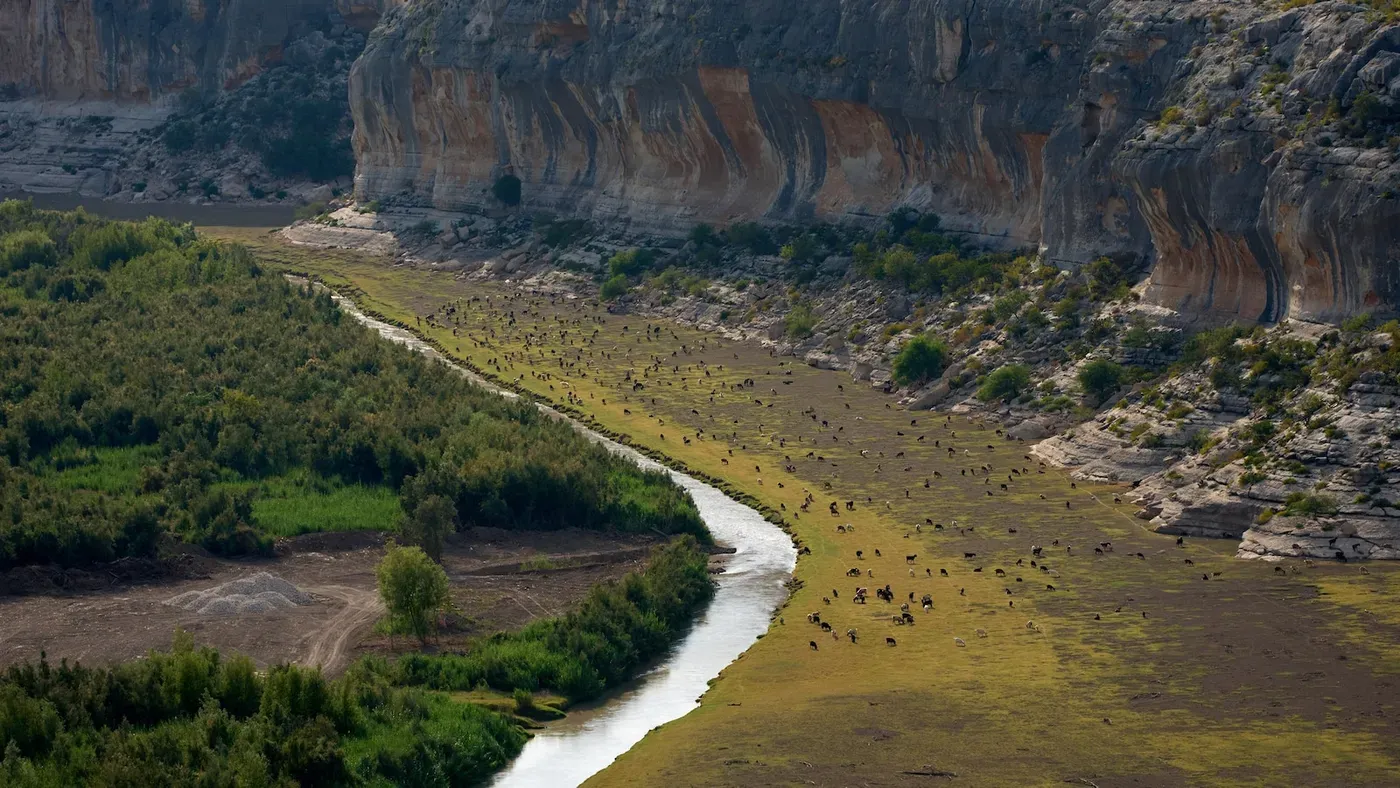
The landscape of Big Bend presents significant challenges to any construction efforts. Steep cliffs and inhospitable desert terrain make it difficult for people to traverse the area, let alone vehicles attempting to cross from Mexico.
Gary Grabowske's property is a prime example of these obstacles. Reaching his land requires navigating rocky mountain trails and gullies carved by flash floods. From the top of a 450-foot cliff, the Rio Grande River is visible below, but it would be nearly impossible for any vehicle to traverse this terrain.
Grabowske emphasizes that even if a wall were built here, it would be impractical due to the lack of infrastructure and accessibility. He believes that resources should be allocated more thoughtfully, taking into account the unique challenges of each region.
The Zuberbueler ranch in Val Verde County has been in operation since 1898, with brothers Bill and Patrick owning and leasing thousands of acres of land that stretches to the Rio Grande River.
Their livestock, including Angora goats and Rambouillet sheep, roam freely over the craggy terrain, stopping at water troughs strategically placed throughout the property. The brothers have expressed concerns about how construction for the border wall will impact their animals' access to water, a crucial resource in the arid landscape.
Bill Zuberbueler recalled receiving a letter in February requesting permission to access his property for construction purposes, with the possibility of using eminent domain if necessary. He worries that the construction will disrupt the daily operations of the ranch, particularly when it comes to herding livestock through the area.
The brothers have so far refused to allow anyone onto their land to survey or build, citing a strong sense of family legacy and responsibility to preserve the ranch's integrity. They feel a deep connection to the land that has been in their family for generations.
Their determination to protect their property is driven by a desire to honor the sacrifices made by previous generations who worked tirelessly to build the ranch up from scratch.
Facts based on reporting originally published by ABC News Politics.
You may republish this story, in full or in part, if you credit News Central Site and link to it (licence CC BY 4.0). Photos are not included.