Donald Trump's Loyal Supporters Question His Agenda
A recent poll by PF Global found that one in four voters who backed Donald Trump in the past think GOP candidates should distance themselves from him if they want to win.
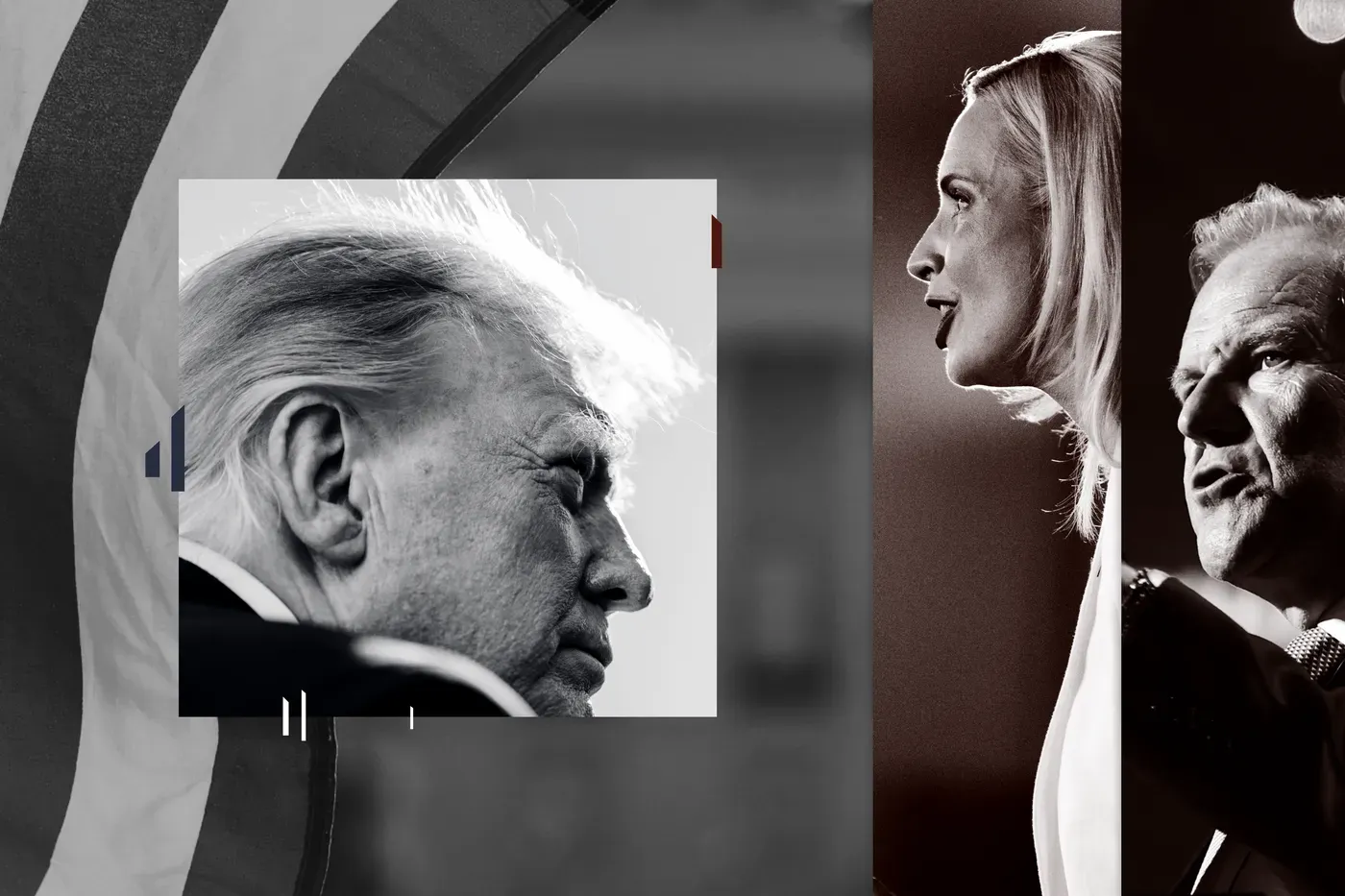
A significant number of Donald Trump's loyal supporters are now questioning whether sticking to his agenda is essential for Republican candidates to win in November.
According to a recent poll conducted by PF Global, one in four voters who backed Trump in the past say GOP candidates should distance themselves from the president if they want to secure victory.
The findings highlight that even die-hard Republicans acknowledge President Trump's presence on the ticket could be detrimental to their chances of winning. This is particularly evident given the current economic and foreign policy challenges facing the country, such as persistent inflation and a trade war with Canada.
Michigan Republican Senate candidate Mike Rogers has become the latest example of this trend after calling for an end to tariffs imposed on Canadian goods, a move that marks a significant shift from his previous defense of President Trump's decision.
Ashley Hinson's call for an end to the Iran war and a halt to soaring diesel costs is just one example of how some Republican candidates are starting to distance themselves from President Trump's policies in key battleground states.
The trend has been observed in several Senate races, including Ken Paxton's bid for the Texas seat, where four leaks have exposed his private attempts to separate himself from Trump and the national party. This move is seen as a strategic decision by some GOP strategists, who believe that running as a Trump sycophant will no longer be effective.
"It's just all dictated by the data," said a GOP strategist working on a Senate campaign, noting that candidates are responding to voter concerns about high gas prices and inflation. This shift is particularly evident in Michigan, where one strategist suggested that embracing Trump's policies may not be enough to secure victory.
In fact, several Republican candidates have been quietly rebranding themselves as independent voices within the party, rather than ardent supporters of the president. While some still choose to maintain their ties to Trump, others are opting for a more nuanced approach in order to appeal to a broader range of voters.
The White House has dismissed efforts by some Republican candidates to distance themselves from the administration's policies, viewing them as a minor adjustment rather than a significant break.
According to a senior official, candidates who choose to physically separate themselves from Trump's team are essentially abandoning ship, and those who do so will be seen as backing away entirely. This stance reflects the administration's confidence in its own record and popularity among core supporters.
White House spokesperson Davis Ingle highlighted several key areas where the administration has made significant progress, including lowering prescription drug costs, cutting taxes, securing the border, and creating jobs. These achievements have helped build a robust coalition of supporters, known as the MAGA movement.
Despite this confidence, a growing number of Republican voters who supported Trump in previous elections are now seeking candidates who will take a more independent stance from Washington. This shift is driven primarily by those who voted for Trump but do not identify with his most loyal base.
Many Republican candidates are facing a difficult decision when it comes to aligning themselves with Trump's policies, especially on key issues such as trade and tariffs, immigration, and the Iran war. Research suggests that those who voted for Trump but do not identify strongly with his base are more likely to want their candidate to break from him on these topics.
In contrast, a significant majority of Trump's most loyal supporters remain fiercely devoted to the president and his agenda. More than two-thirds of this group believe that GOP candidates should continue to align themselves closely with Trump across various policy areas.
This creates a challenging situation for Republican hopefuls, who must balance their loyalty to Trump with the need to appeal to independents and non-MAGA Republicans. By doing so, they risk alienating either their base or more moderate voters.
To navigate this tightrope, some candidates are opting to praise Trump while distancing themselves from his advisors or policies. This approach is evident in comments made by Salazar, who acknowledged the president's ability to energize his base but also sought to shift blame elsewhere.
A White House official pointed to President Trump's rally in South Carolina as an example of his ability to energize voters ahead of elections.
In this approach, candidates are left to run their own campaigns and decide whether or not to align themselves with the president, a strategy that has been adopted by several Senate hopefuls.
The president has taken to telling voters to "pretend" he is on the ballot, touting his economic record and arguing that higher prices are a small price to pay for national security in the wake of tensions with Iran.
This message resonates with some Republican candidates who are keen to associate themselves with Trump's popularity among their base, but others remain nervous about alienating undecided voters by campaigning too closely with him.
Paxton's campaign in Texas serves as a prime example of the delicate balance GOP candidates face when it comes to association with President Trump. On Wednesday, Trump appeared on stage in San Antonio alongside Paxton, where he praised the candidate.
Despite this public display of unity, Paxton struck a different tone when speaking directly to Trump from the stage, expressing his amazement at sharing the platform with the president.
Facts based on reporting originally published by Politico.
You may republish this story, in full or in part, if you credit News Central Site and link to it (licence CC BY 4.0). Photos are not included.