Michigan Senate Debate Turns Heated Between Abdul El-Sayed and Mike Rogers
The first Michigan Senate debate between Democrat Abdul El-Sayed and Republican Mike Rogers turned heated on Thursday in Grand Rapids, with both candidates trading barbs over various issues.
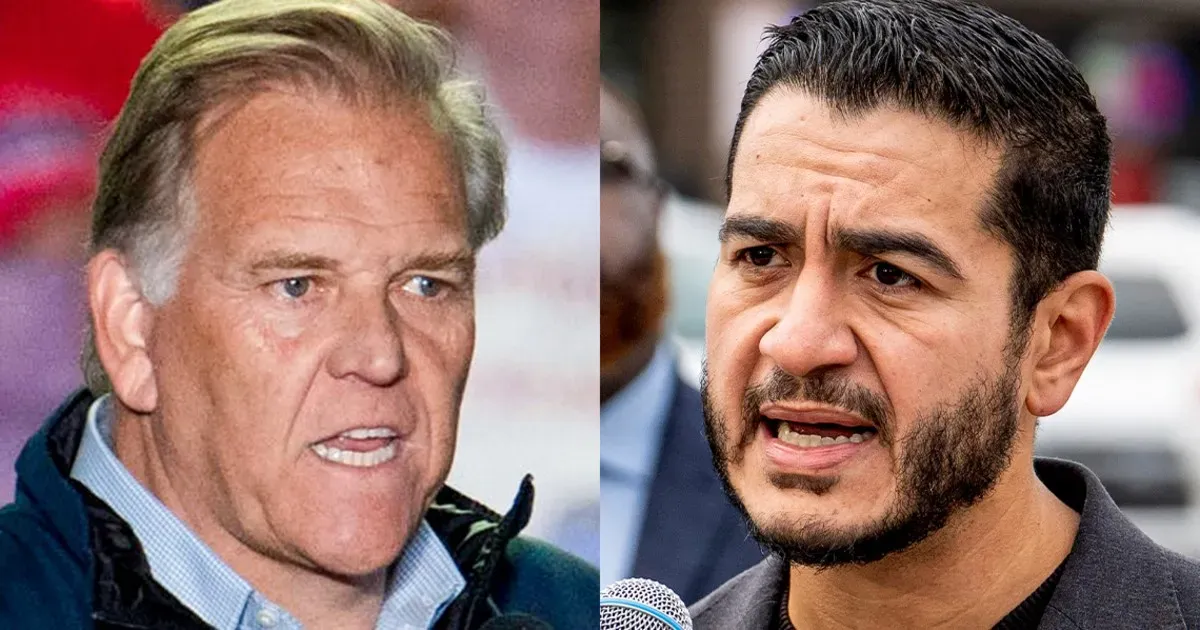
A heated exchange marked the first Michigan Senate debate between Democrat Abdul El-Sayed and Republican Mike Rogers on Thursday in Grand Rapids. The candidates clashed over several key issues, including the ongoing conflict in Iran, rising gas prices, and the impact of tariffs.
El-Sayed sought to portray Rogers as a politician who has shifted his stance on certain issues due to loyalty to President Donald Trump rather than principle. In response, Rogers characterized El-Sayed as a "con man who makes promises he cannot keep without raising taxes or other costs.
The debate quickly turned personal, with both candidates trading barbs over their respective financial dealings. Rogers' ownership of a home in Florida was mentioned alongside El-Sayed's wife's property in the United Arab Emirates, highlighting the increasingly contentious tone of the exchange.
The Michigan Senate seat has become a highly coveted prize as the state's voters prepare to choose between two strong candidates vying for the position left vacant by Sen. Gary Peters' decision not to seek re-election.
In the Democratic primary, Abdul El-Sayed emerged victorious despite facing stiff competition from Rep. Haley Stevens, who positioned herself as a more moderate candidate in an effort to appeal to a broader electorate.
As Republicans seek to capitalize on their opportunity to win a Senate seat for the first time since 1994, they have sought to portray El-Sayed as an extremist, leveraging his progressive credentials and associations with prominent figures like Sen. Bernie Sanders and Rep. Alexandria Ocasio-Cortez.
The debate's opening question about a federal gas tax pause highlighted the stark differences between the two candidates on issues related to the ongoing conflict in Iran, with Rogers' recent shift from supporting the war to advocating for its swift end serving as a notable example of his evolving stance.
The two candidates continued their heated exchange as they addressed the issue of Medicare for All. Rogers argued that such a policy would be disastrous, forcing people off private insurance and causing taxes and gas prices to rise. He claimed that El-Sayed's proposal was more about ideology than practical solutions, implying that it would not benefit Michigan residents.
Rogers' criticism of El-Sayed's stance on Medicare for All drew a sharp response from the audience, with some members visibly upset by Rogers' characterization of the policy as a disaster. The tension between the two candidates remained palpable as they navigated complex issues such as tariffs and trade policies.
The discussion turned to tariffs, an issue that has significant implications for Michigan's economy due to its extensive trade ties with Canada. Rogers had previously supported Trump's push for tariffs but released an ad this week calling for an end to the trade war.
Rogers' shift on tariffs was seen as a bid to distance himself from Trump's policies, which have been contentious in Michigan. The tariffs imposed by the US on Canadian goods, including dairy products exported to Canada, have caused significant economic strain on both countries.
The topic of tariffs dominated a significant portion of the debate, with both candidates presenting their views on how to address this contentious issue.
Rogers emphasized his efforts to negotiate a better deal for Michigan by citing a recent conversation he had with the White House and the Secretary of Commerce. He expressed his desire to eliminate tariffs that are not beneficial to the US, while also working towards reducing those deemed too high.
El-Sayed took a different approach, criticizing Rogers' initial support for the Canadian tariff policy and pointing out its estimated annual cost to Michigan households - $5,600 per year.
El-Sayed sidestepped Albin's direct question about his stance on military action against Iran, calling it a ridiculous hypothetical" instead.
He shifted the focus to the current situation in the Middle East, pointing out that Israel has lobbied for war with Iran, while Iran has responded by attacking various countries and disrupting global energy supplies.
El-Sayed expressed his opposition to getting drawn into conflict over Iran, emphasizing that he wants US funds allocated towards domestic needs such as education, healthcare, and childcare rather than military interventions.
The debate marked the first of two planned confrontations between El-Sayed and Rogers, with both candidates having engaged in a series of public exchanges and jabs at each other in recent months.
The Republican party has attempted to portray Abdul El-Sayed as the new face of the Democratic Party, emphasizing his progressive views and alliances in their efforts to villainize him. This strategy also involves highlighting his ethnicity and Muslim faith, an approach that some critics see as a deliberate attempt to exploit these aspects for political gain.
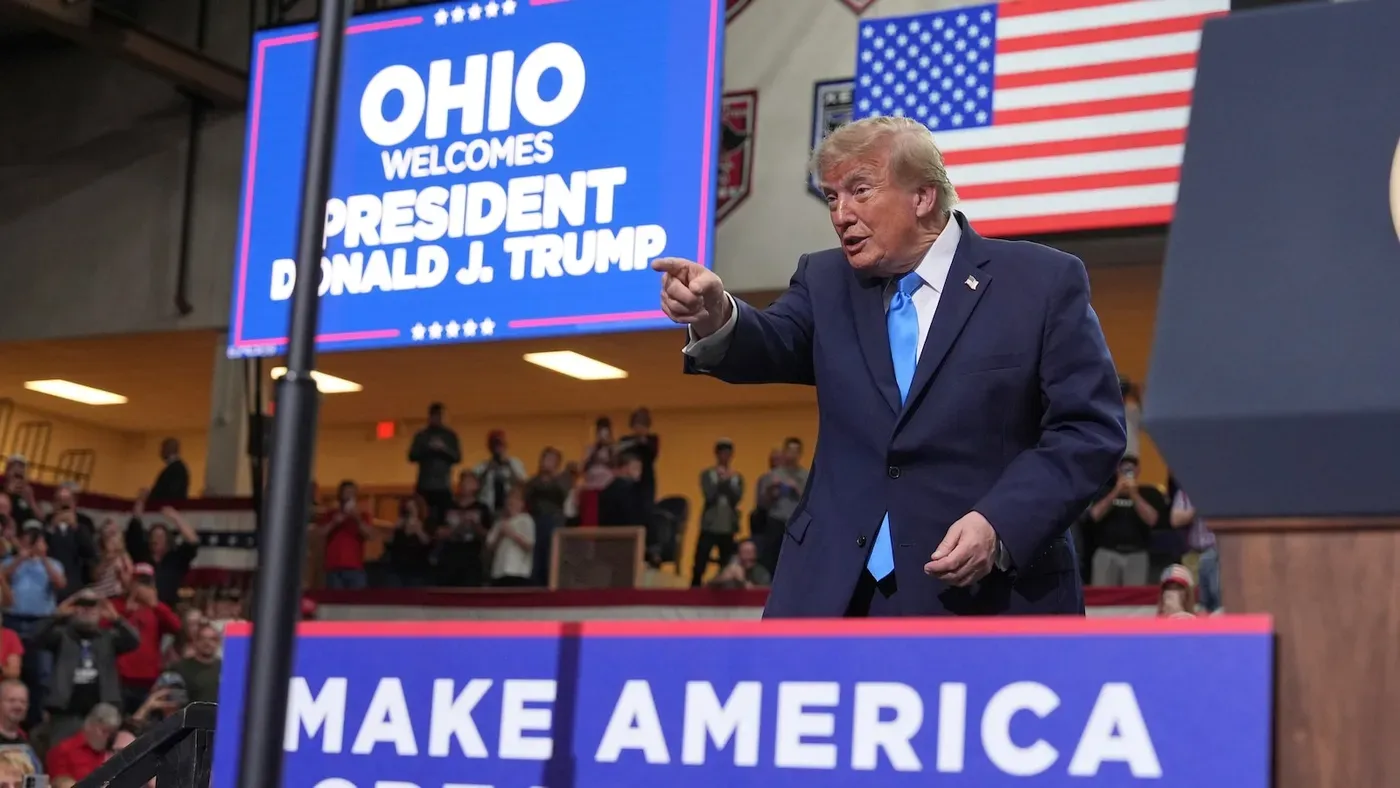
In this context, Vice President JD Vance has suggested that Republicans focus on El-Sayed's unorthodox views rather than his personal characteristics. Meanwhile, in a separate event, El-Sayed took aim at Donald Trump, making light of the former president's pronunciation of his name during a speech earlier Thursday.
Facts based on reporting originally published by NBC News Politics.
You may republish this story, in full or in part, if you credit News Central Site and link to it (licence CC BY 4.0). Photos are not included.