Mercury levels found in Pacific Coast marine mammals increase with predator status
Researchers led by Dr. Todd O'Hara have studied contaminant exposure in marine mammals and humans along the Pacific Coast, examining the impact on their health.
Researchers studying marine mammals along the Pacific Coast of North America have found that contaminants such as mercury can move through marine food webs and become more concentrated as they move from prey to predator. This means that fish-eating marine mammals are exposed to higher levels of pollutants than other animals in their ecosystem.
Dr. Todd O'Hara, a veterinary toxicologist at Texas A&M College of Veterinary Medicine and Biomedical Sciences, has led research efforts along the Pacific Coast to better understand which contaminants marine mammals are being exposed to and what this exposure means for their health. His team's studies have included examining contaminant levels in marine mammals from Alaska to Mexico.
The researchers' work also involves studying people who consume the same or similar fish as the marine mammals, allowing them to examine contaminant exposure across species that share marine food resources. This multi-species approach provides a more comprehensive understanding of the impact of pollutants on marine ecosystems.
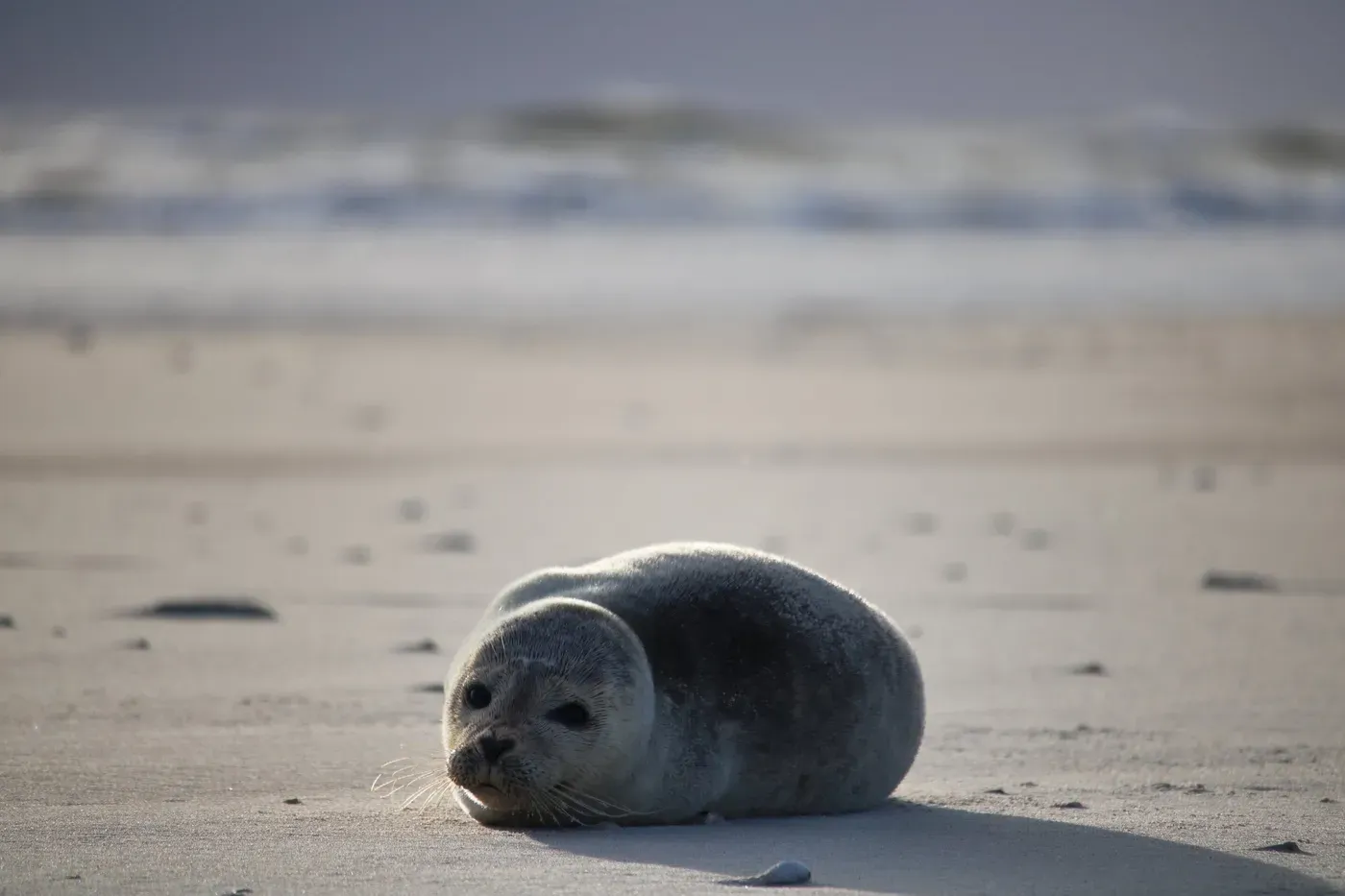
Seal and sea lion pups have become an important part of Dr. O'Hara's research because they can reveal insights into mercury exposure that begins before birth. Some contaminants can be transferred from mothers to their offspring during gestation and nursing, making young animals ideal subjects for studying early life exposures.
A study led by Dr. O'Hara found that Steller sea lion pups from Alaska's western Aleutian Islands had higher concentrations of mercury and certain persistent organic pollutants than adult females and Steller sea lions from other locations. These pollutants include polychlorinated biphenyls (PCBs) and the pesticide DDT, which have been banned in the United States for decades but can persist in the environment.
The presence of these pollutants in sea lion pups suggests that they are being exposed to them through their mothers' milk or during gestation. This exposure can have long-lasting effects on the animals' health and may be linked to various health problems.
The researchers' findings also highlight the importance of studying marine mammals from different locations to understand how contaminant levels vary across ecosystems. By examining contaminant levels in sea lion pups, Dr. O'Hara's team is gaining valuable insights into the impact of pollutants on marine life.
Further research is needed to determine the full extent of mercury and other pollutant exposure among marine mammals along the Pacific Coast. The study's findings emphasize the need for continued monitoring and regulation of contaminants in the environment to protect both human and animal health.
Research has shown that mercury levels in Steller sea lion pups vary depending on their location, likely due to differences in their mothers' diets. This highlights the crucial role maternal diet plays in determining exposure to contaminants before birth.
Experts explain that regional variations in ocean currents and environmental conditions can shape local food webs and prey composition, which in turn affects maternal exposure to pollutants. As a result, pups from different areas may be exposed to varying levels of mercury and other elements through their mothers' milk.
However, detecting the presence of mercury and other contaminants is only part of the story. Scientists also need to understand whether this exposure has any impact on the animal's functioning. This involves considering not just mercury, but also other elements like selenium that can interact with it and influence its effects on the nervous system and other organs.
Researchers have noted that marine mammals, including pinnipeds such as seals and sea lions, are exposed to neurotoxic chemicals in much the same way as humans - through their diet. This means that understanding the effects of these chemicals is essential for protecting both human and animal health.
A key challenge in studying the effects of neurotoxic chemicals on marine mammals is recognizing subtle neurological abnormalities. These can be difficult to identify, but may have serious consequences for animals in the wild.
The anatomy of pinnipeds also makes it challenging to design a neurological examination that translates from other species. Their bodies are adapted for swimming and diving, with unique features such as flippers, reduced external ears, and thick layers of blubber.
The researchers had to develop innovative methods to assess the neurological function of harbor seal pups, given their wild nature and aquatic environment.
To create a standardized examination, the team collaborated with The Marine Mammal Center in California, where they worked on a tailored assessment specifically designed for harbor seal pups.
Led by Dr. Christine Thomson, a veterinary neurologist, the research involved evaluating 45 stranded harbor seal pups over two years at the center. This comprehensive exam comprises 26 assessments that take into account the unique anatomy and behavior of pinnipeds.
The examination enables veterinarians to thoroughly evaluate an animal's nervous system and pinpoint where abnormalities may be occurring, providing crucial information for diagnosis, treatment, and prognosis.
It also allows clinicians to distinguish between neurological disease and other non-toxic issues that might produce similar symptoms, such as ear infections or malnutrition.
Some pups initially displaying abnormal neurological signs were later found to have underlying conditions like an ear infection, a congenital brain defect, or malnutrition, highlighting the importance of identifying these problems.
Researchers studying the impact of mercury on marine mammals have found a way to compare naturally occurring exposure levels with neurological function in harbor seal pups.
This distinction is crucial because detecting contaminants does not necessarily mean they are causing harm. The team, led by Dr. O'Hara, has been investigating how mercury affects pinnipeds, including seals, sea lions, and walruses.
To examine this connection, researchers used neurological and clinical assessments to compare the effects of mercury exposure in harbor seal pups. These assessments allowed them to identify any adverse health effects caused by the contaminant.
Dr. Marianne Lian's research, a former doctoral student of Dr. O'Hara's, found that fetal exposure to mercury was associated with differences in how harbor seal pups responded to touch and moved, as well as their rehabilitation needs.
The study highlighted the difficulty of measuring adverse health effects in wild animals, where access to detailed neurological examinations can be limited. However, the findings provided valuable insights into the potential risks posed by prenatal mercury exposure.
Researchers have found that fetal exposure to mercury before birth can lead to neurodevelopmental abnormalities in harbor seal pups.
The standardized examination used to assess harbor seal pups is also a valuable tool for researchers studying the effects of mercury exposure.
This method helps identify subtle neurological impairments that might otherwise go unnoticed and provides a consistent way to compare findings across animals and studies.
Subtle neurological impairment can have significant consequences for an animal's survival in the wild, where being able to swim, navigate, and forage for food are essential skills.
An animal may appear healthy while still having underlying neurological abnormalities that could impact its ability to survive after release from rehabilitation, according to O'Hara.
The implications of this research extend beyond marine mammals and have important connections to human health as well.
Since both humans and marine mammals rely on the same ocean resources, studying contaminants in these food webs can provide valuable insights into environmental risks affecting both species.
O'Hara and his team are expanding their research to include more marine mammals and communities that depend on them for food. This will involve studying California sea lions in Mexico as well as continuing community-based participatory research involving harbor seals in Alaska. The focus of this work is on mercury and other trace elements, with a broader perspective provided by the One Health approach.
The Texas A&M researchers involved in this project include Dr. Jill Hiney from the Department of Veterinary Integrative Biosciences, who has contributed expertise to the study. Additionally, Dr. Carlos Rosado Berrios, a postdoctoral researcher at VIBS, and retired faculty member Dr. Robert Taylor have also been part of the research team.
The findings of this research will provide valuable insights into environmental risks affecting both humans and marine mammals that rely on the same ocean resources, ultimately contributing to better conservation efforts and public health policies.
Facts based on reporting originally published by Phys.org.
You may republish this story, in full or in part, if you credit News Central Site and link to it (licence CC BY 4.0). Photos are not included.